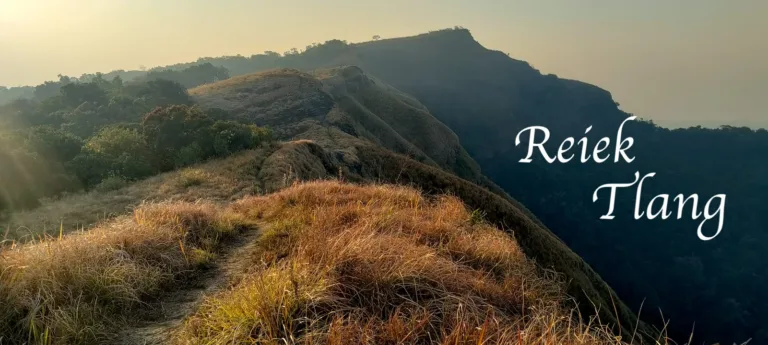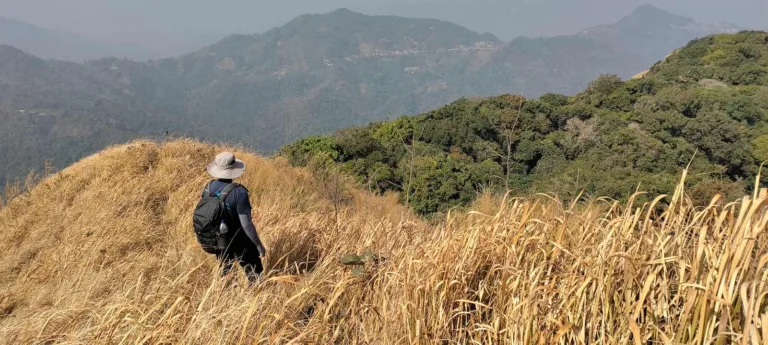
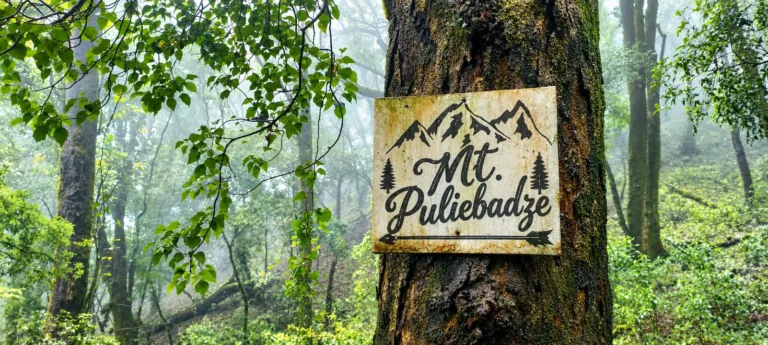

Puliebadze, also known as Pulie Badze, is a 2,300 m peak in the Pulie Badze Wildlife Sanctuary above Jotsoma village, around 8 km from Kohima. The peak is known for its local legend and panoramic views of Kohima.
This guide covers the best ways to reach Puliebadze Peak, with route options from four starting points, expected costs, trail conditions, the local legend of Puliebadze, and nearby places like Scenic Houses and Jotsoma Baptist Church that you can combine into a half-day trip from Kohima.
Quick Guide
| Starting points | 4 – see breakdown below |
| Shortest option (from Parking Point) | 1.2 km one-way (2.4 km round trip), ~200 m elevation gain |
| Longest option (from Kohima Science College) | ~7 km one-way (14 km round trip) |
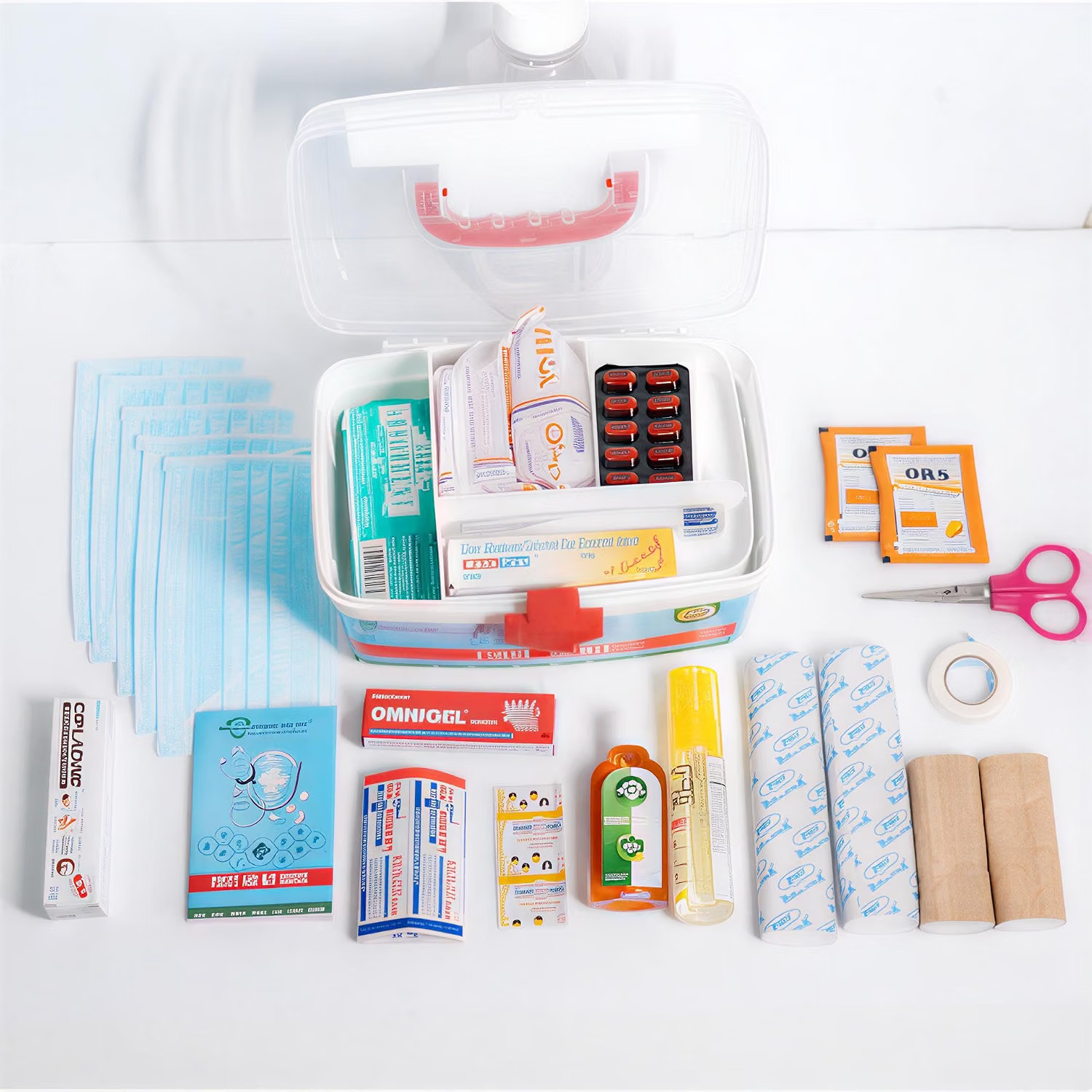
| Entry fee | ₹50/person · ₹50/two-wheeler · ₹100/taxi (light-vehicle) · ₹200/heavy-vehicle |
| Taxi Cost (round trip, Kohima – Puliebadze – Scenic Houses – Jotsoma Baptist Church – Kohima) | ₹3,000 |
| Trail | Well-defined, but slippery in sections |
| Leeches | Yes, plenty during rainy season |
| Guide | Not needed, trail is clear |
| Food & water | Available near Kohima Science College. No other shops on the way. |
| GPX file | Pulibadze_Rangers_Of_Mountains.gpx. Upload it to Gaia GPS or any map app to follow the trail |
How to go to Puliebadze from Kohima
The easiest way to reach the trail is by taxi from Kohima towards Kohima Science College, which is an important landmark for the route. Taxis typically cost around ₹3000 from Kohima to Puliebadze and back, including the stop at Scenic Houses and the Baptist Church in Jotsoma. If you prefer, you can contact Mr. Raja, at +91 88374 55457 to book a taxi.
Puliebadze Trek Information
One of the interesting things about the Pulie Badze trek is that there isn’t just one starting point. There are four practical points where you can start walking, depending on how much of the approach you want to cover on foot.
| Starting point | Distance to summit (one-way) | Elevation gain | Best for |
| Kohima Science College | ~7 km | – | Full route |
| Ticket counter | ~5.7 km | – | Longer hike |
| Puliebadze Gate | ~3.2 km | ~500 m | Moderate hike |
| Parking Point | 1.2 km | ~200 m | Shortest option |
1. Kohima Science College – Full Route
Starting from Kohima Science College gives you the longest version of the Puliebadze trek. From the college, the route continues off-road for around 1.3 km to the Ticket counter, and remains off-road all the way to the Parking Point at the base of the peak. From the Parking Point, the final section climbs up to the summit.
The complete distance from Kohima Science College to the summit is approximately 7 km one way. This is the best option for hikers who want to experience the full approach to Puliebadze on foot rather than taking a taxi further along the route.
2. The Ticket Counter
The Ticket Counter is where the route officially begins and where the entry fee is collected. The entry fee is ₹200 for two people travelling by taxi. From here, the route continues for 4.5 km to the parking area at the base of the peak.
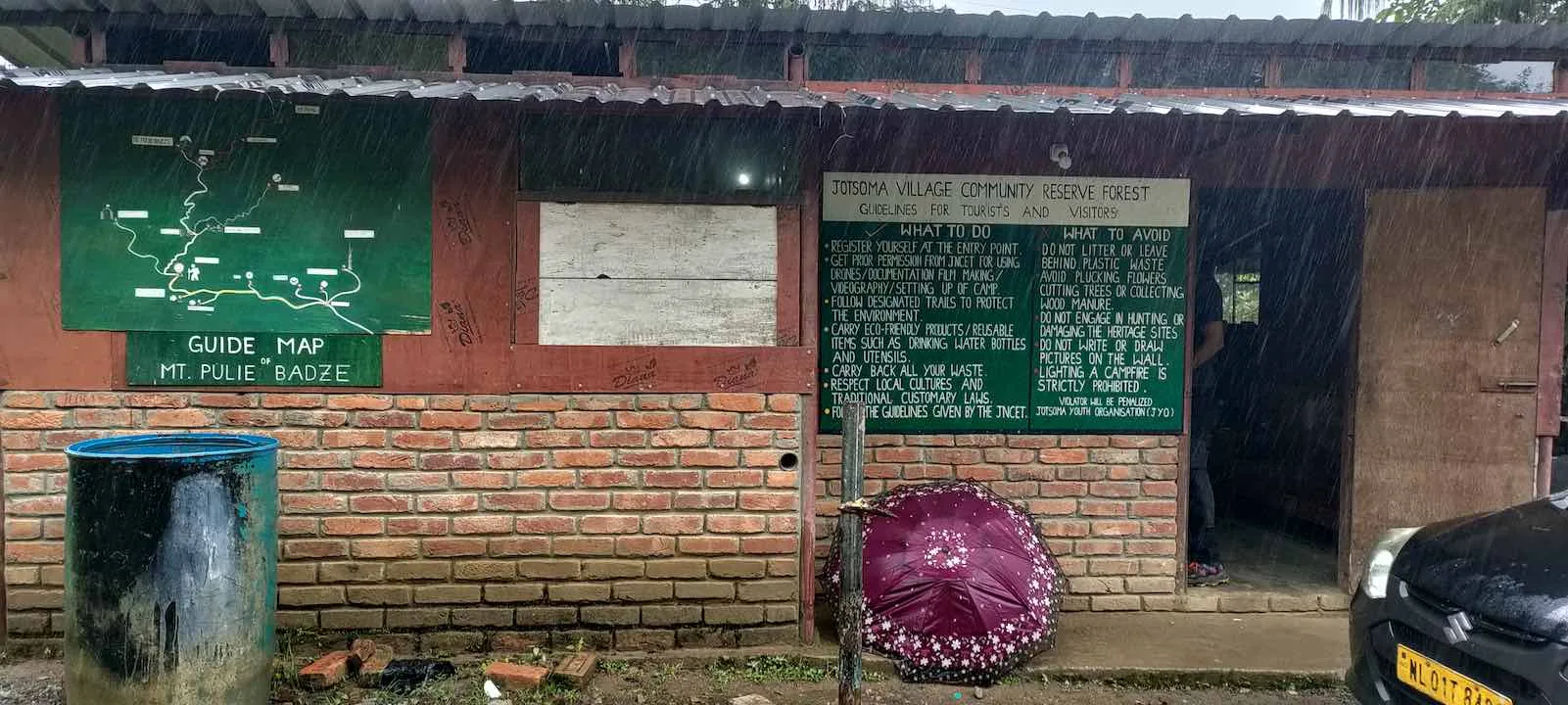
Starting here reduces the distance to the summit to approximately 5.7 km one way.
3. The Puliebadze Gate
The Gate is the large arch-like structure further along the route and is another possible starting point.
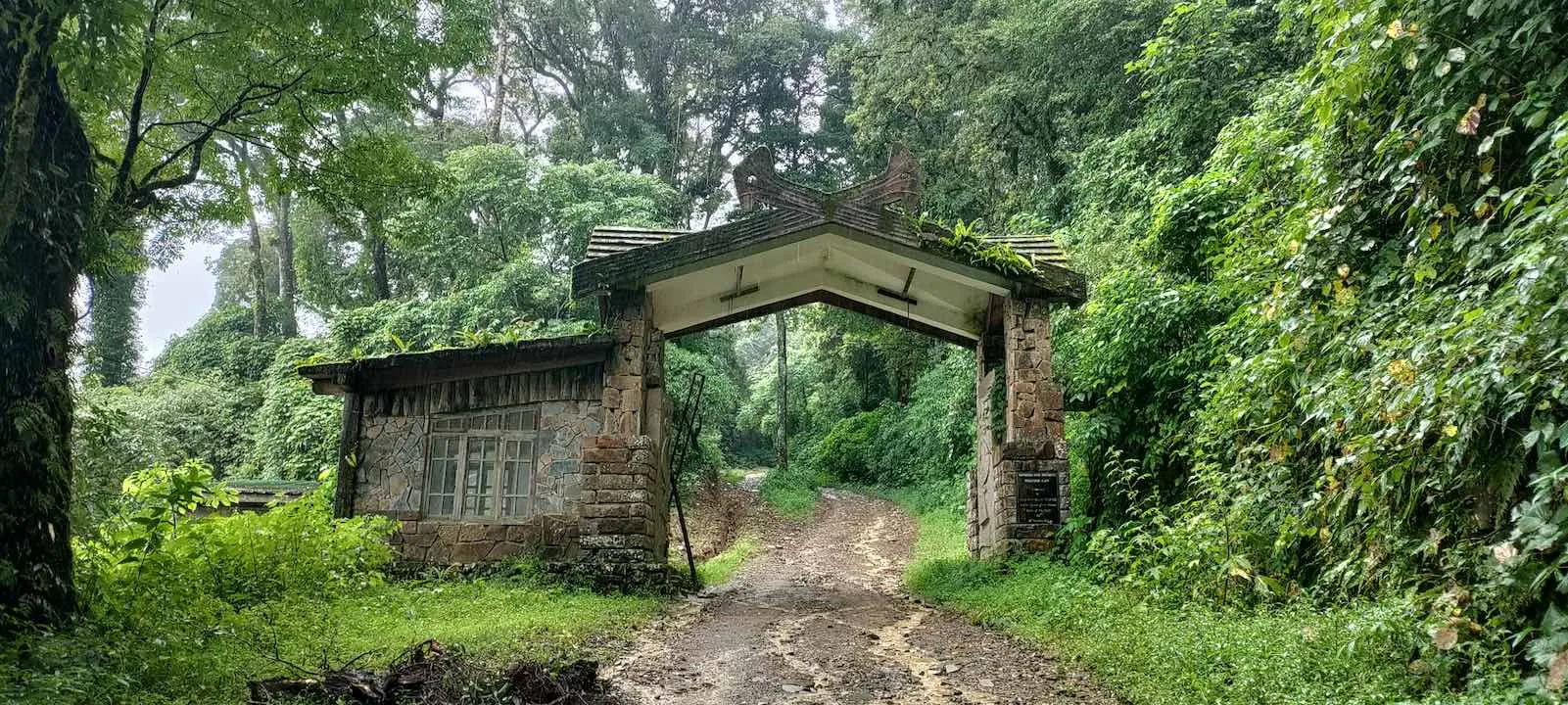
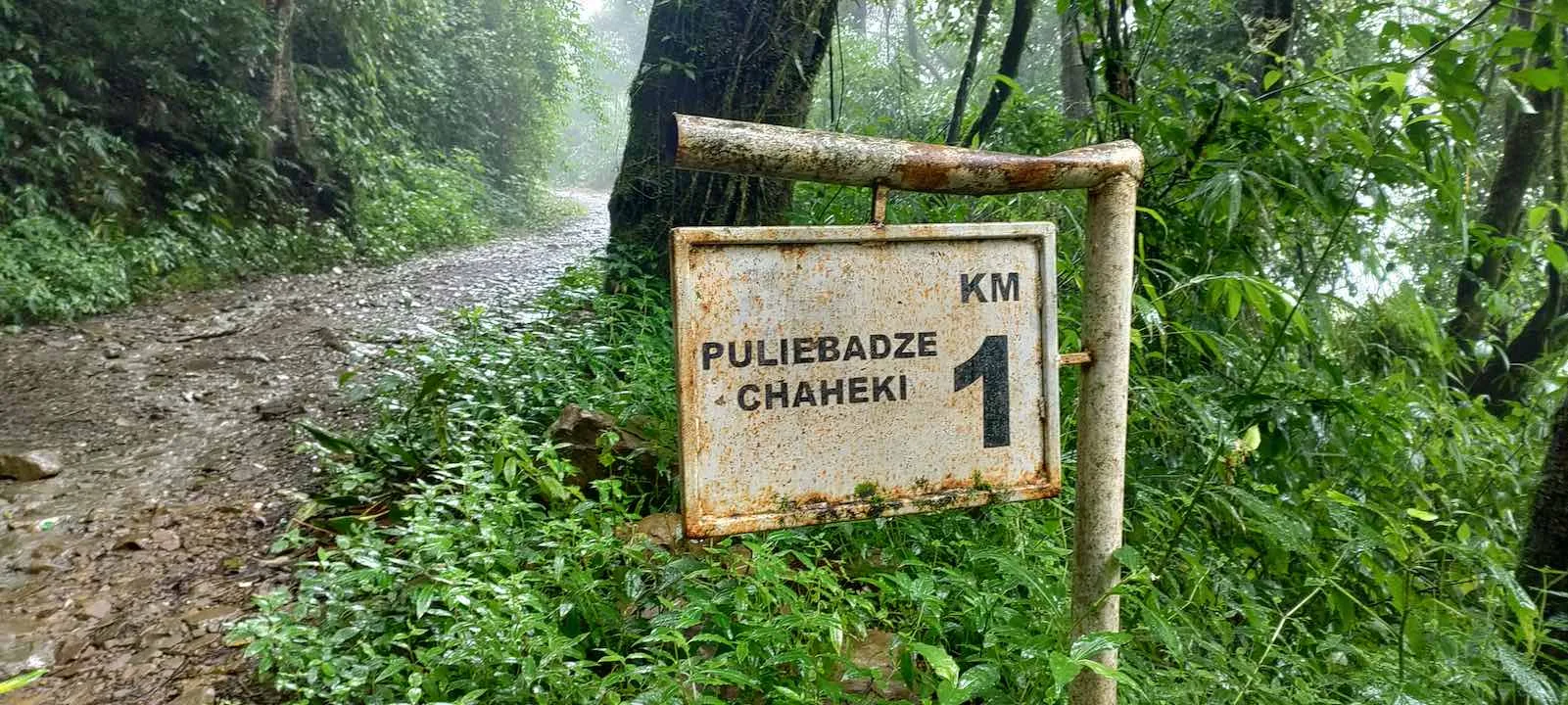
This is where the trek started for us. From the Gate, the route continues off-road for around 2 km to the Parking Point at the base of the peak. From there, the trail becomes a proper 1.2 km uphill hike, climbing through steps and forest towards the summit.
The entire section from the Gate to the summit involves approximately 500 m of elevation gain and took us around 3 hours, including several stops to take photographs.
Starting from the Gate offers a good middle ground as it cuts out much of the longer approach from Kohima Science College while still giving you a substantial hike to the summit.
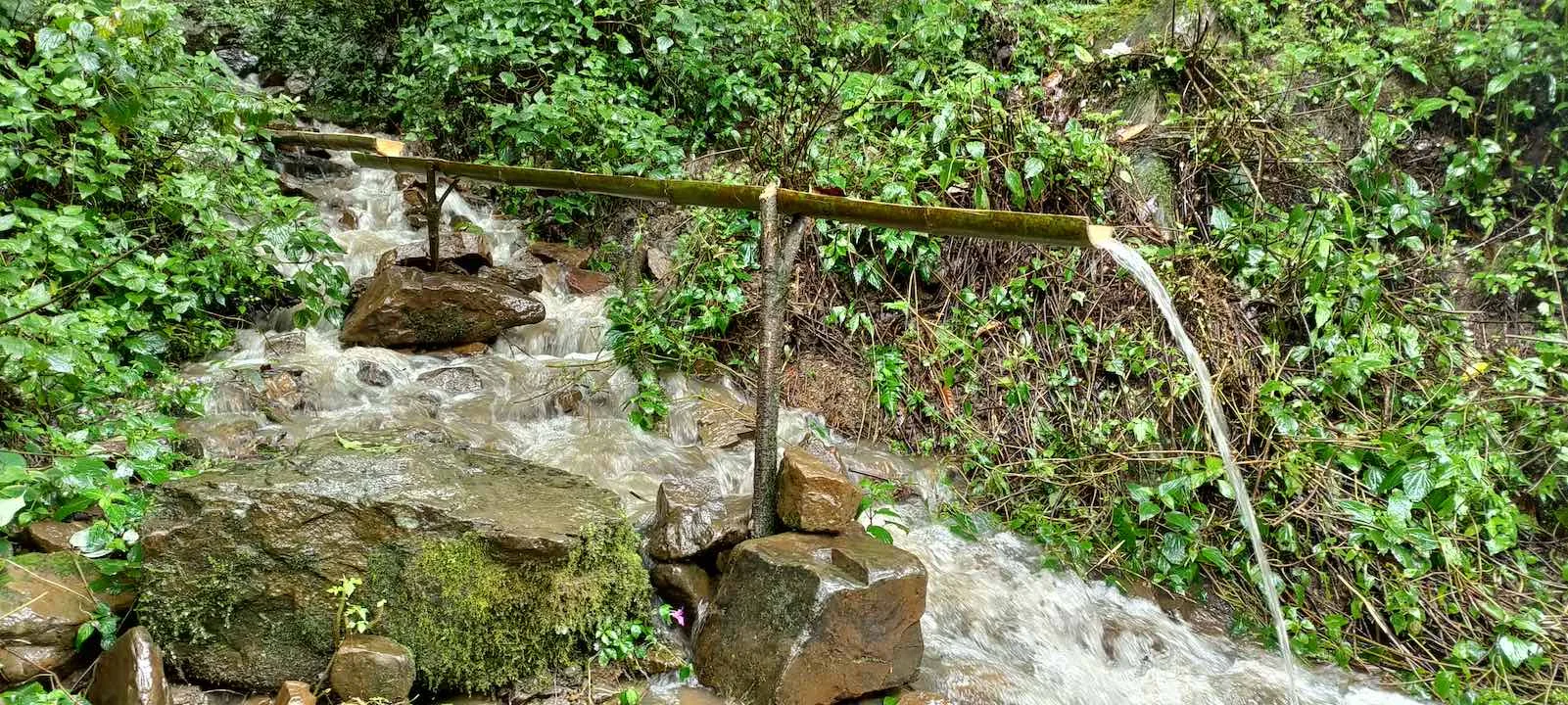
4. The Parking Point
The Parking Point is the shortest option for reaching the summit.
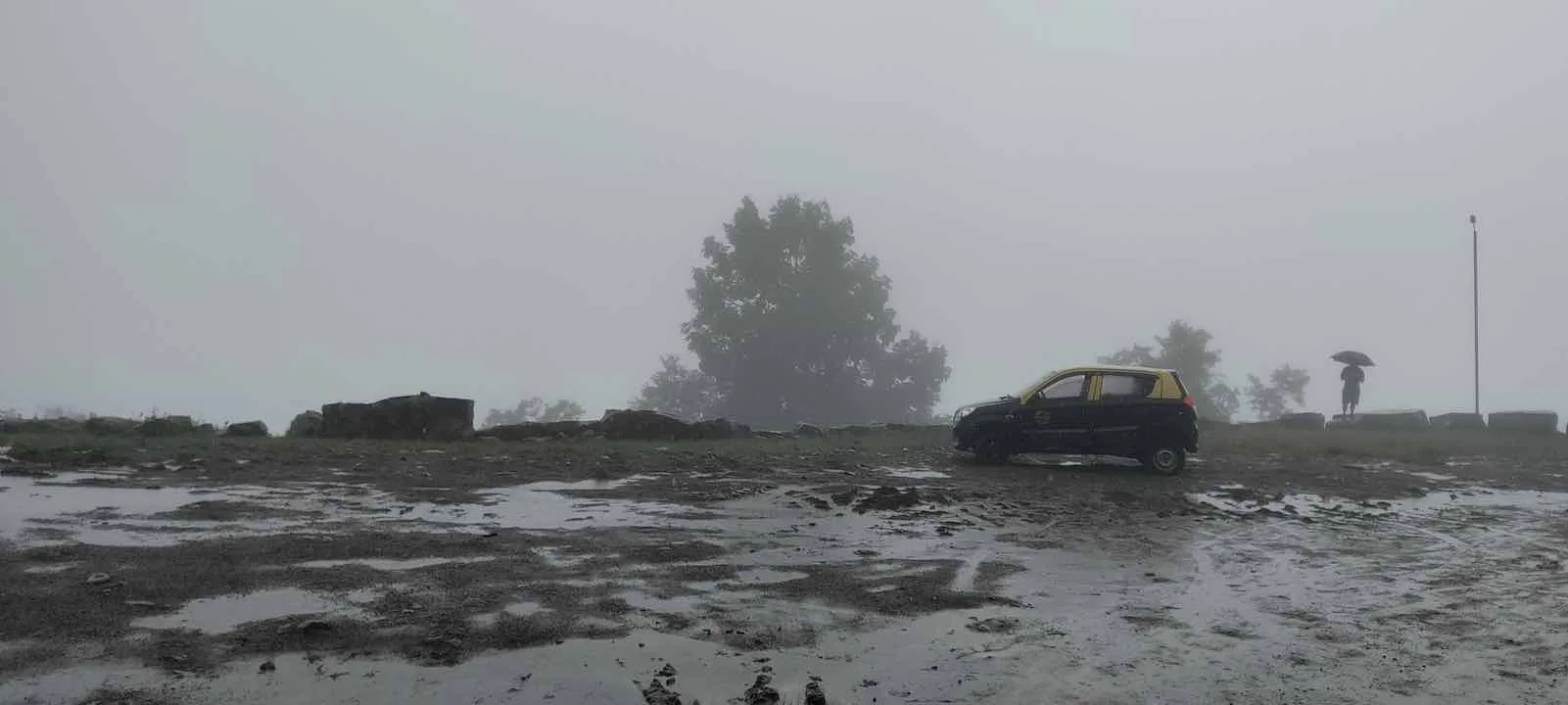
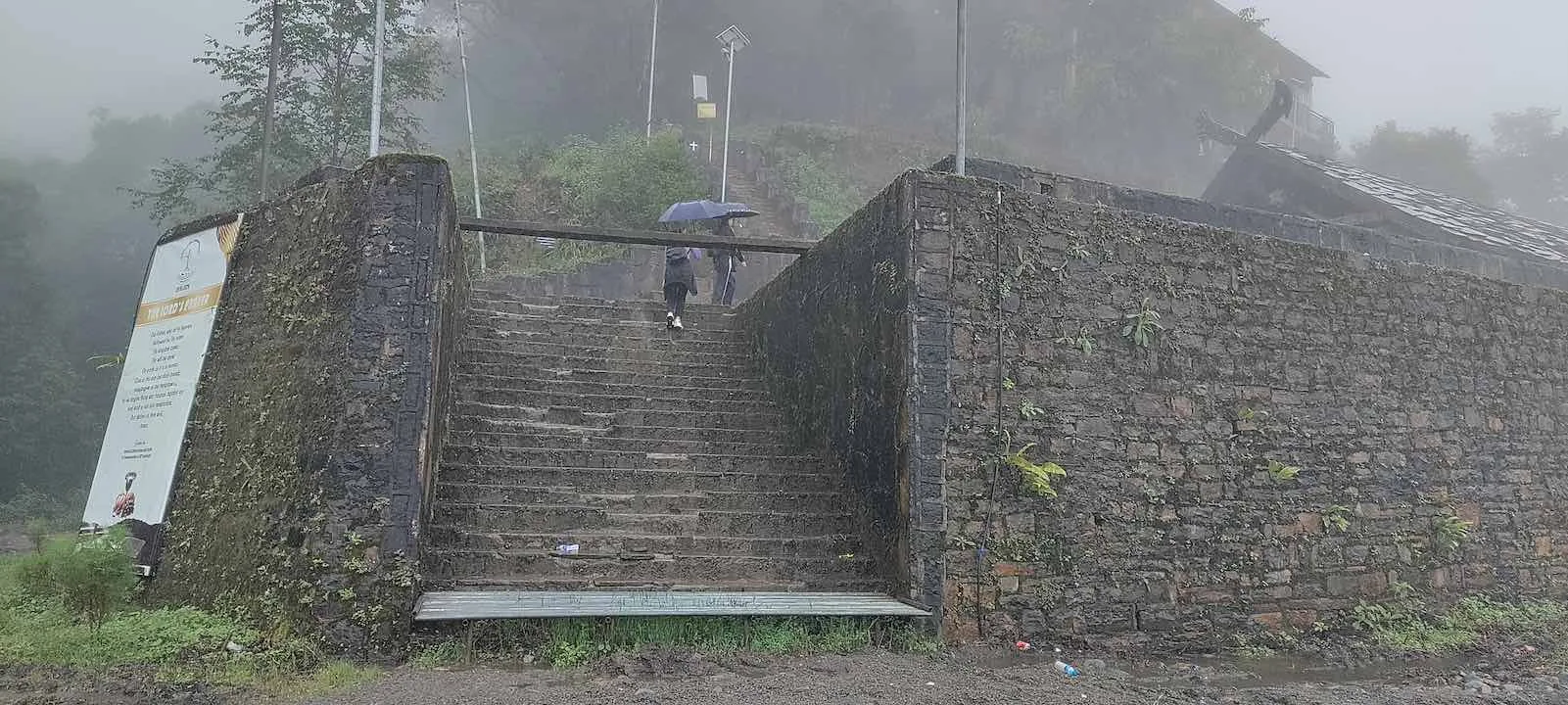
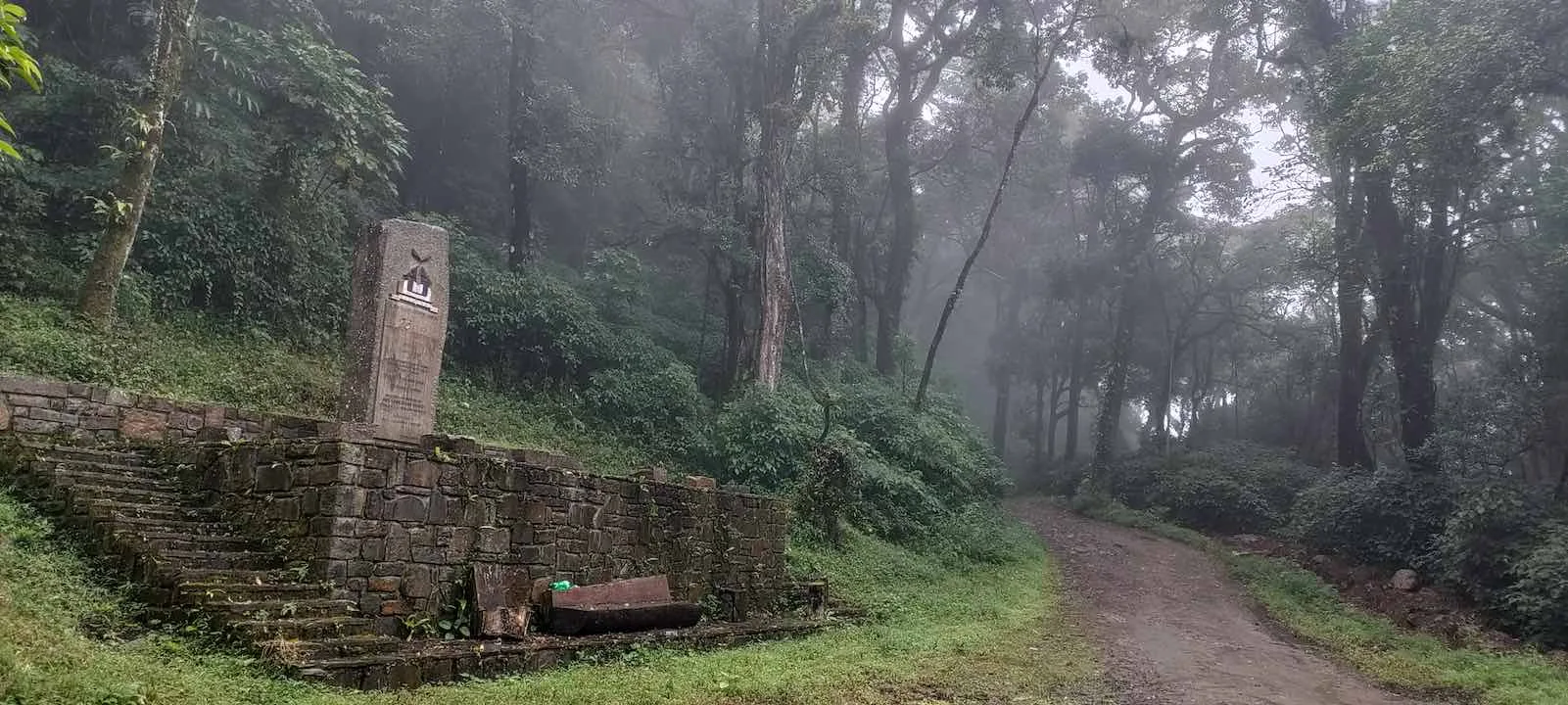
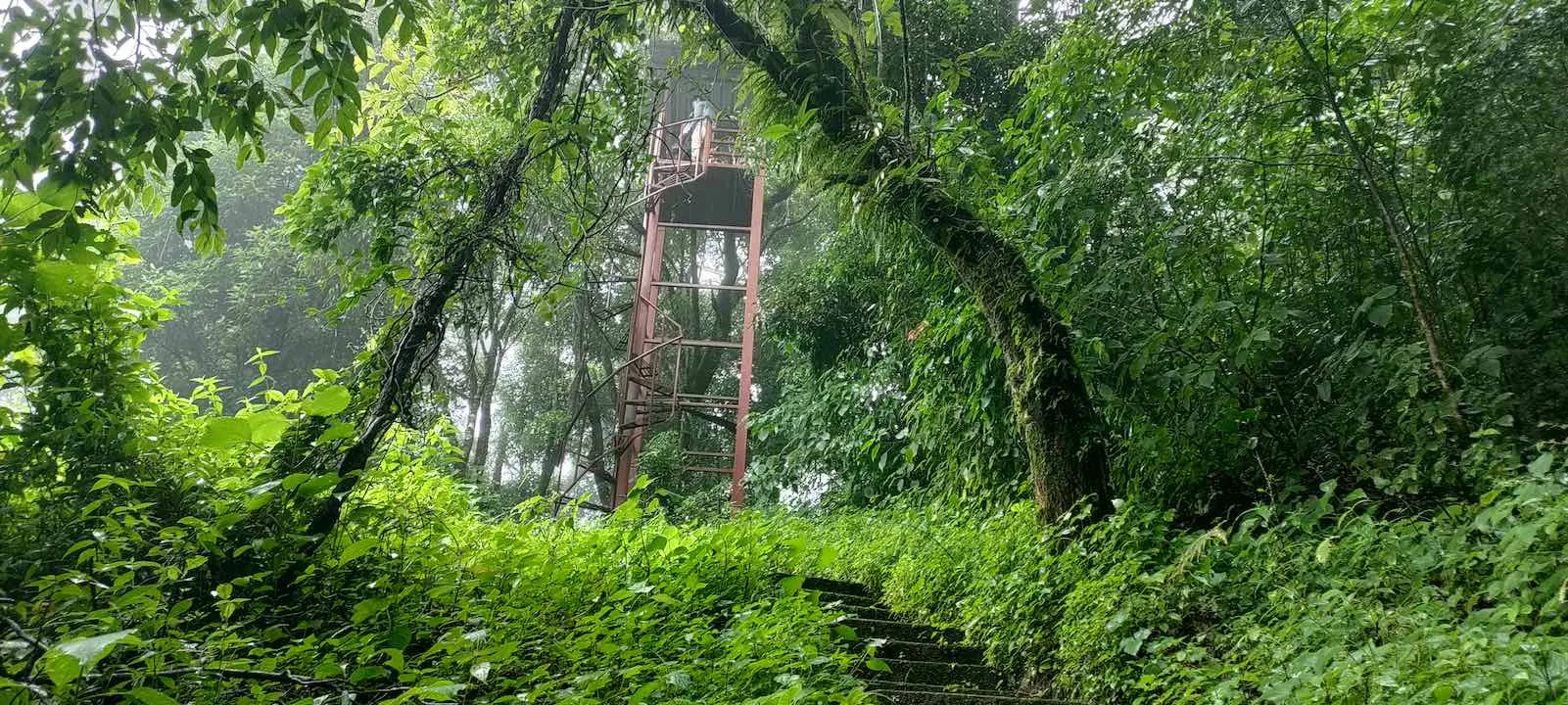
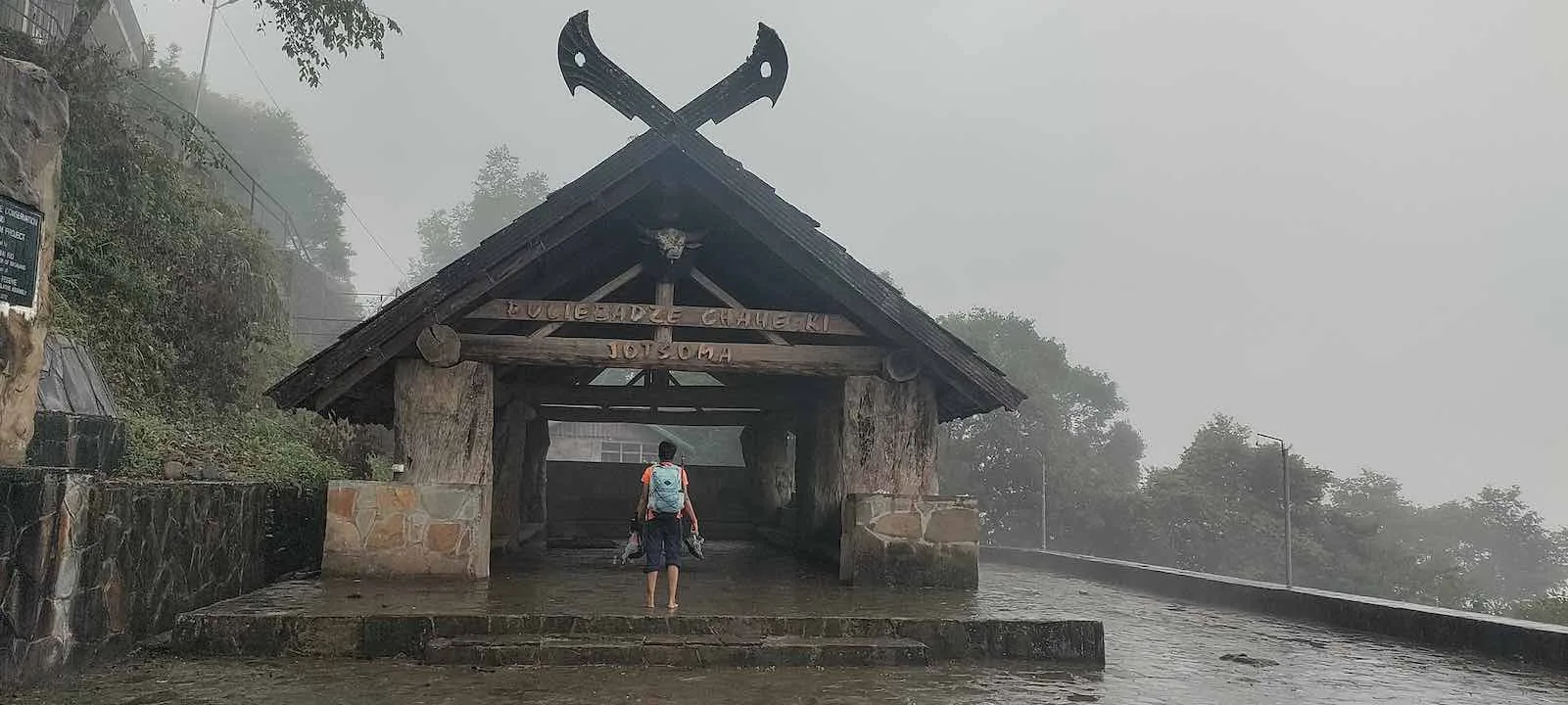
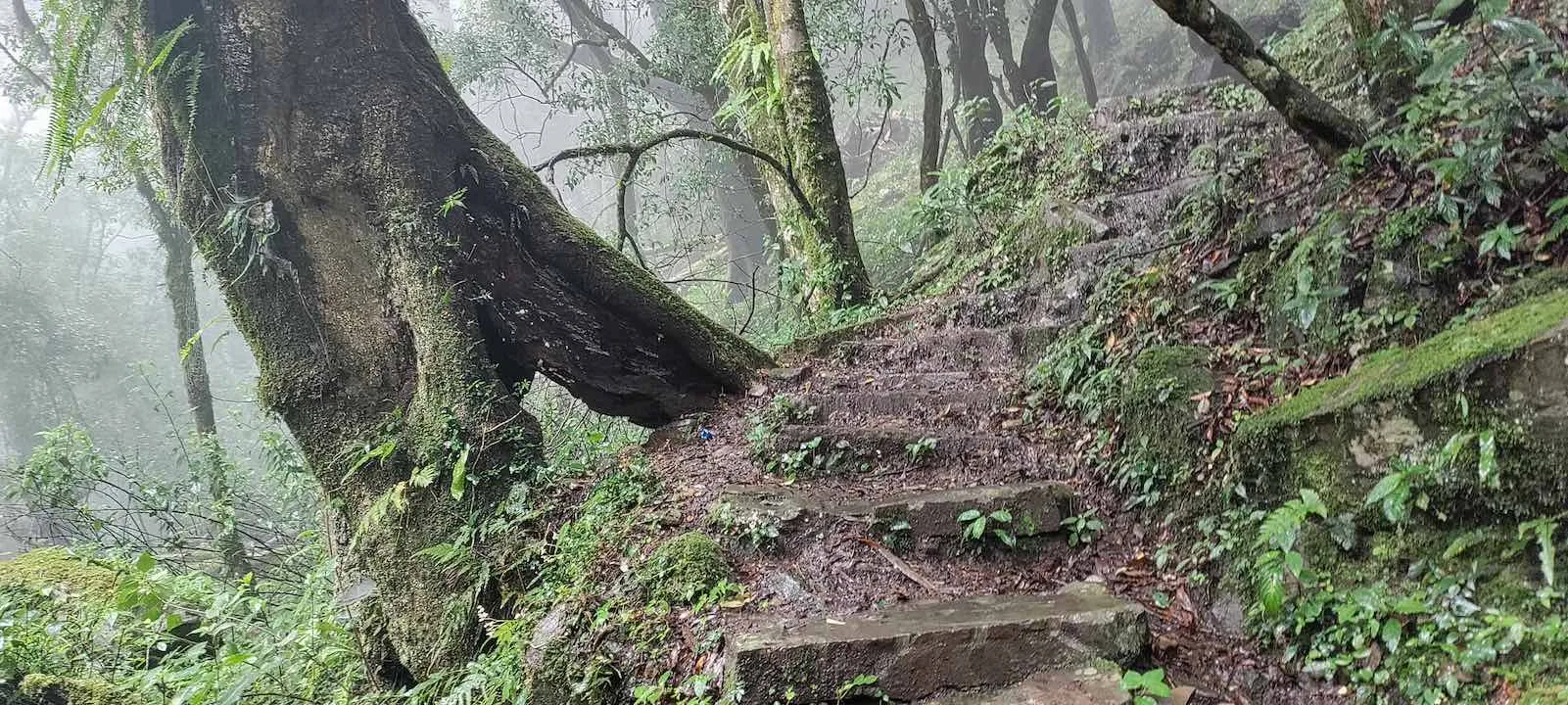
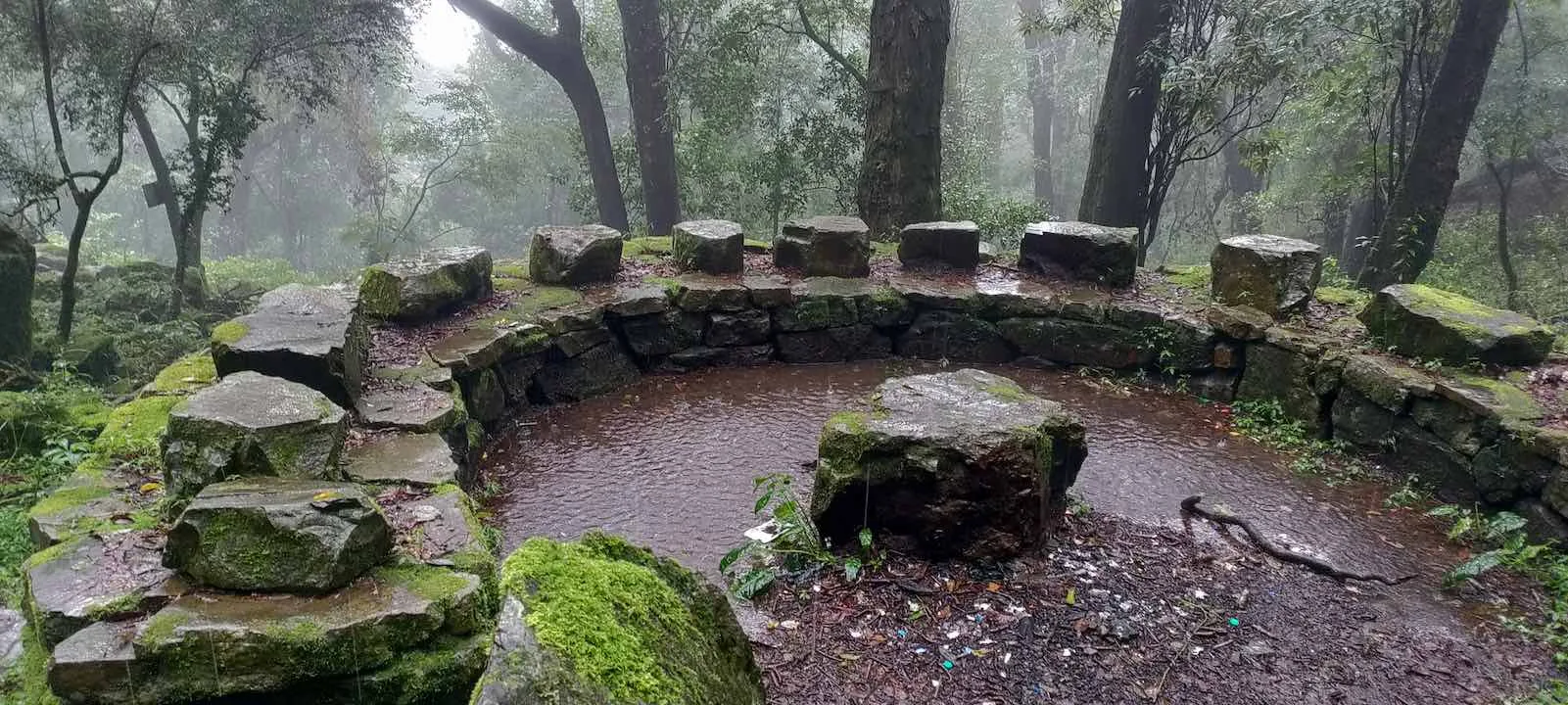
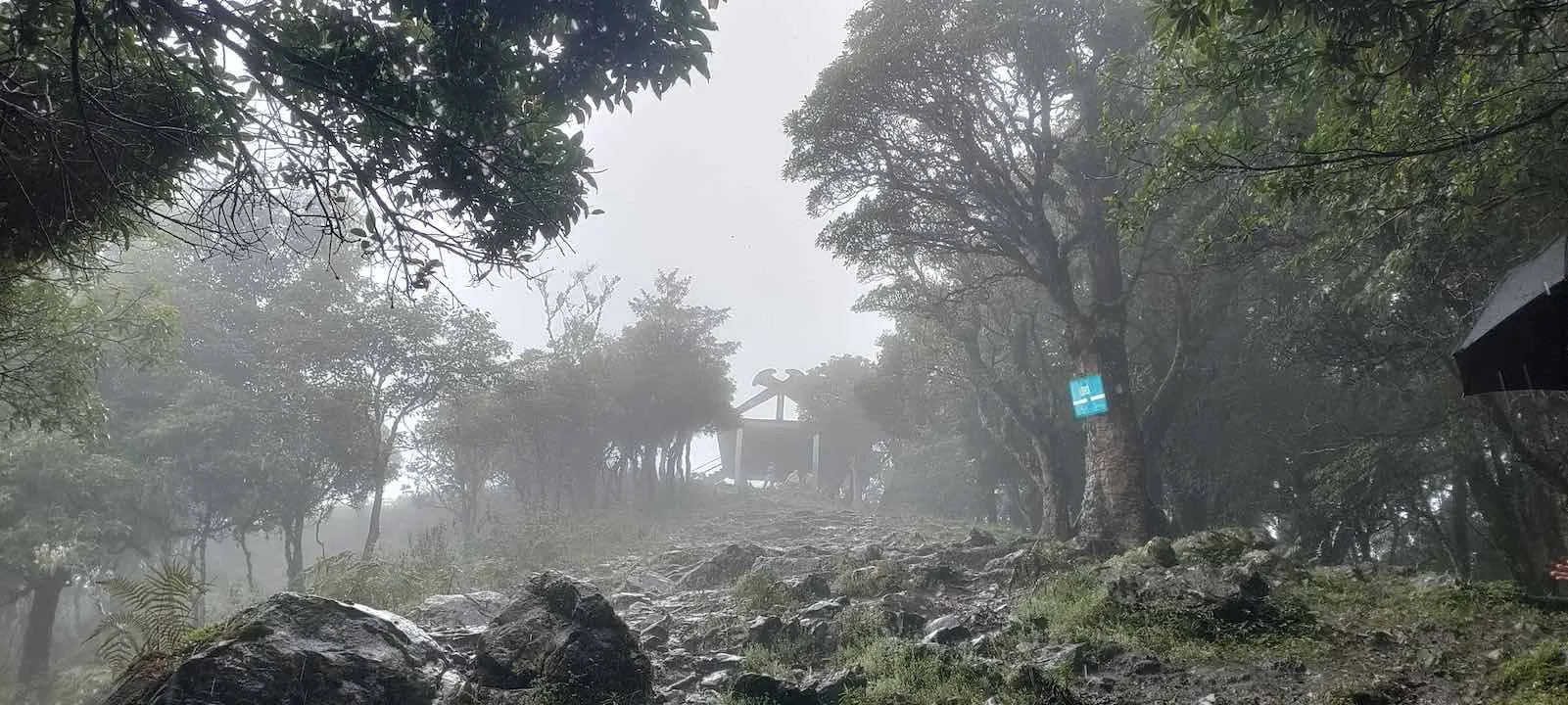
From here, the trail climbs approximately 1.2 km one way, with around 200 m of elevation gain. Near the start of the trail, there is a shelter with an animal-head structure at the entrance and seating arrangements. Take the steps alongside it to climb up.
The route consists mainly of steps and a defined mountain trail. For visitors with limited time, or those who want to combine Puliebadze with other attractions around Jotsoma, this is the most convenient starting point.
What Is the Puliebadze Trail Like?
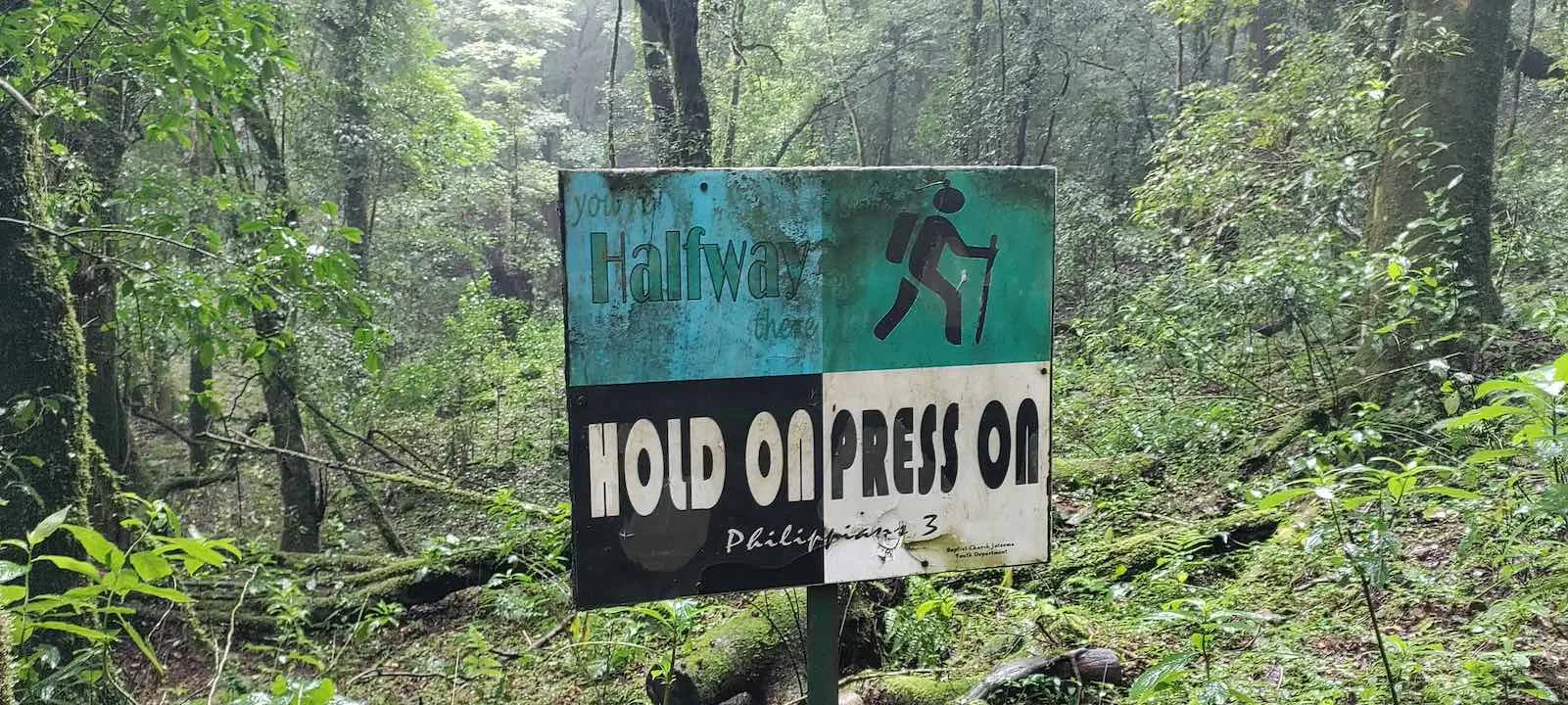
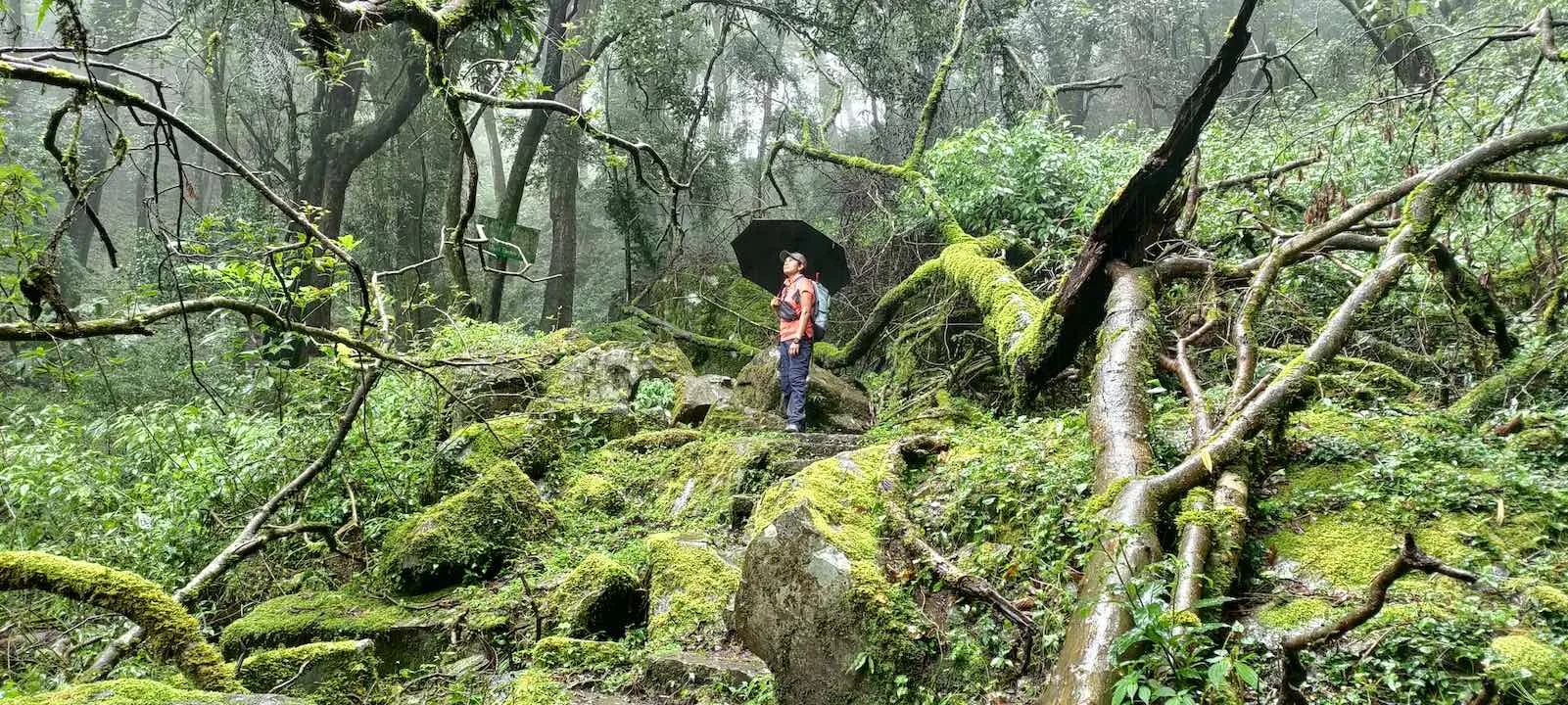
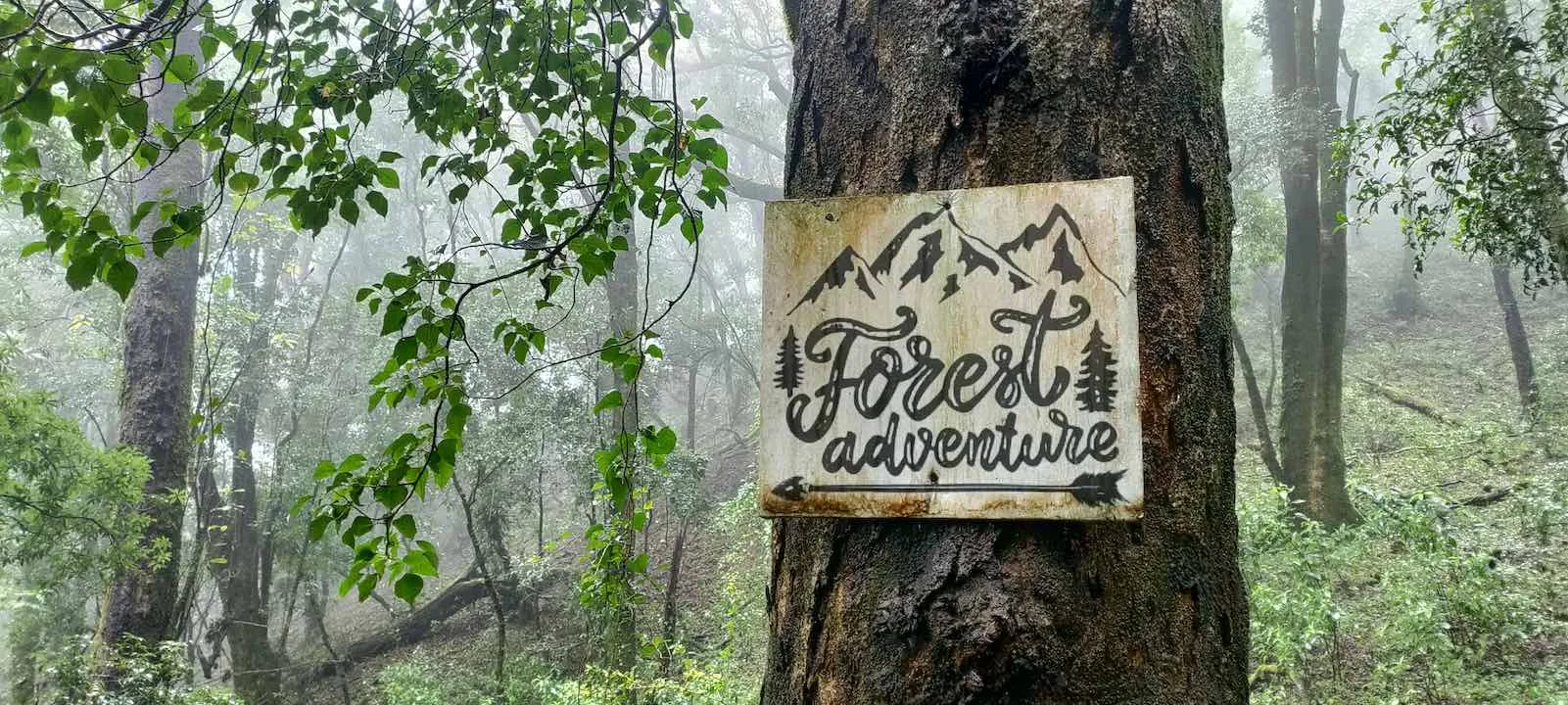
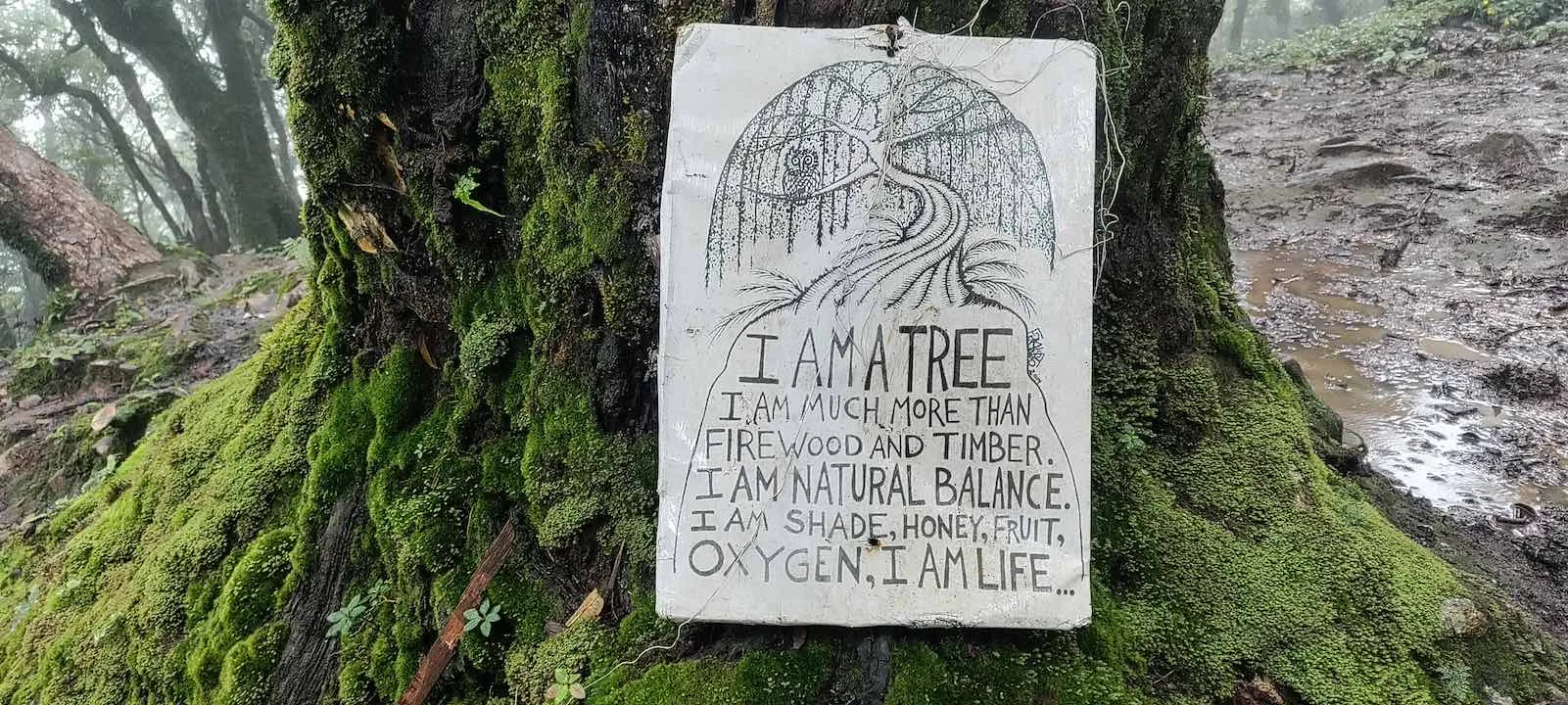
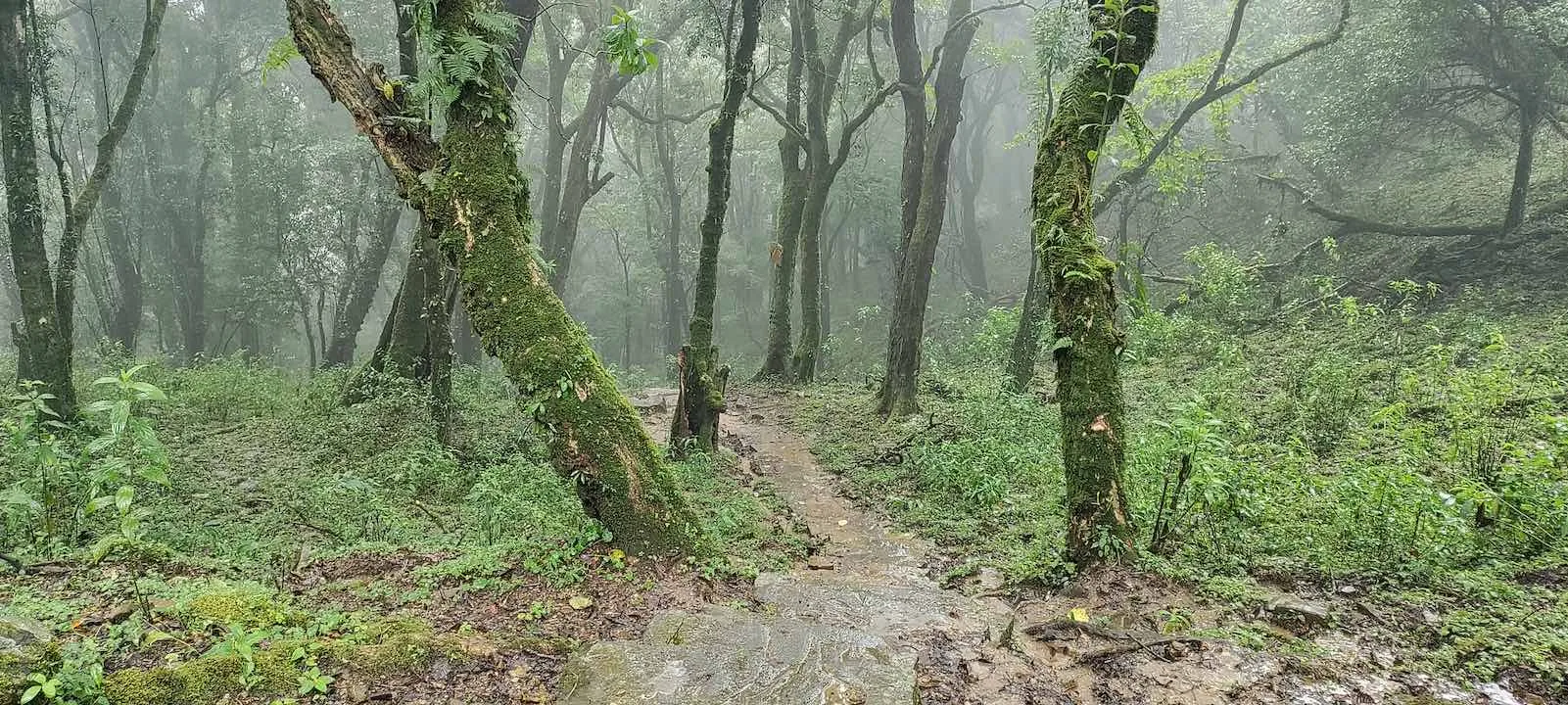
The trail is well-defined throughout, so navigation is relatively straightforward and a guide is not necessary.
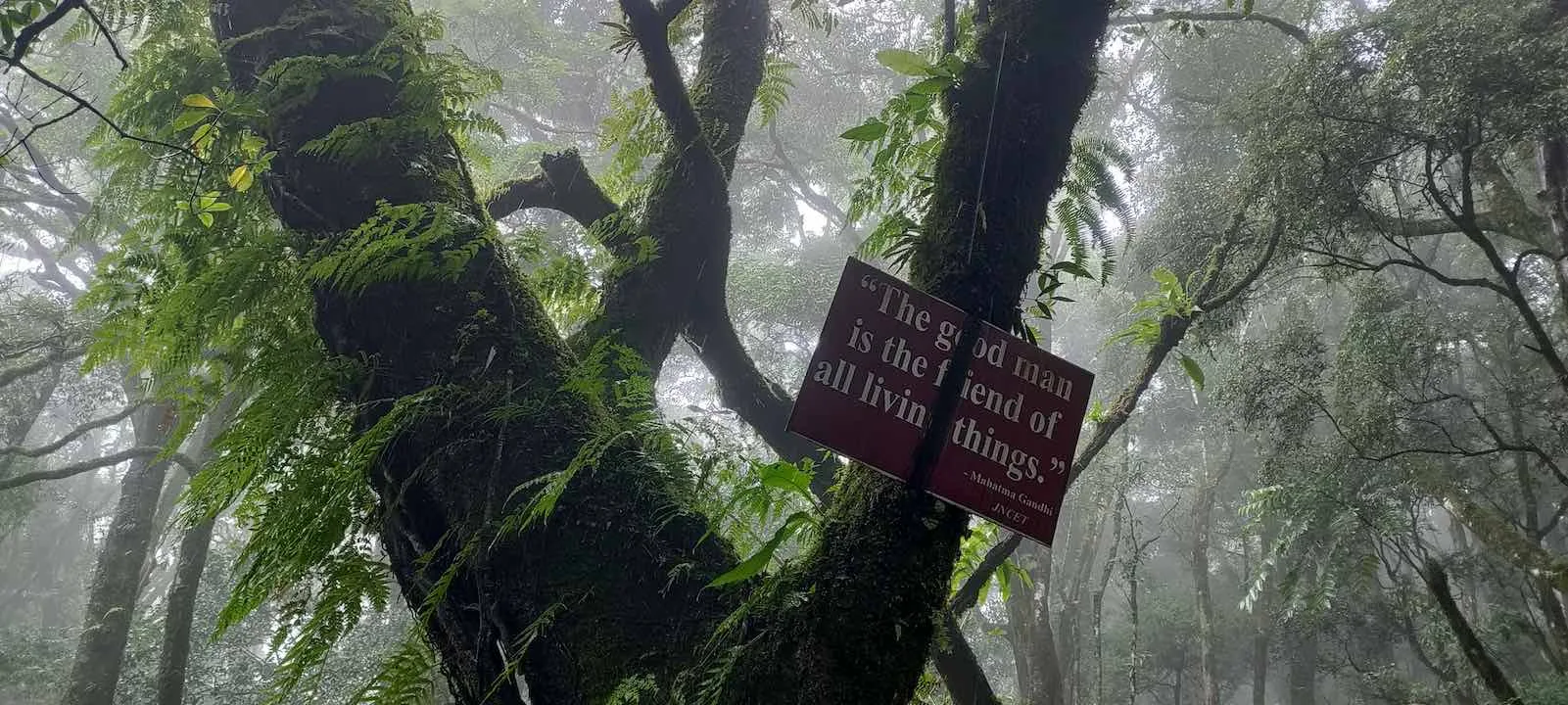
However, some sections can become slippery, particularly during wet weather. Rain and cloudy conditions can make the steps and trail more difficult to negotiate.
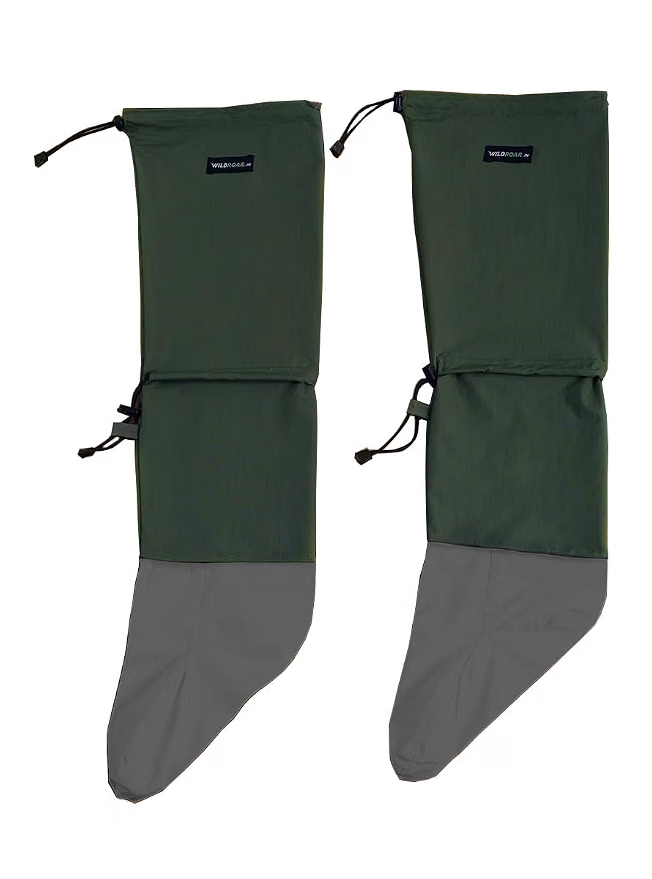
Leeches are also common, especially during wet conditions in September. Proper footwear and leech protection are recommended.
The Summit and the Legend of Puliebadze
At the summit, there is a shelter, a cross and a stone plaque describing the legend behind the name Puliebadze.
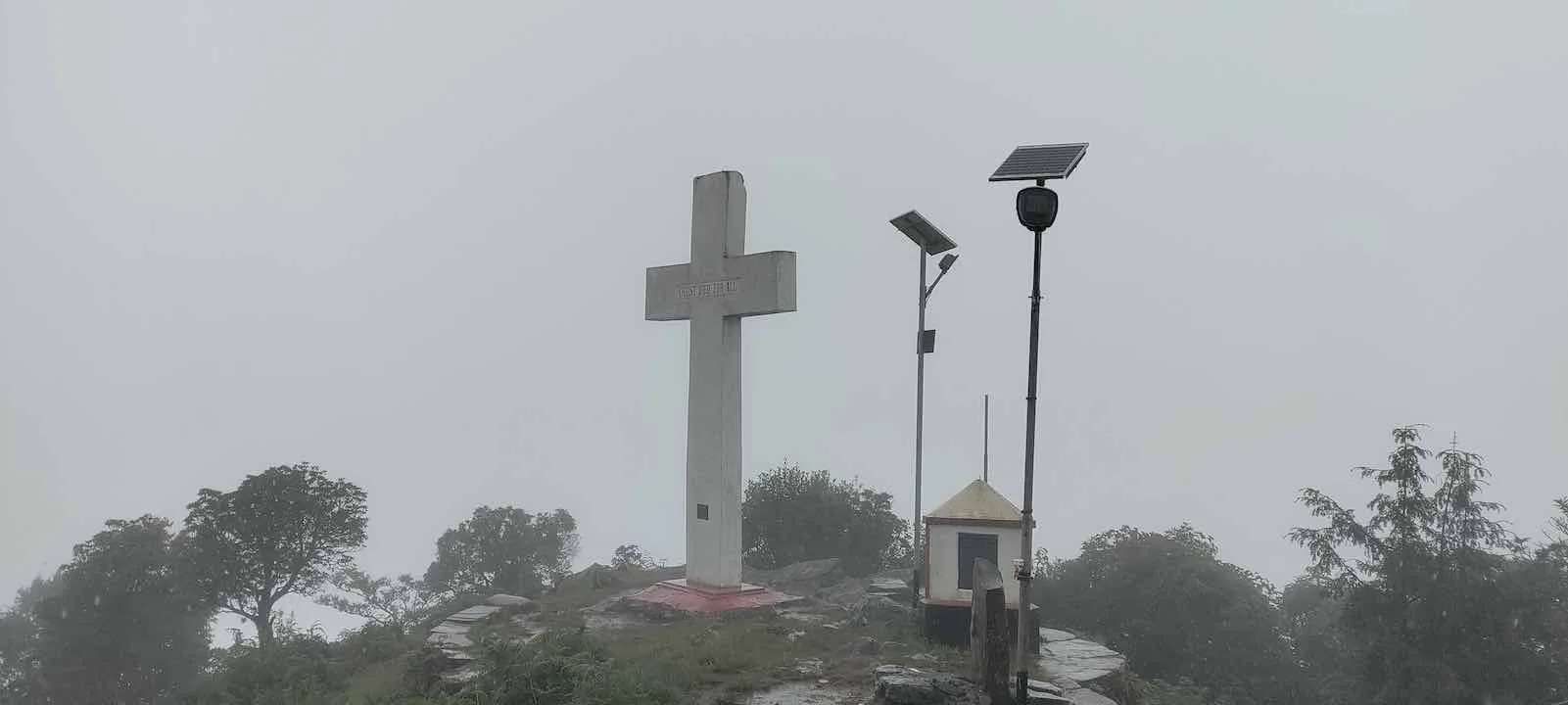
The Story of Puliebadze (as written on the summit plaque)
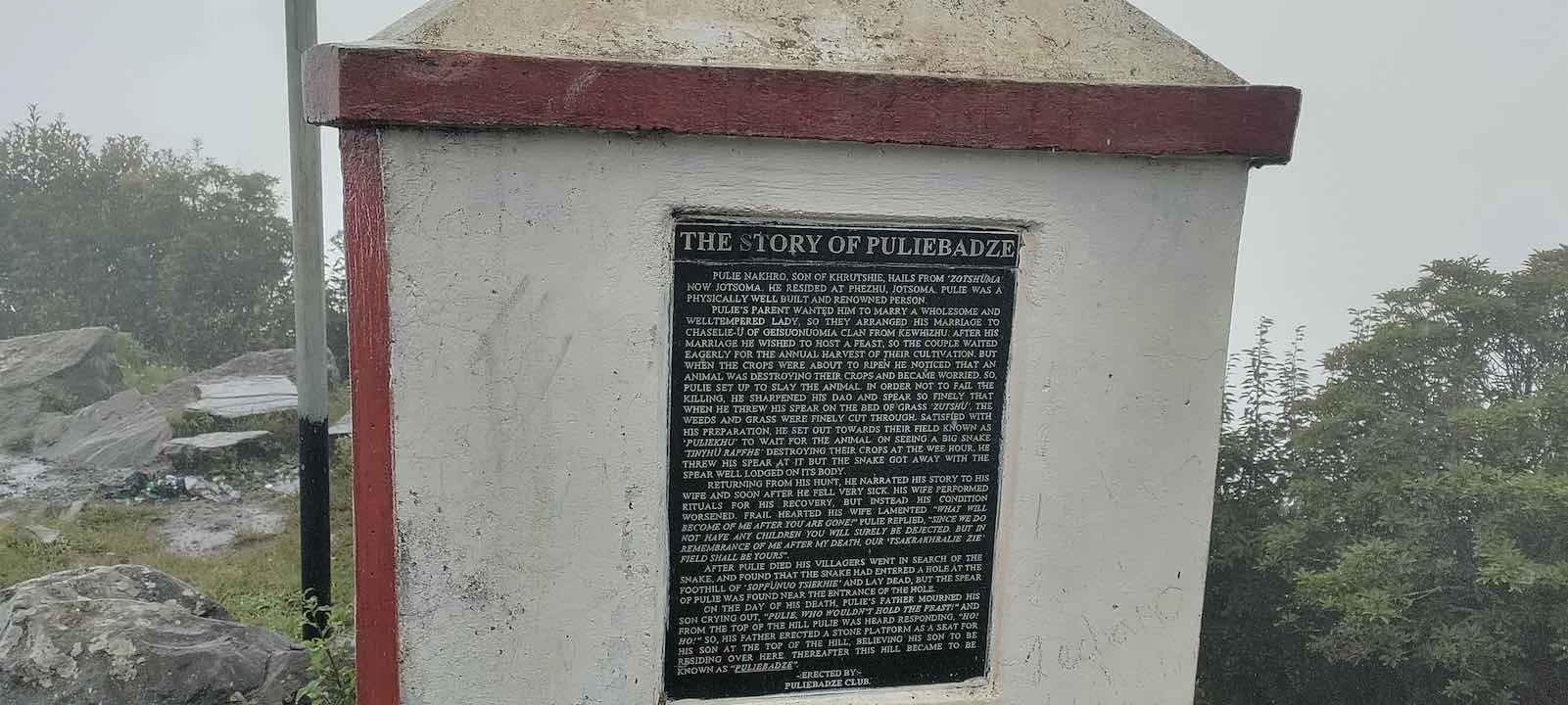
Pulie Nakhro, son of Khrutshie, hails from ‘Zotshuma’, now Jotsoma. He resided at Phezhu, Jotsoma. Pulie was a physically well built and renowned person.
Pulie’s parent wanted him to marry a wholesome and well-tempered lady, so they arranged his marriage to Chaseli-U of Geisuonuomia clan from Kewhizhu. After his marriage he wished to host a feast, so the couple waited eagerly for the annual harvest of their cultivation. But when the crops were about to ripen he noticed that an animal was destroying their crops and became worried. So, Pulie set up to slay the animal. In order not to fail the killing, he sharpened his dao and spear so finely that when he threw his spear on the bed of grass ‘Zutshu’, the weeds and grass were finely cut through. Satisfied with his preparation, he set out towards their field known as ‘Puliekhu’ to wait for the animal. On seeing a big snake ‘Tinyhu Rapfhe’ destroying their crops at the wee hour, he threw his spear at it but the snake got away with the spear well lodged on its body.

Returning from his hunt, he narrated his story to his wife and soon after he fell very sick. His wife performed rituals for his recovery, but instead his condition worsened. Frail hearted his wife lamented, “What will become of me after you are gone?” Pulie replied, “Since we do not have any children you will surely be dejected, but in remembrance of me after my death, our ‘Tsakrakharlie Zie’ field shall be yours”.
After Pulie died his villagers went in search of the snake, and found that the snake had entered a hole at the foothill of ‘Sopfunuo Tsiekhie’ and lay dead, but the spear of Pulie was found near the entrance of the hole.
On the day of his death, Pulie’s father mourned his son crying out, “Pulie, who wouldn’t hold the feast!” And from the top of the hill Pulie was heard responding, “Ho! Ho!” So, his father erected a stone platform as a seat for his son at the top of the hill, believing his son to be residing over here. Thereafter this hill became to be known as “Puliebadze”.
— Erected by —
Puliebadze Club.
Where to Eat After the Puliebadze Trek
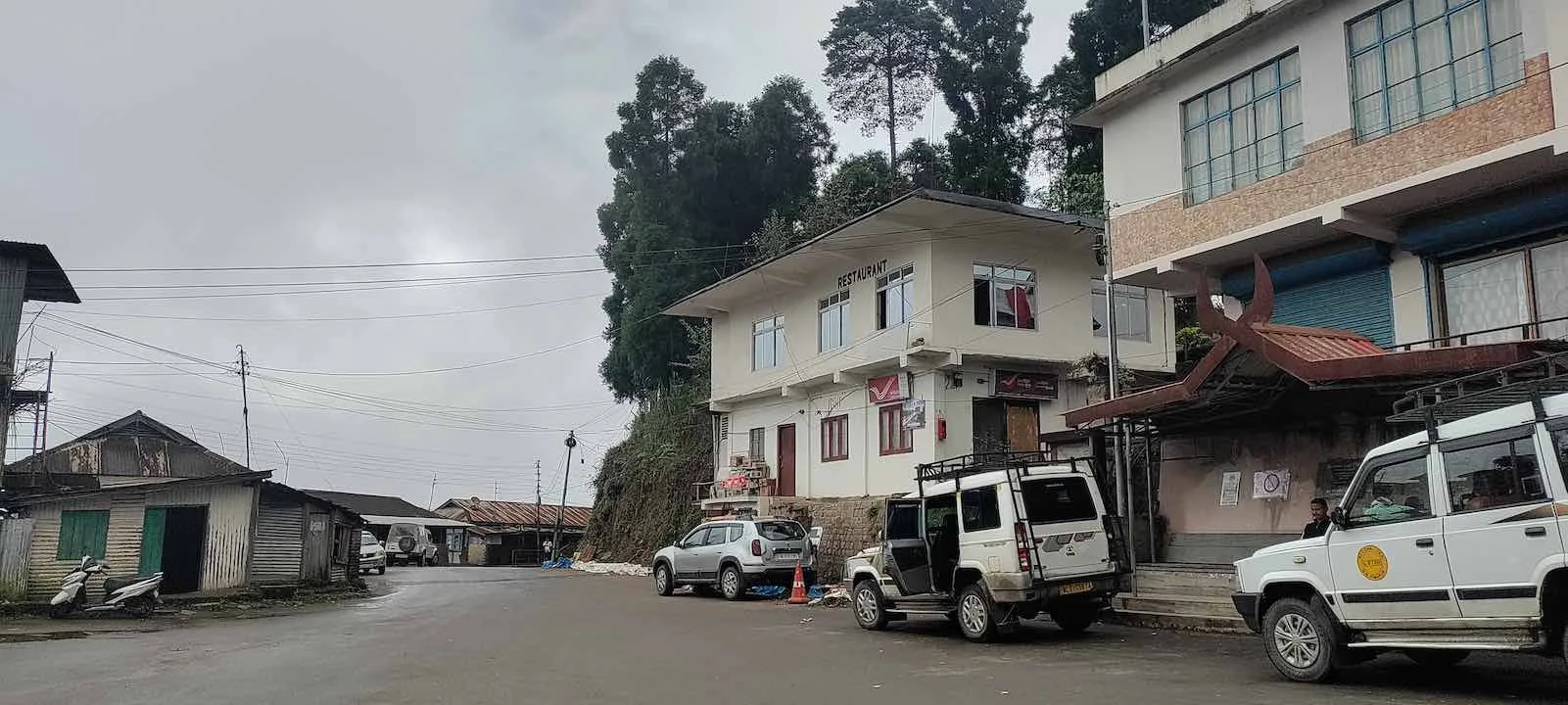
Following the Puliebadze hike, we returned to Kohima Science College and stopped at The Happy Table. It’s a small place with some unique anime-themed paintings on the walls. The food is straightforward but decent, with fried rice and chow available with chicken or pork. There’s also a clean toilet, which is useful before or after the trek.
Other attractions in Jotsoma
Puliebadze can easily be combined with a few nearby attractions, making it possible to turn the trek into a half-day trip from Kohima.
Jotsoma Scenic Houses
After returning towards Kohima Science College, make a stop at Jotsoma Scenic Houses, which is a short walk away.
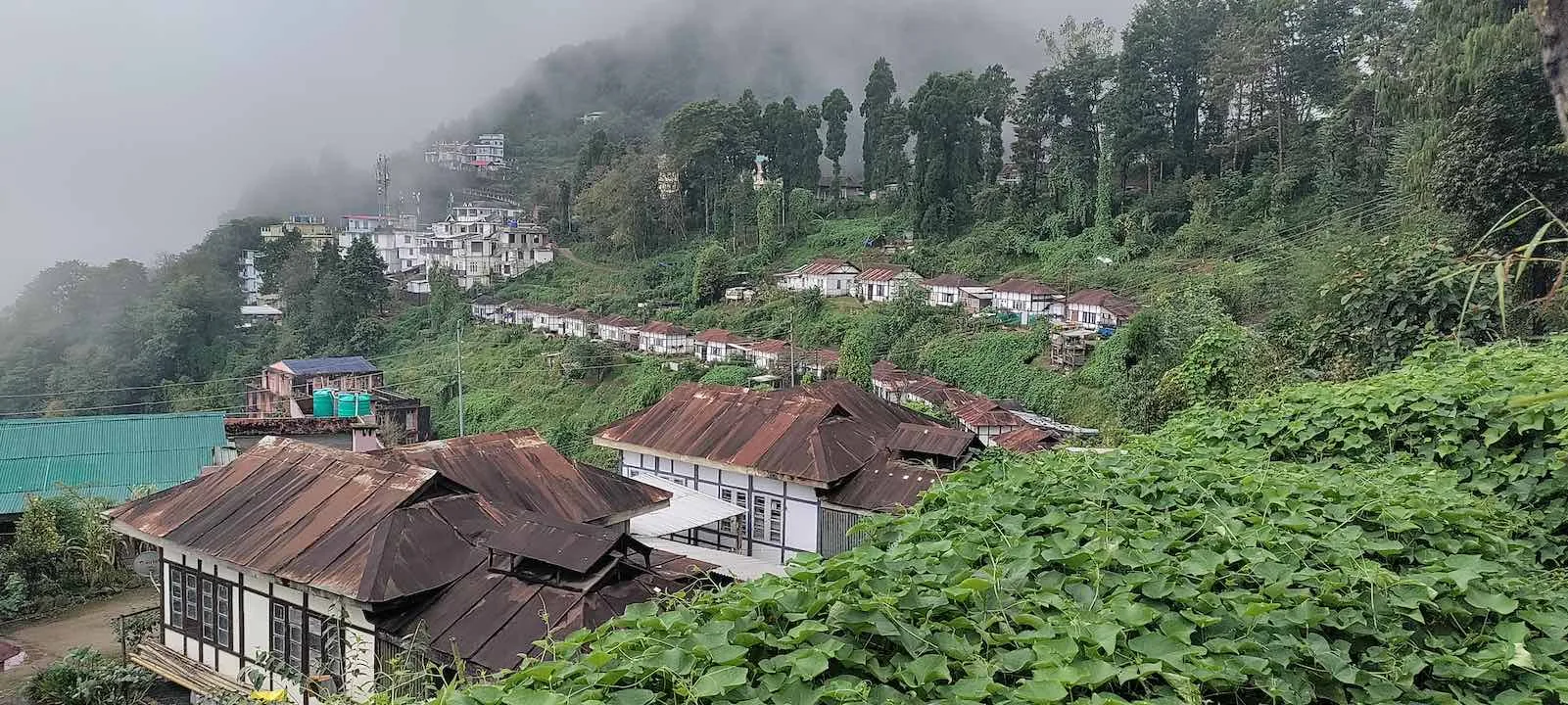
The place is a beautifully maintained village with two rows of identical houses, each with its own neat garden filled with flowers. The clean, orderly layout and colourful gardens make it a particularly pleasant place to walk around and take photographs.
It is a quiet contrast to the mountain trail and makes a nice addition to the Puliebadze trip, especially if you have some extra time after the hike.
Jotsoma Baptist Church

A short drive from Scenic Houses is Jotsoma Baptist Church, a large and peaceful church surrounded by greenery.
The church grounds are particularly beautiful, with well-kept lawns, plenty of trees and colourful flowers around the property. The church feels quiet and relaxed, making it a pleasant place to stop and take in the surroundings after the hike. The church also has a spacious ground that has been used for community gatherings and significant events in Jotsoma.
Jotsoma Baptist Church is an easy final stop before heading back to Kohima.
FAQs about Puliebadze
What is the cost of the entry ticket to Puliebadze?
The entry fee is ₹50/person · ₹50/two-wheeler · ₹100/taxi (light-vehicle) · ₹200/heavy-vehicle
How long is the Puliebadze trek?
The distance depends on the starting point. The shortest option from the Parking Point is approximately 1.2 km one way, while starting from Kohima Science College makes the route approximately 7 km one way.
How to get to Puliebadze?
Hiring a taxi from Kohima is the most convenient option. Taxis typically cost around ₹3000 from Kohima to Puliebadze and back, including the stop at Scenic Houses and the Baptist Church in Jotsoma.

What is at the top of Puliebadze?
The summit has a shelter, a cross and a stone plaque describing the legend of Puliebadze. It also offers panoramic views of the surrounding landscape and Kohima.
Do I need a guide for Puliebadze?
No. The trail is well-defined throughout, so a guide is not necessary.
Is there food and water on the Puliebadze trail?
There are food and water options around Kohima Science College.
Are there toilets at Puliebadze?
Yes. Toilets are available at the ticket counter, so it is best to use them before continuing towards the trail and summit.
Which is the shortest Puliebadze route?
The shortest route starts from the Parking Point and is approximately 1.2 km one way, with around 200 m of elevation gain.
Kind words are better than useful tools.
Poumai Naga proverb