
Mantafushi, sometimes referred to as Manta Island, is a newly reclaimed island connected to Maafushi in the Maldives. While the name is beginning to appear in local usage, many official documents still describe it simply as the Maafushi reclaimed area.
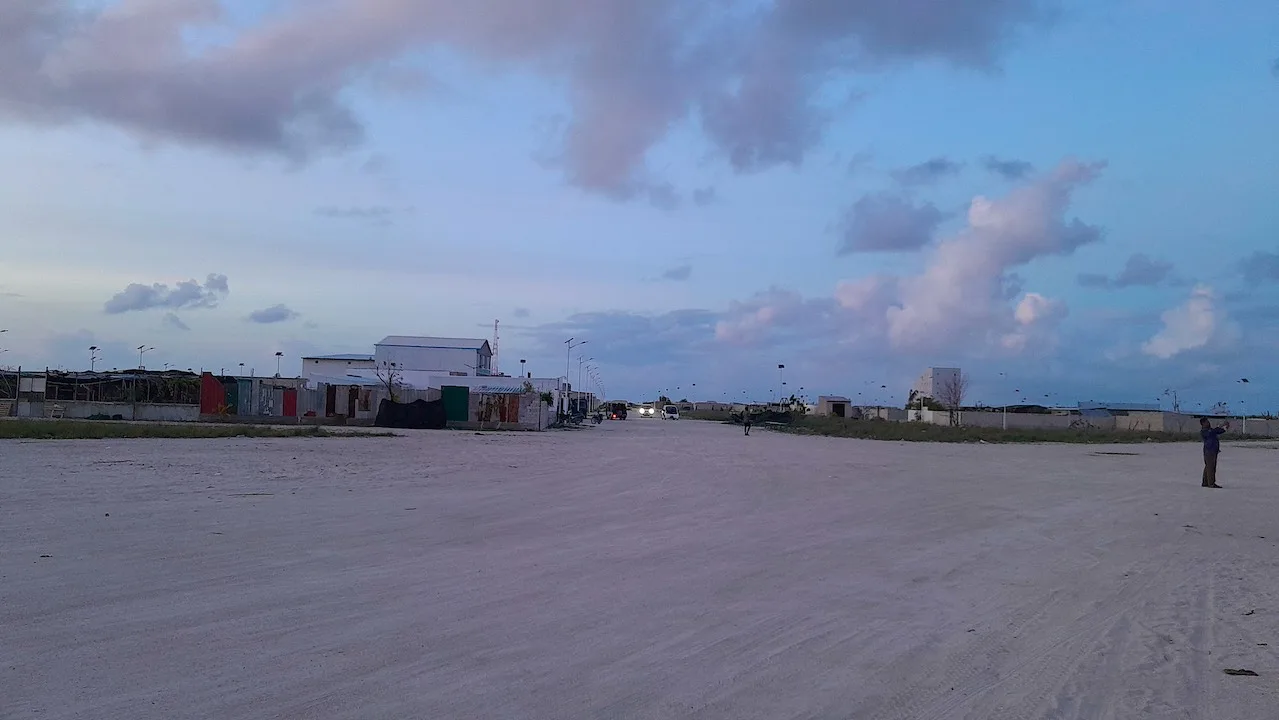
Despite its growing visibility, there is surprisingly little information available online. During my visit in May 2026, the island was largely empty, with wide roads, construction plots, and vast open spaces. There was only a single small restaurant, very few visitors and large sections of undeveloped land.
Walking around Mantafushi felt like travelling into the past and seeing what Maafushi itself might have looked like before tourism transformed it into one of the most popular local islands in the Maldives.
What is Mantafushi?
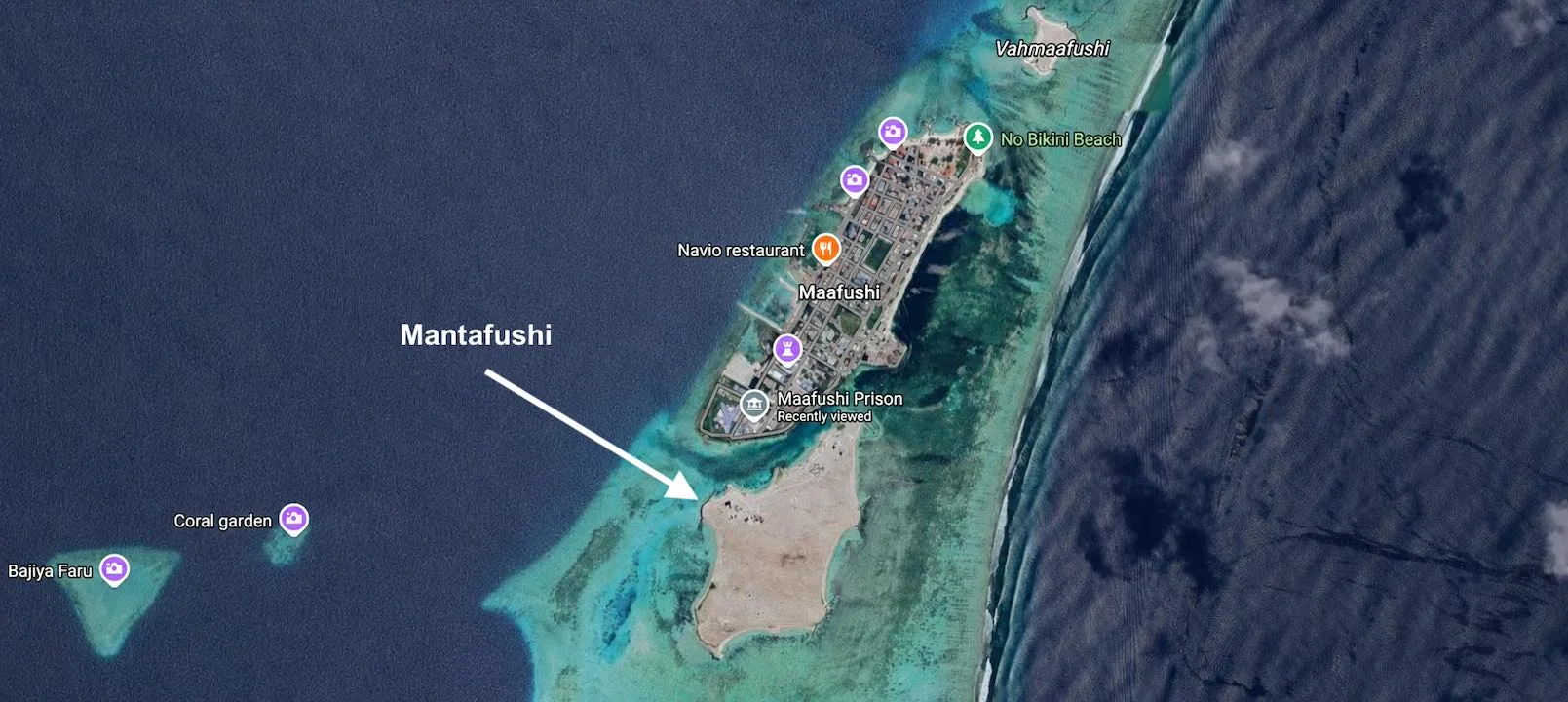
Mantafushi is a newly reclaimed island located immediately next to Maafushi in the Kaafu Atoll.
Unlike most natural Maldivian islands, Mantafushi did not exist in its current form a few years ago. It was created through a large-scale land reclamation project that pumped sand from the surrounding lagoon to create approximately 25 hectares of new land. The reclamation works were completed in June 2020.
The reclaimed area was developed primarily to address Maafushi’s growing shortage of land and to create space for future residential, commercial and tourism development.
Today, visitors can simply walk from Maafushi into the reclaimed area, making it feel less like a separate island and more like the newest neighbourhood of Maafushi. Wide roads, utility infrastructure and marked development plots already hint at the role this area is expected to play in the island’s future growth.
Quick Facts About Mantafushi (Manta Island)
| Feature | Details |
| Location | Adjacent to Maafushi |
| Atoll | Kaafu Atoll |
| Type | Reclaimed island |
| Area | Approximately 26 hectares |
| Physically connected to Maafushi | Yes |
| Development Status | Early-stage development |
| Best Time to Visit | Evening and sunset |
| Facilities | Extremely limited (with just one restaurant called Manta Vibes) |
| Crowds | Very low |
Why Was Mantafushi Created?
The answer lies in Maafushi’s success.
Over the past decade, Maafushi has become the centre of budget tourism in the Maldives. Guesthouses, dive centres, restaurants and tourism businesses expanded rapidly, while the island itself remained physically small.
As demand for housing and business space increased, the Maldivian government approved a major reclamation project to create additional land. The project reclaimed approximately 25 hectares from the lagoon adjacent to Maafushi.
The reclaimed area is expected to support:
- Residential housing
- Commercial development
- Tourism-related businesses
- Public infrastructure
- Future population growth
How Mantafushi Was Built
Mantafushi was created through land reclamation. This process involved:
- Dredging sand from the surrounding lagoon.
- Pumping the sand into a designated area.
- Raising the elevation above sea level.
- Constructing coastal protection structures.
- Building roads and utilities.
The Shape of Mantafushi
One of the most fascinating details about Mantafushi is its shape. Viewed from satellite imagery, the reclaimed land resembles a manta ray, which likely explains the name “Mantafushi”.
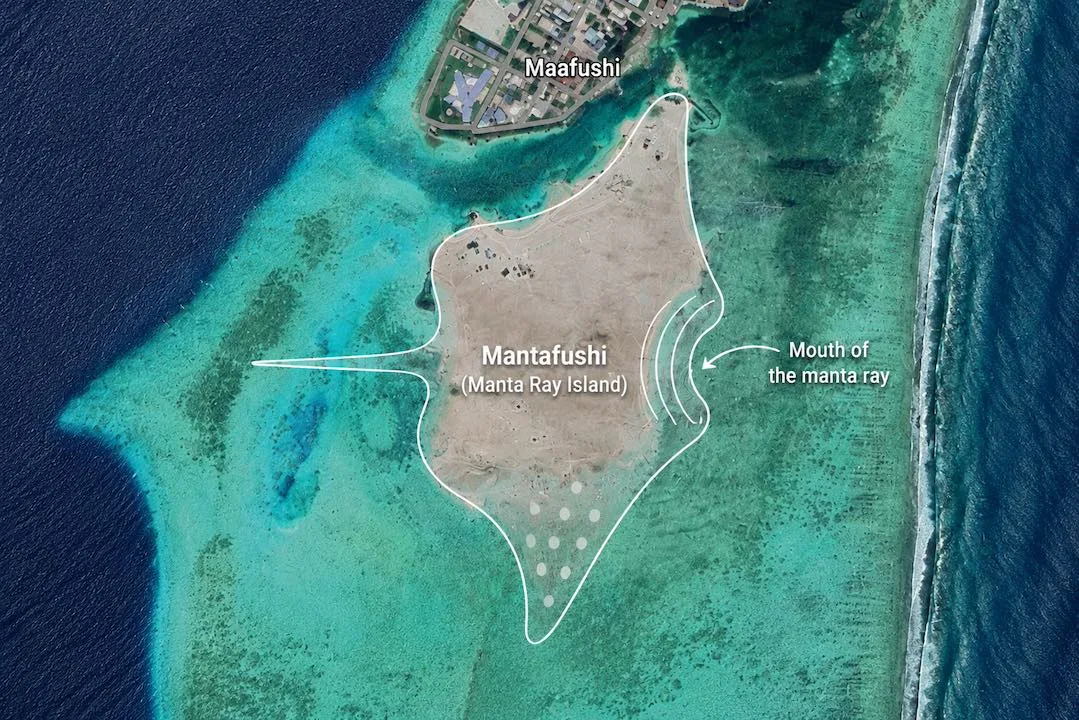
While no official statement explicitly confirms that the island was intentionally designed to resemble a manta ray, the similarity is difficult to ignore when viewed from above.
This makes Mantafushi one of the few reclaimed islands in the Maldives with a distinctive outline.
How to go from Maafushi to Mantafushi
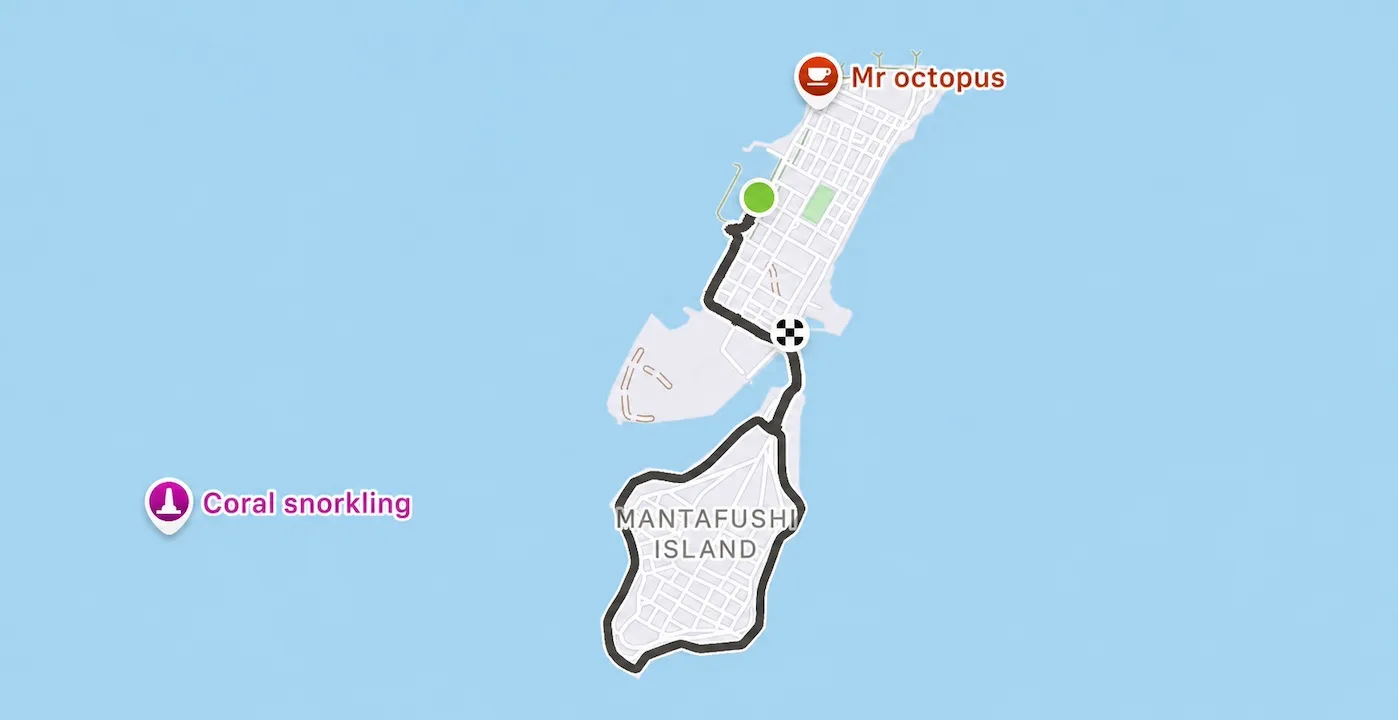
One of the best aspects of Mantafushi is how easily accessible it is. Unlike most excursions in the Maldives that require a boat, Mantafushi can simply be reached on foot from Maafushi and it is possible to explore the entire perimeter relatively quickly.
To get to Mantafushi, walk straight past Maafushi Prison, keeping the Maafushi Prison Gate on your right. Continue to the end of the road, then turn right onto a white sandy road that leads towards Mantafushi. Continue on this road for around 500m to reach Mantafushi.
From Maafushi Prison, it takes around 45 minutes at a moderate pace to walk to Mantafushi, complete a circuit of the island’s outer perimeter and return to the starting point.
The Best Part of Mantafushi: The Coconut Grove & Sunset
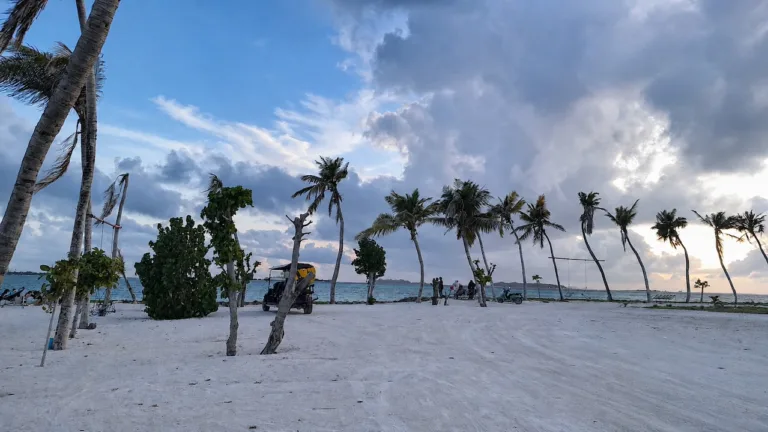
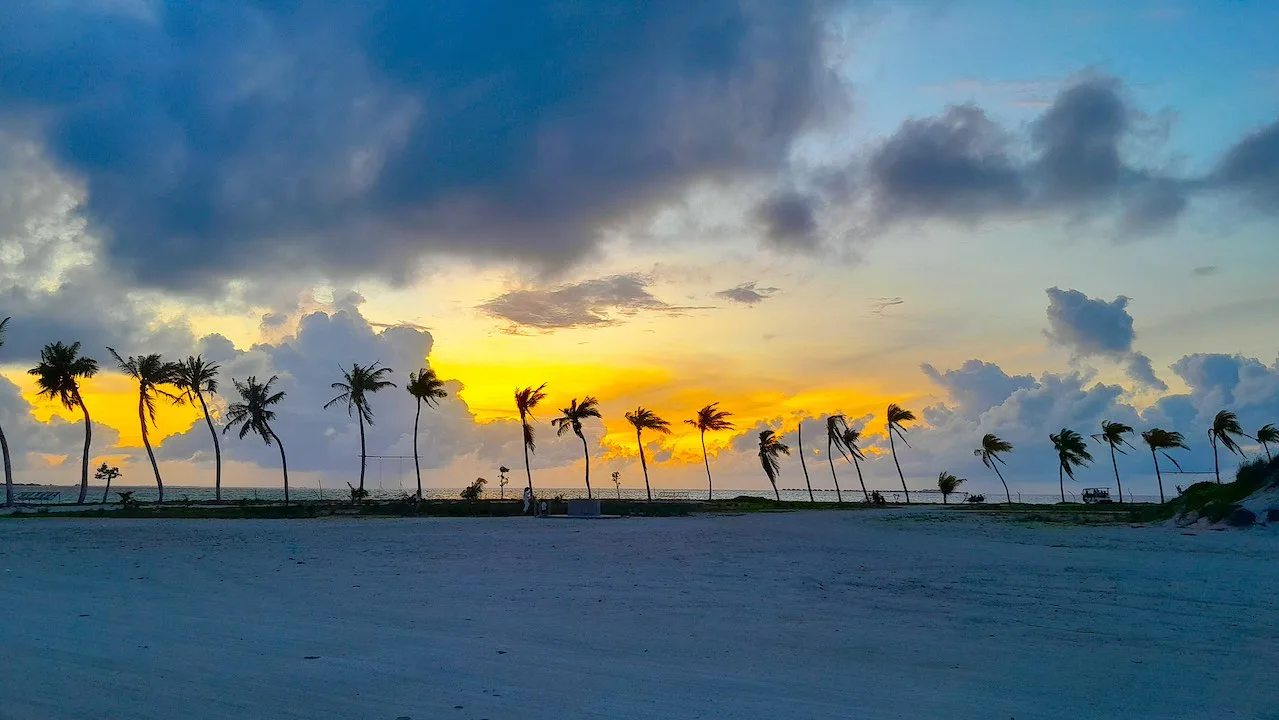
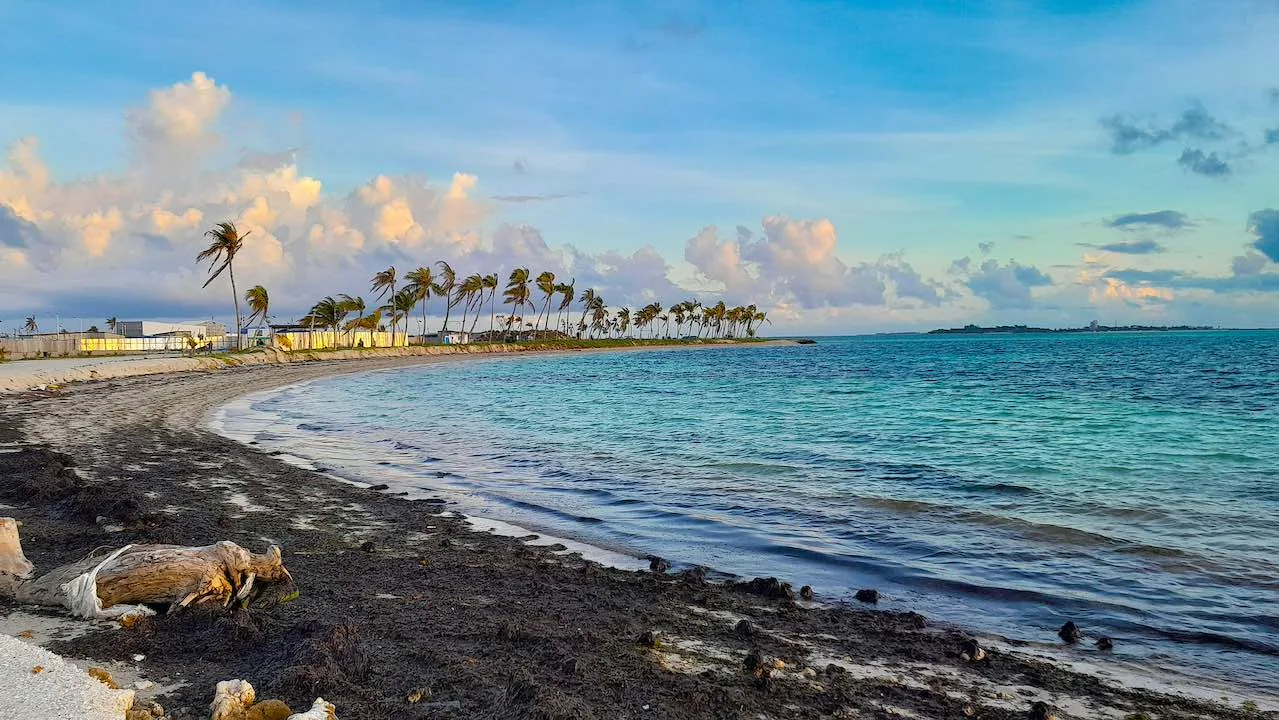
The highlight of my visit to Mantafushi was the coconut grove along the island’s outer shoreline. Compared to the busy beaches of Maafushi, this part of the island felt surprisingly peaceful and undeveloped. Rows of coconut trees lined the waterfront, with swings and seating areas placed beneath them, creating a quiet space to relax and enjoy the sea views.
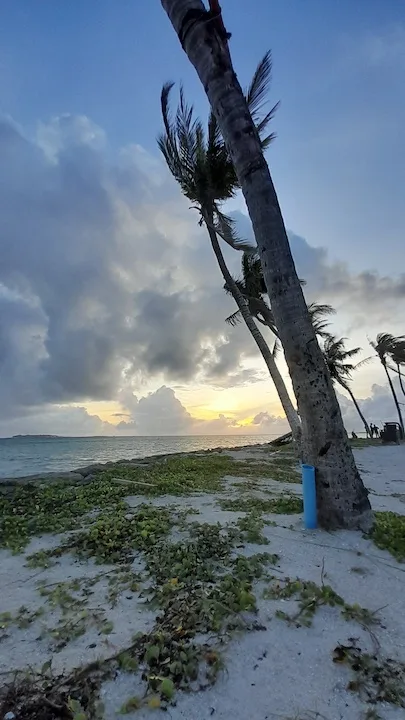
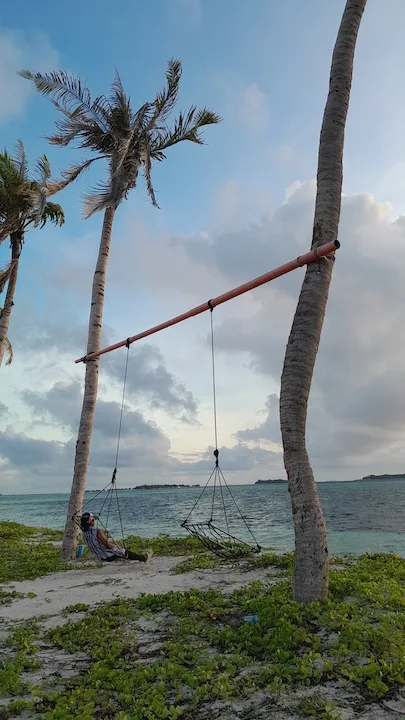
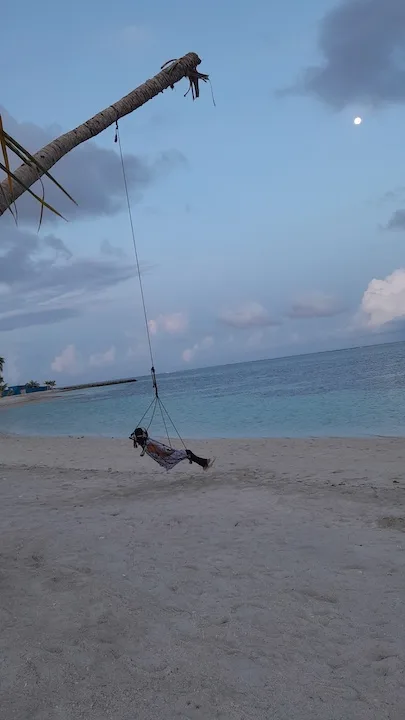
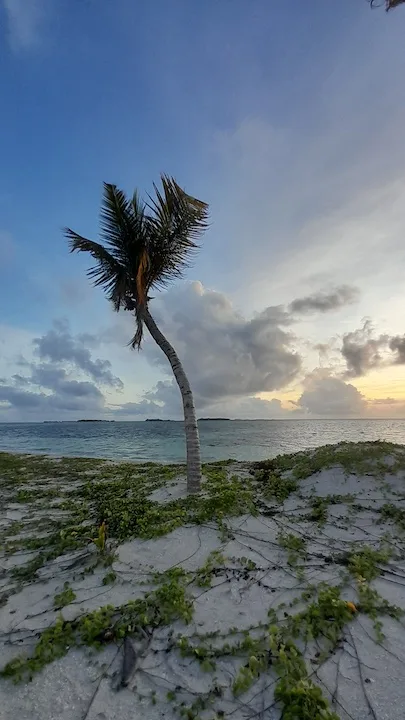
Several locals told me that this is one of the best sunset spots in the area, and after spending an evening there, I can understand why. The shoreline faces an open horizon, and provides a beautiful unobstructed view of the sun sinking into the Indian Ocean.
If you’re staying in Maafushi, visiting Mantafushi around sunset is probably the best reason to come. Even though much of the island is still under development, this quiet stretch of coastline already feels like one of its most appealing features.
Is Mantafushi Worth Visiting?
For most travellers, Mantafushi is not a destination in its own right. There are no major attractions, resorts or beaches specifically designed for tourism. However, if you’re staying in Maafushi, it is well worth spending an hour or two exploring. The island offers a rare opportunity to see one of the Maldives’ newest reclaimed developments, enjoy a peaceful sunset away from the crowds and experience a side of the country that few visitors currently know exists.
Final thoughts on Mantafushi
Mantafushi may currently look like an empty stretch of reclaimed land, but it represents something much bigger: the next chapter in Maafushi’s story.
Today, it is a quiet place of open spaces, coconut trees and sunset views. Tomorrow, it could become a major residential and tourism district.
If you’re visiting Maafushi now, this is the perfect time to experience Mantafushi before the hotels, restaurants and crowds arrive. The island offers a rare snapshot of a destination in transition—a glimpse of what the future Maldives might look like.
Every wave reminds us that persistence shapes even the strongest shores