

If you’re in Gangtok and wondering whether Pelling and Yuksom are worth it, they are. In just 3 days, you can cover some of the best places to visit in West Sikkim, including stunning viewpoints, waterfalls, quiet monasteries, sacred lakes, and some of the best Kanchenjunga views in the region.
This 3-day itinerary takes you through all the key places to visit in Pelling and Yuksom, along with transport options (including taxi contacts), accommodation, cost breakdown, and practical travel tips to help you make the most of your trip.
Gangtok to Pelling & Yuksom Itinerary Overview
- Duration: 3 days.
- Day 1: Gangtok to Pelling (Tarey Bhir, Maniram Peri Monastery, check-in).
Day 2: Pelling to Yuksom day trip (Kanchenjunga Falls, Khecheopalri lake, Dubdi Buddhist Monastery, Norbu gang and others).
Day 3: Pelling sightseeing (Sky Walk, Pelling Ropeway, Pemayangtse Monastery, Sidkeong Bird Park and Rabdentse Ruins) → Return to Gangtok.
- Day 1: Gangtok to Pelling (Tarey Bhir, Maniram Peri Monastery, check-in).
- Route: Gangtok -> Pelling -> Yuksom -> Pelling -> Gangtok.
- Best for: Nature, monasteries, short scenic trip.
- Total distance: ~260 to 300 km (round trip)
- Travel time: ~6 to 7 hours (Gangtok to Pelling)
- Transport: This itinerary is best done by hiring a taxi from Gangtok.
- Accommodation: Stay at a hotel in Pelling.
This is a packed but comfortable itinerary, ideal for a quick West Sikkim trip. For a quicker overview of all the major attractions, check out my separate guide to the best places to visit in Pelling & Yuksom.

Detailed 3-Day Pelling & Yuksom Itinerary
Day 1: Gangtok to Pelling (via Tarey Bhir)
Tarey Bhir
We left early from Gangtok, grabbing breakfast on the way, and reached Tarey Bhir by late morning.
Tarey Bhir is one of the most scenic stops on this route, a long ridge walk with sweeping views of the surrounding hills and winding roads below. The full trail is around 3 km one way and eventually descends towards the base of the mountain. Since we had to reach Pelling on time, we covered about 1 km and returned. It took us around an hour.
The trail itself is easy to follow, with steps in many sections, but there are some ups and downs along the ridge. If you want to complete the full stretch, it’s best to start early. You can also walk right up to the cliff edge for some of the best views.
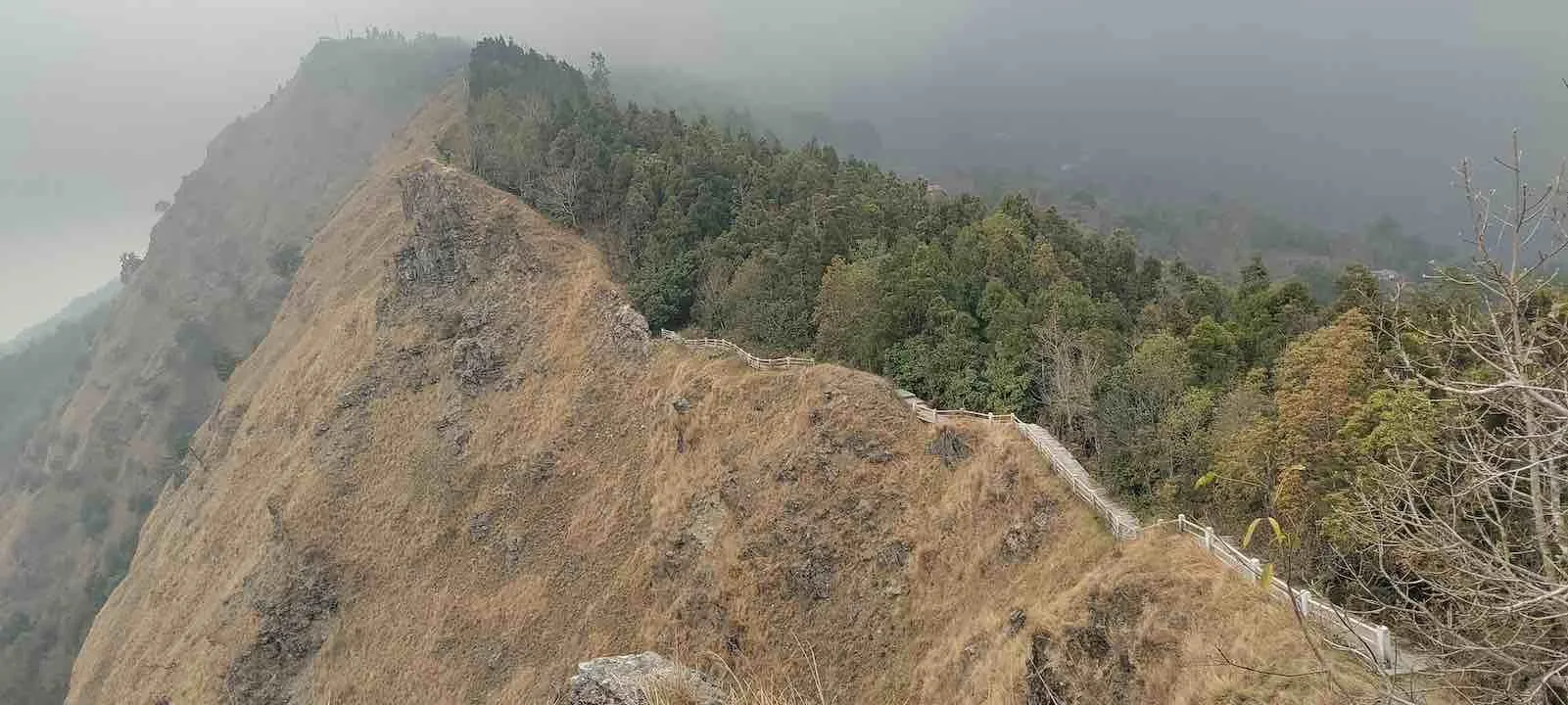
There’s a small entrance gate with a ticket counter at the start.
Maniram Peri Monastery
Next, we made a quick stop at Maniram Peri Monastery, located about 8 km from Tarey Bhir. It’s a relatively lesser-known monastery (consecrated in 2018), and the peaceful setting makes it worth a short halt.
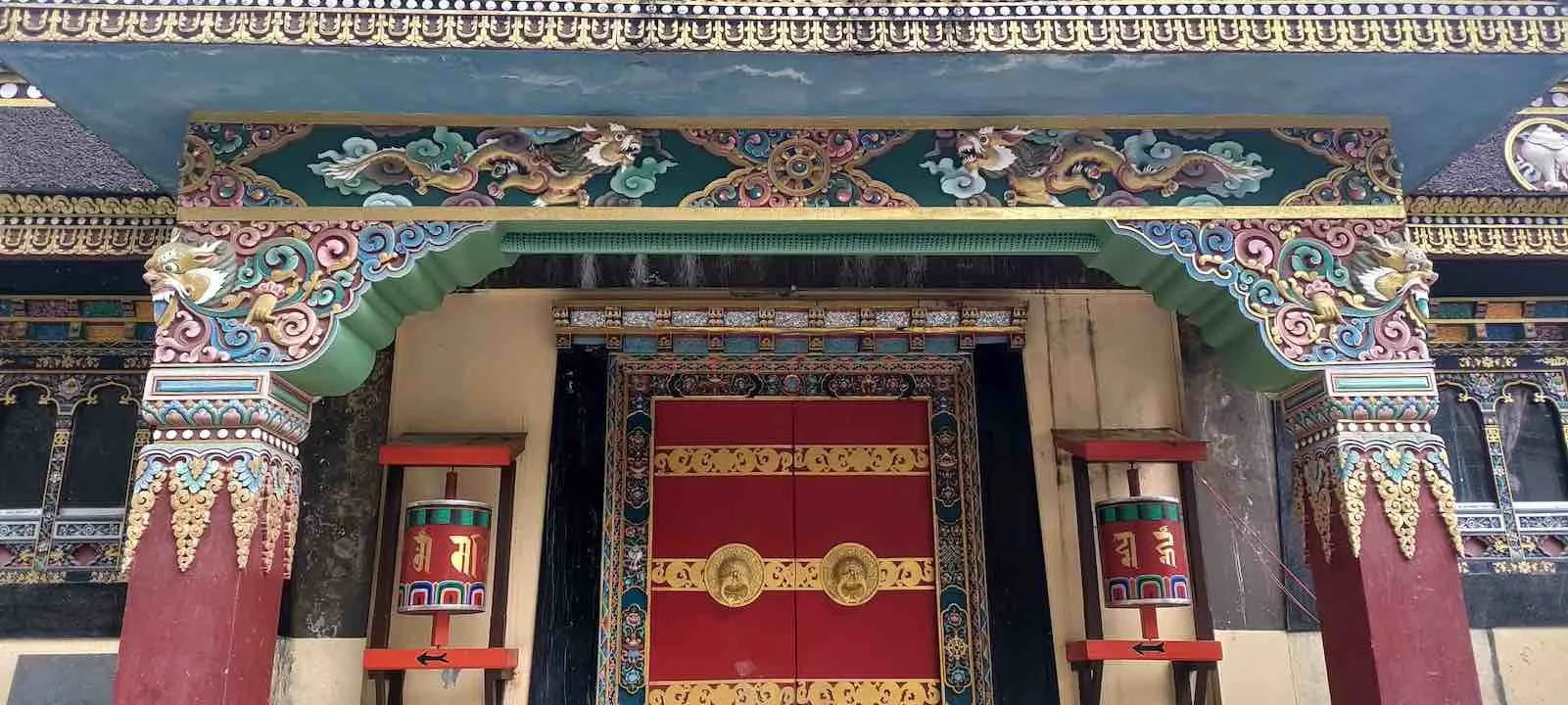
The monastery complex is quiet, with prayer wheels and occasional birds adding to the calm atmosphere. It doesn’t take long to explore, but it’s a nice break in the journey before continuing towards Pelling.
Check-in to Hotel Sikkim Aurora
We reached Pelling by around 7 PM and checked in at Hotel Sikkim Aurora. Dinner was included with our stay, and I’ve shared more details about the hotel below.
Day 2: Pelling to Yuksom Day Trip (Places to Visit in Yuksom)
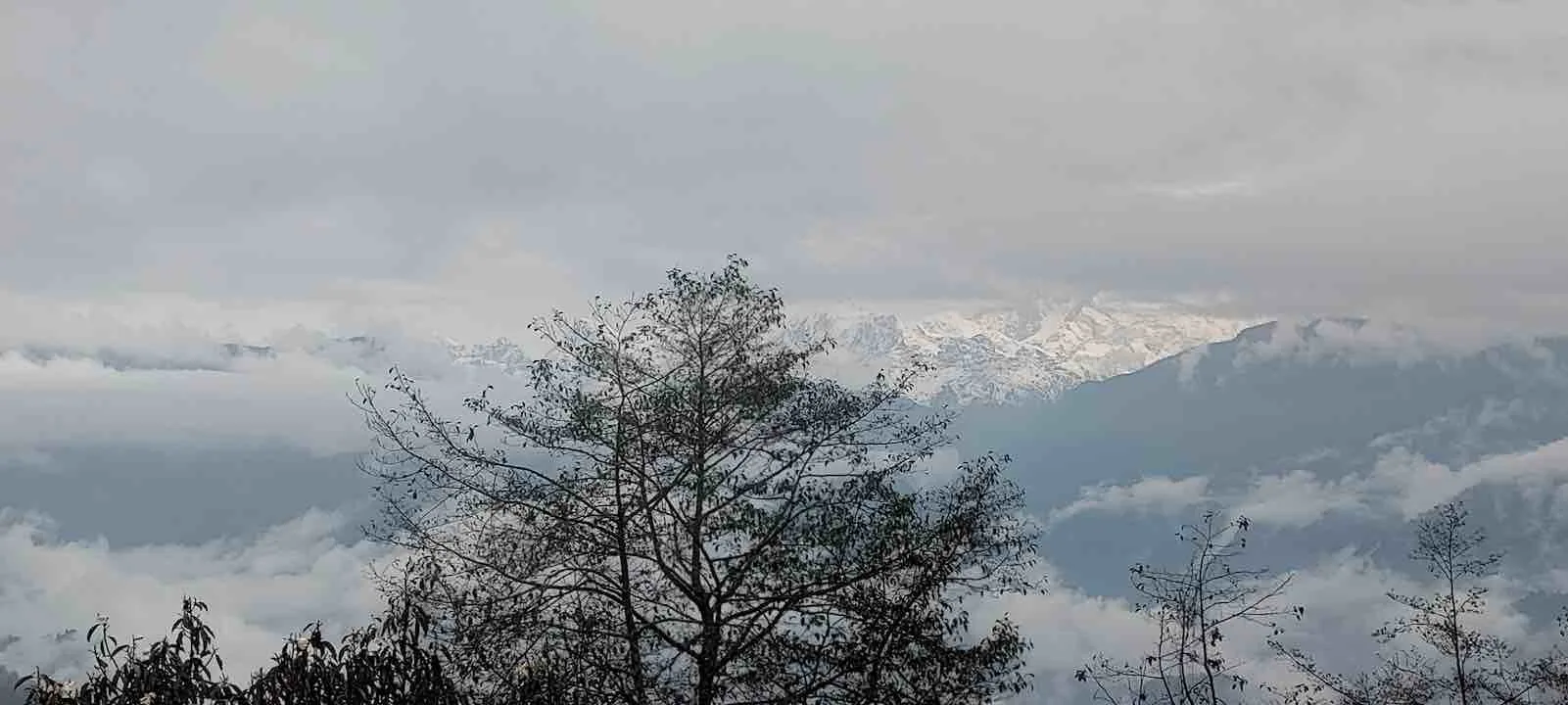
We started the day early and headed to the terrace to catch a glimpse of Kanchenjunga. On a clear morning, the snow-capped peaks are visible right from Pelling, and it’s easily one of the highlights of the stay.
Yuksom
Yuksom is a small, peaceful village peaceful village about 35–40 km from Pelling (around 1.5 to 2 hours by road), and it feels completely different from the more touristy parts of Sikkim. It’s quiet, uncrowded, and has a laid-back charm, with locals who are warm and welcoming.
Historically, Yuksom holds great importance, it was the first capital of Sikkim and is also the starting point for the popular Goechala trek. When we visited, there happened to be a big local wedding, so most of the village was there, making the place feel even quieter than usual.
Dubdi Monastery
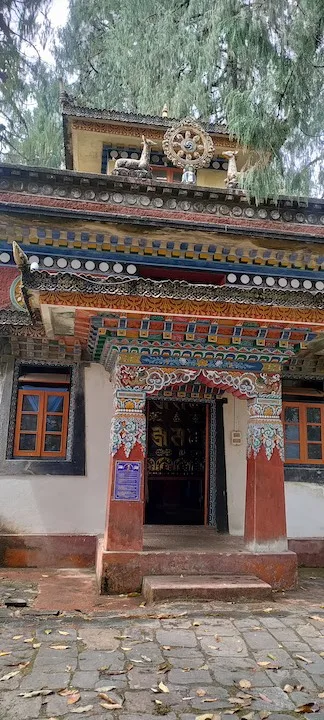
Dubdi Monastery is one of the most important stops in Yuksom and is believed to be the oldest monastery in Sikkim, built in 1701.
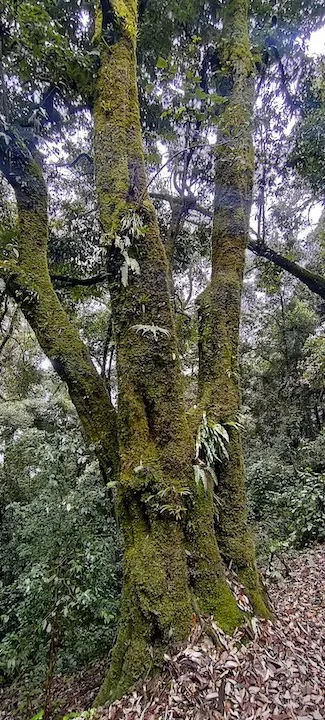
Reaching the monastery involves a short uphill walk through a dense green forest. There are two entry points: one of them takes a longer 30–40 minute climb, while the other (marked by a blue board from the Archaeological Survey of India) is a much shorter and easier route. It’s worth asking locals to find the right entrance.
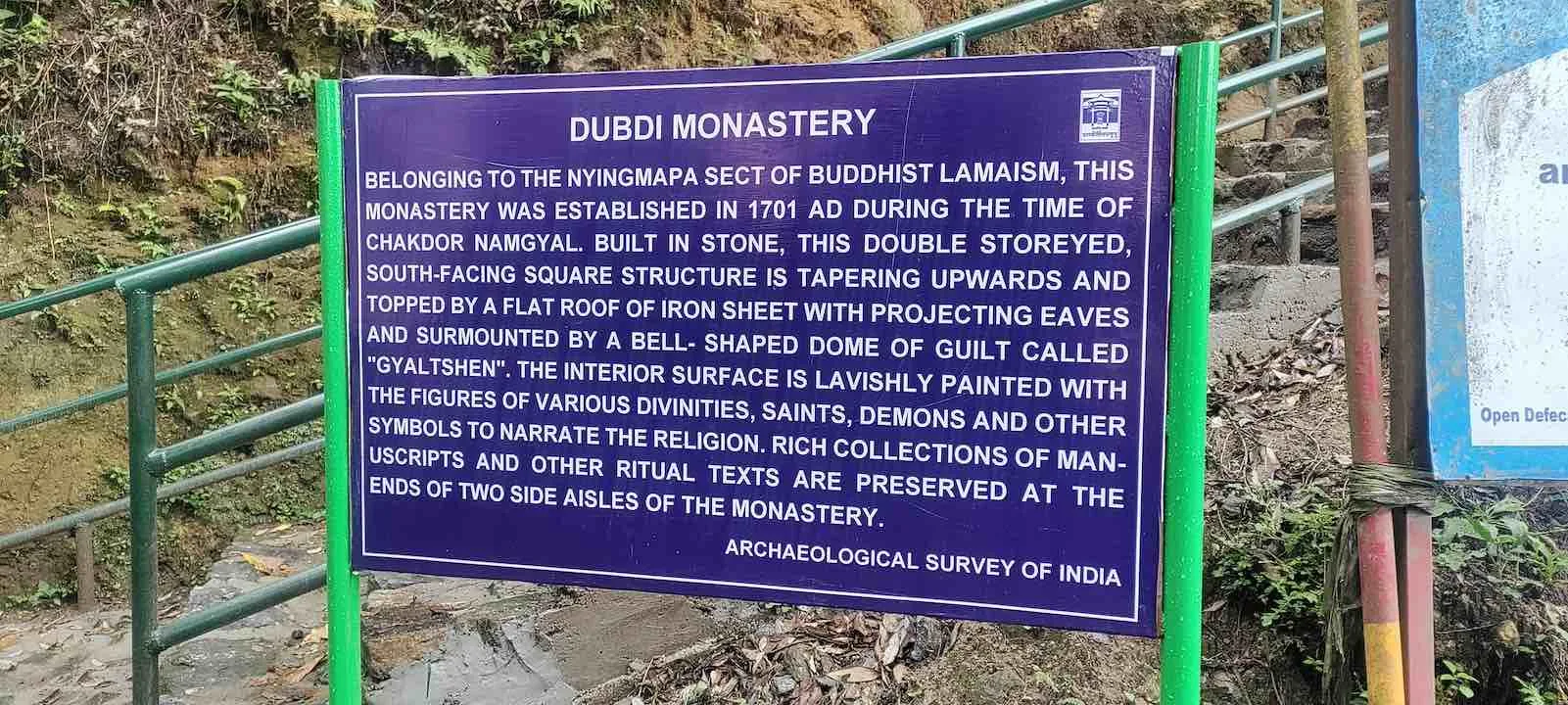
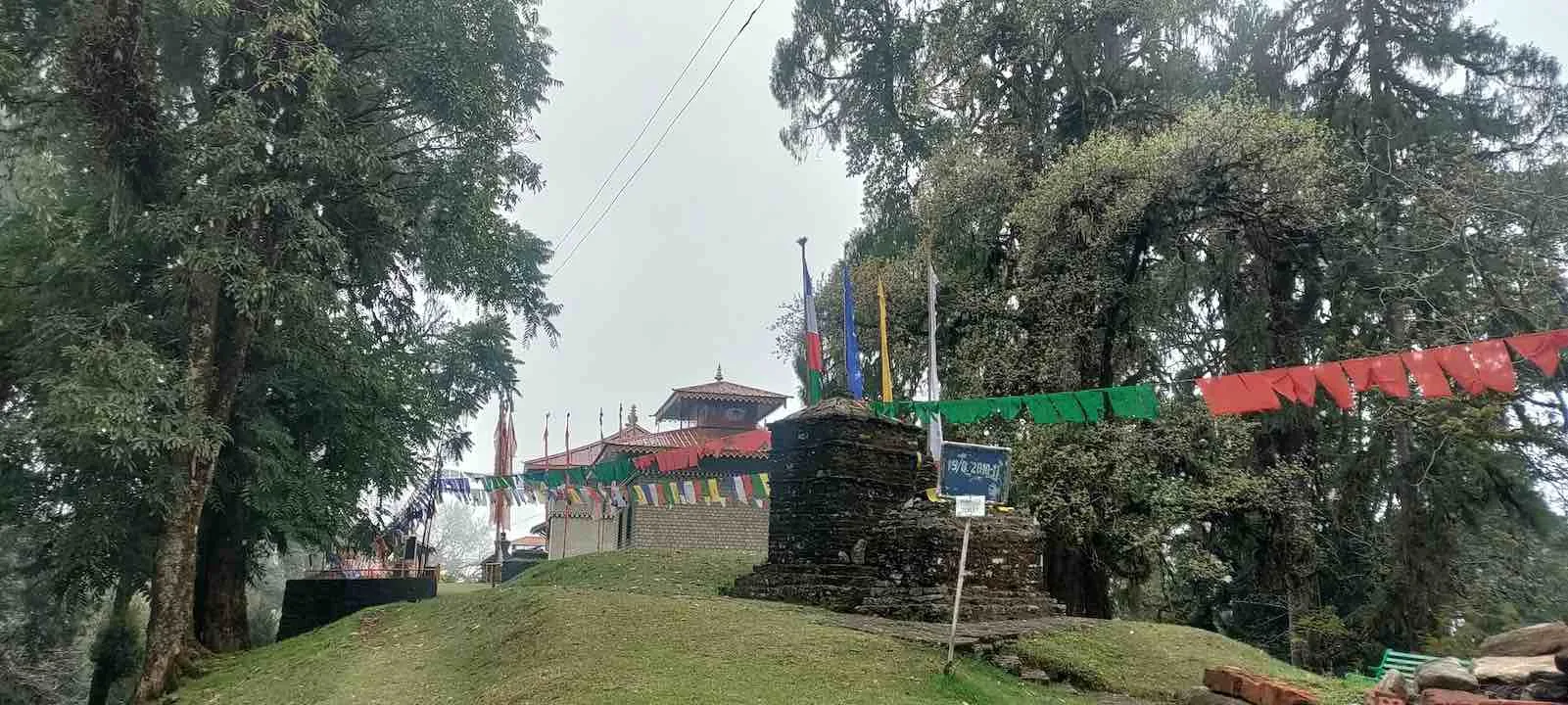
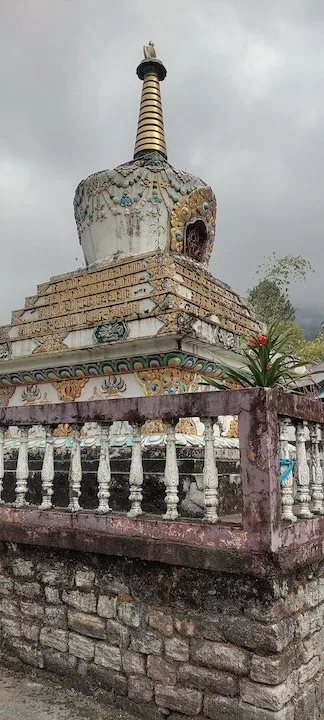
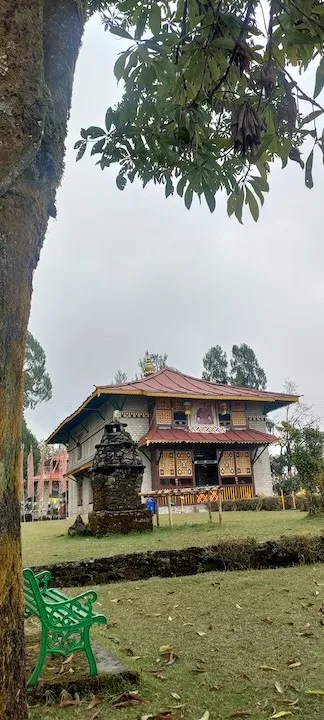
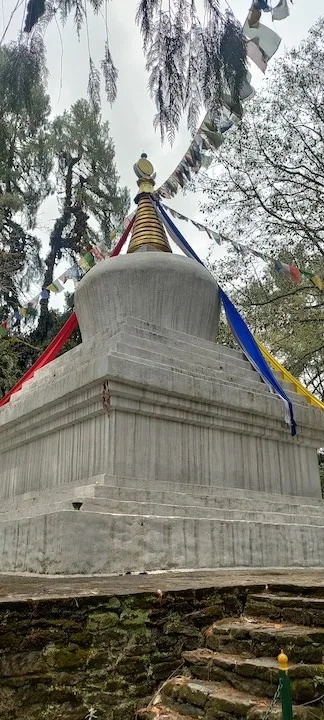
The monastery itself is a grand colourful structure on a quiet green clearing, surrounded by stupas, some of them very old. The interiors are richly decorated with traditional Buddhist paintings depicting deities and religious symbols.
According to local history, the monastery belongs to the Nyingmapa sect of Buddhism and was established during the reign of Chagdor Namgyal. It also houses old manuscripts and ritual texts.
There’s a calm, almost meditative atmosphere here that makes it worth the short hike.
Kathok Lake and Monastery
Our next stop was Kathok Lake, a sacred lake located close to the main town.
Surrounded by hundreds of colourful prayer flags, the lake looks especially beautiful when the wind picks up and the flags flutter across the water. You can also spot fish and frogs in the lake, adding to the natural charm.
Karthok Lake is considered a “soul lake” (Lahtsho) of Lama Kathok Kuntu Zangpo, one of the early Buddhist figures associated with the region. It is believed to have been used for spiritual and oracular practices, and even today, annual purification rituals are performed here by monks.
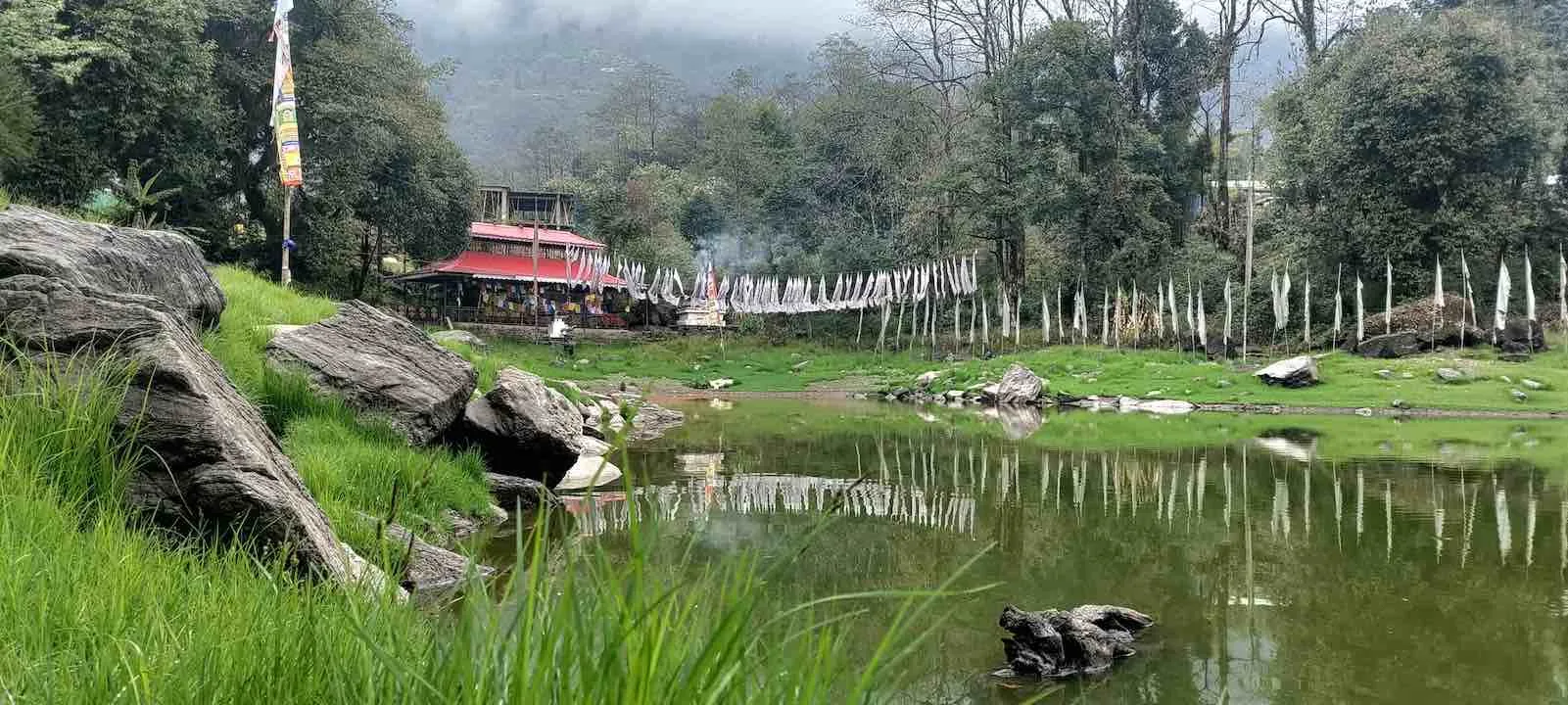
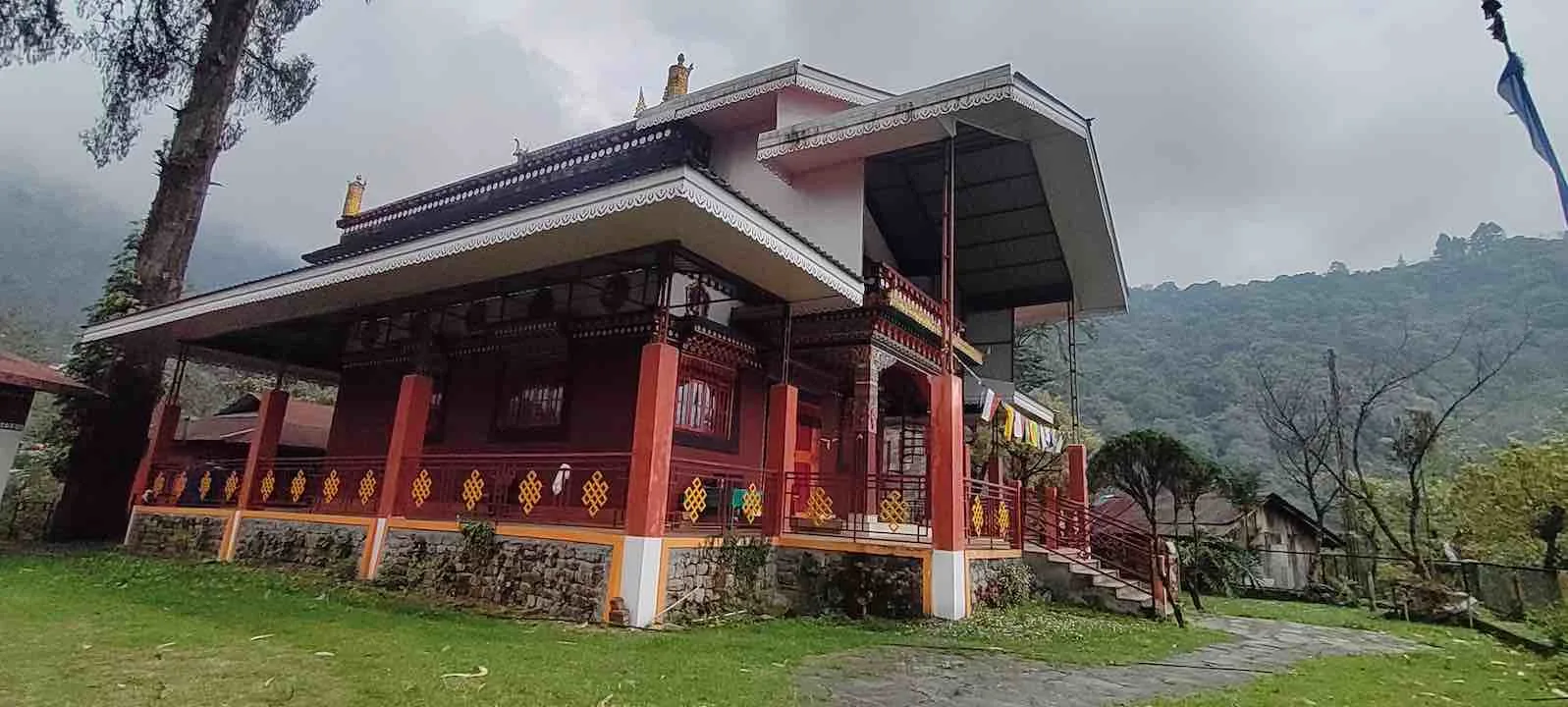
The entire area lies within the buffer zone of the Khangchendzonga National Park, a UNESCO World Heritage Site. The Kathok monastery (also known as Kathok Wodsal Ling Monastery) lies a short distance away.

Norbugang, Coronation throne of Namgyal Dynasty
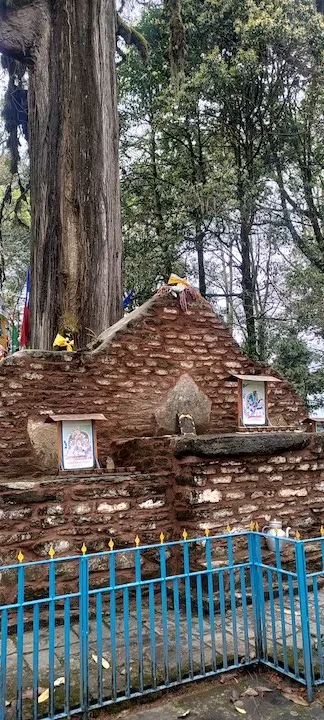
Norbugang is one of the most historically significant sites in Yuksom. This is where the first Chogyal of Sikkim was crowned in 1642, marking the beginning of the Namgyal dynasty.
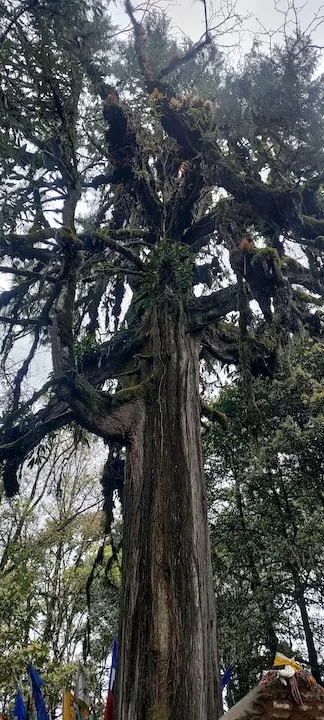
The site includes a large chorten (stupa), a stone throne where the coronation is believed to have taken place, and a peaceful open area surrounded by tall pine trees. There are several smaller stupas around, along with a prominent white stupa topped with gold.
One of the most striking features here is a large prayer wheel, nearly 10 feet tall, that can be spun as part of Buddhist ritual practice.
The entire area has a calm, spiritual atmosphere, and we also spotted quite a few birds around, some of them quite unique.
Monastery & Thangtong Gyalpo Statue (Nearby)
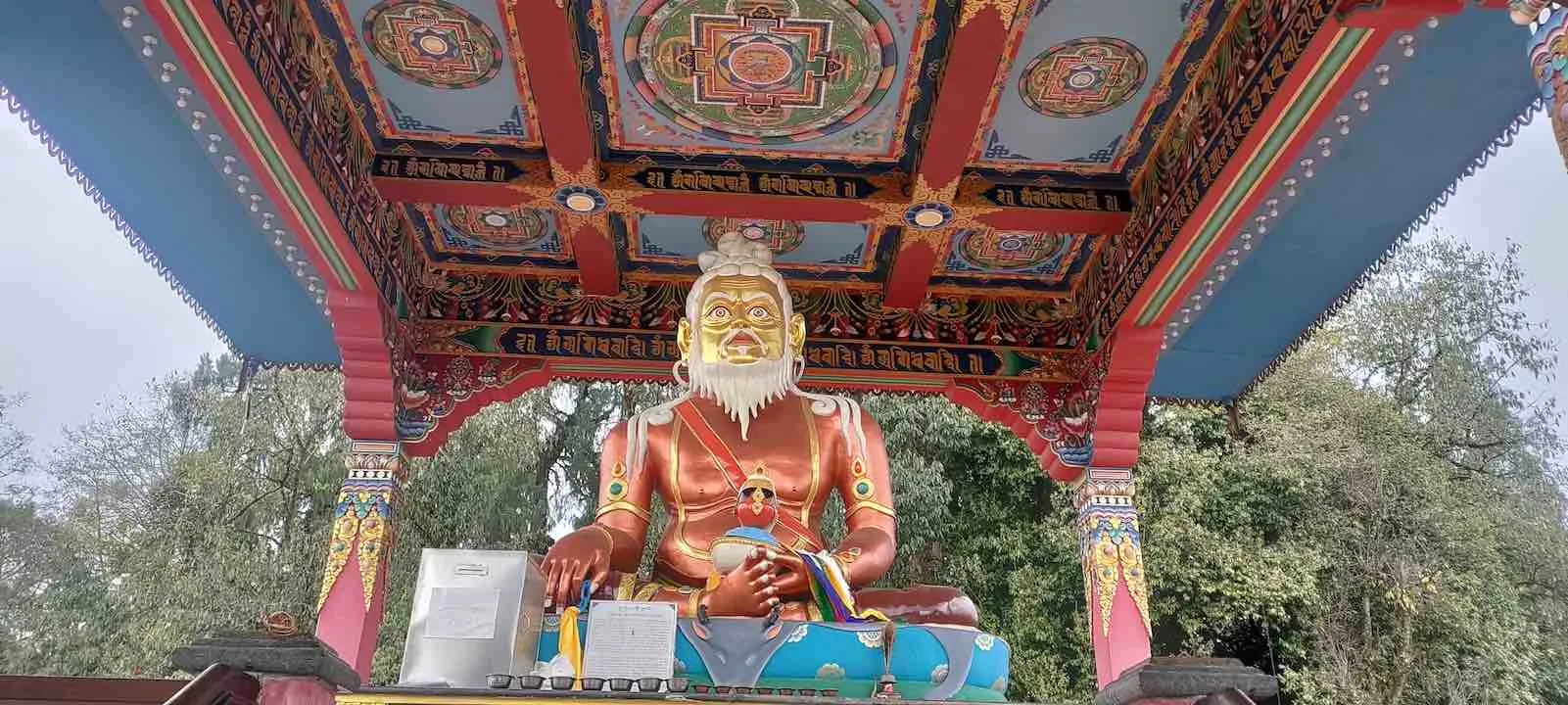
Close to Norbugang is a monastery and a statue of Thangtong Gyalpo, a revered Tibetan saint and engineer known for building iron chain suspension bridges across Tibet and Bhutan, many of which are still in use today.
In the statue, he is depicted holding blue iron chain links in his right hand, symbolizing his contributions.
Kanchenjunga Falls
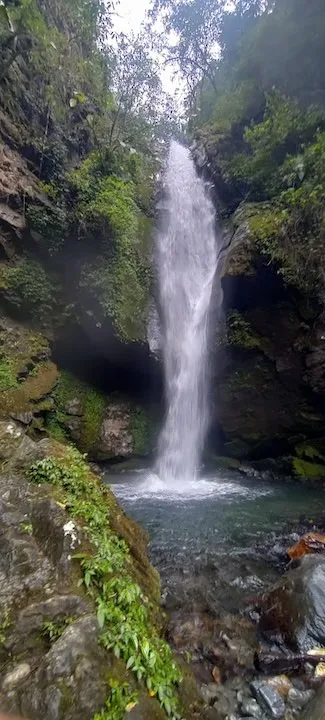
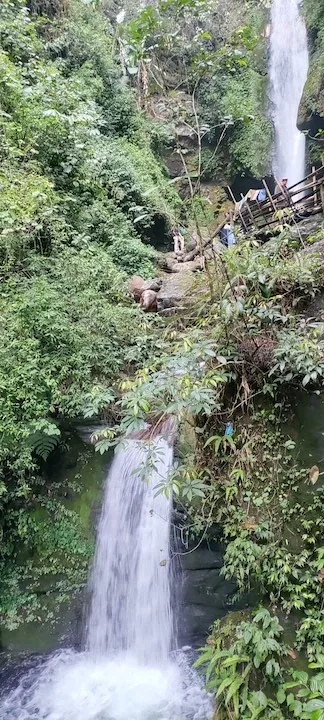
We passed the Kanchenjunga waterfall earlier on the way to Yuksom, but it’s better to stop here later when you have more time. There are several small eateries outside, making it a good spot for a break.
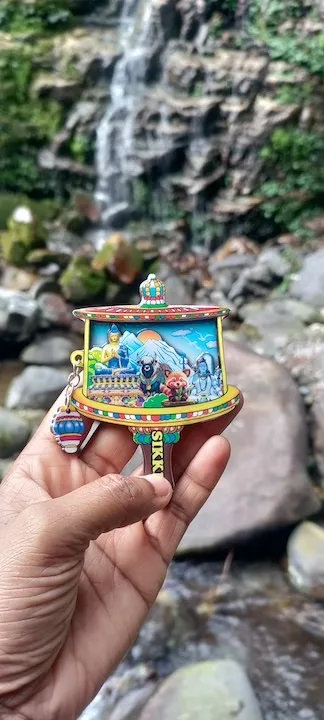
We had lunch here, picked up a few souvenirs like fridge magnets, and spent some time enjoying the waterfall. There is a small entrance fee, and basic facilities like toilets are available. A short climb up steps takes you closer to the falls.
You will also find local photographers offering DSLR photos for a fee.
Khecheopalri Lake
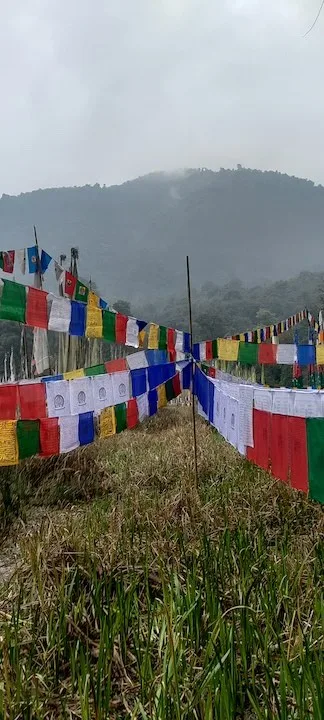
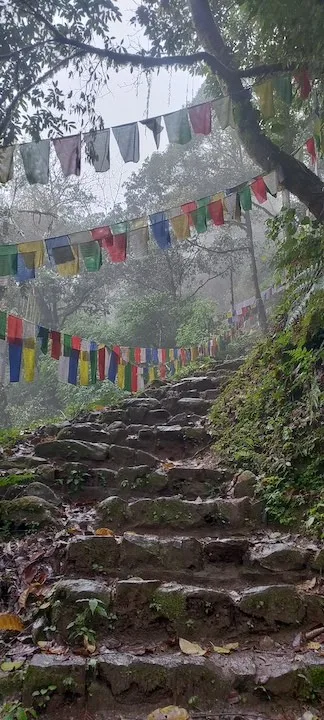
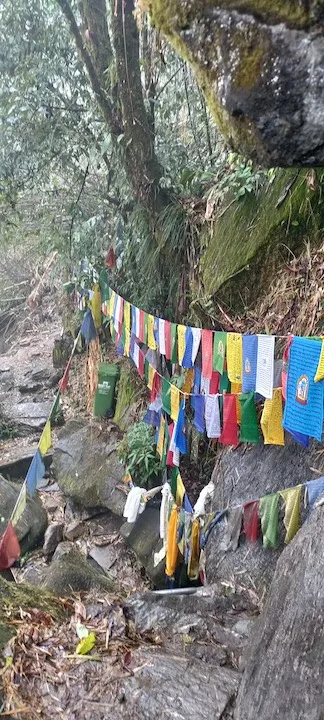
Khecheopalri Lake is one of the most peaceful and unique stops on this route. Surrounded by thousands of colorful prayer flags, the lake has a quiet, sacred atmosphere. After entering through the main gate, most people walk to the viewpoint and return, but the trail actually continues around the lake and loops back to the entrance.
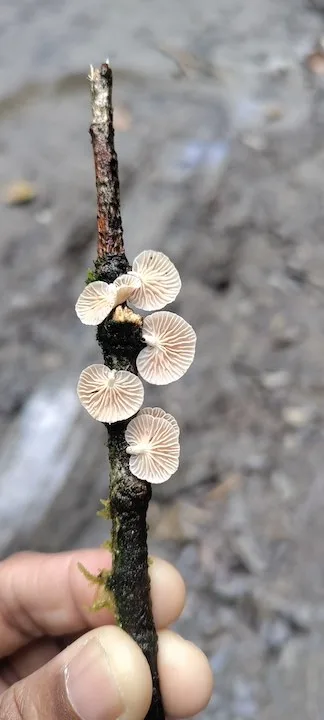
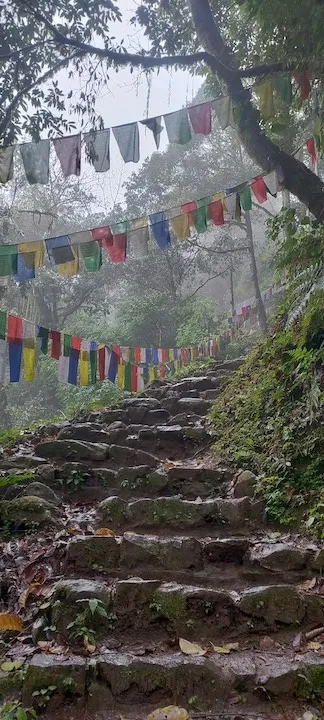
We did the full circular walk, which made the experience much more immersive. Along the trail, we also spotted a variety of polypore mushrooms and other small forest fauna, adding to the overall experience.
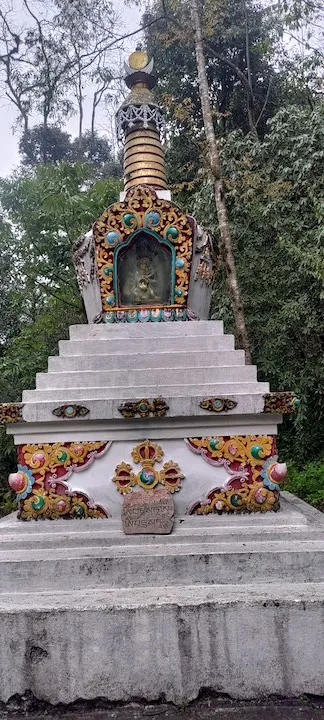
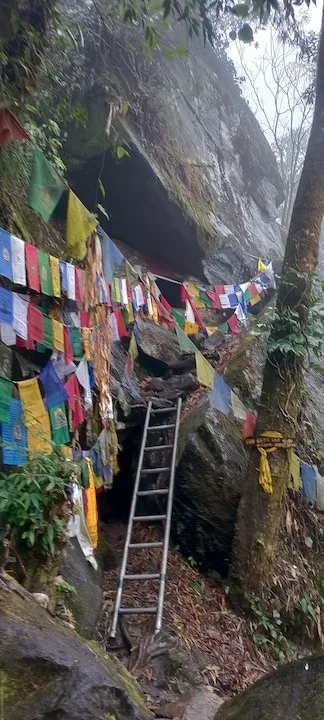
A short distance from the entrance, there is a small trail on the right that leads to a ladder climb. This takes you to a small cave known as the Guru Rinpoche Cave, which houses a statue of Guru Rinpoche (Padmasambhava) inside and is easy to miss if you are not looking for it.
The cave is associated with Guru Padmasambhava (Guru Rinpoche), a revered Buddhist master who is believed to have meditated in several caves across the Himalayas while spreading Buddhism. The spot has a quiet, spiritual feel and is worth the short detour.
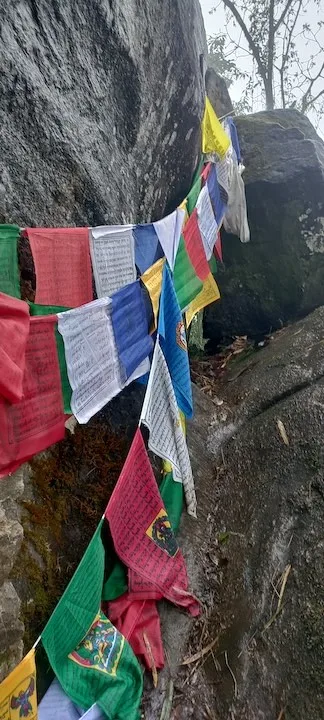
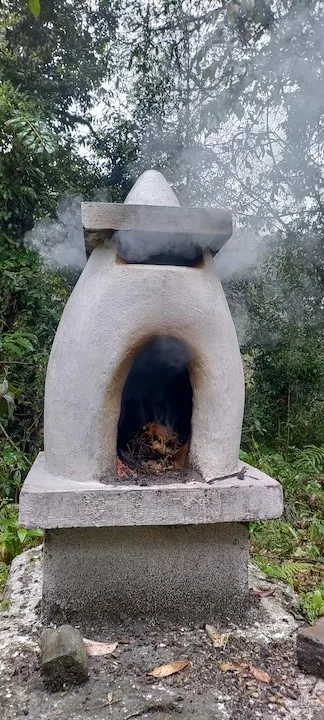
After visiting the lake, we stopped at Latop’s Pizzeria nearby. The pizzas are made fresh in front of you in a wood-fired oven, with both veg and non-veg options, and tasted really good.

Right opposite, you can also purchase locally brewed rhododendron wine. A bottle costs around 200 rupees and has a sweet, juice-like taste.
Rimbi Orange Garden
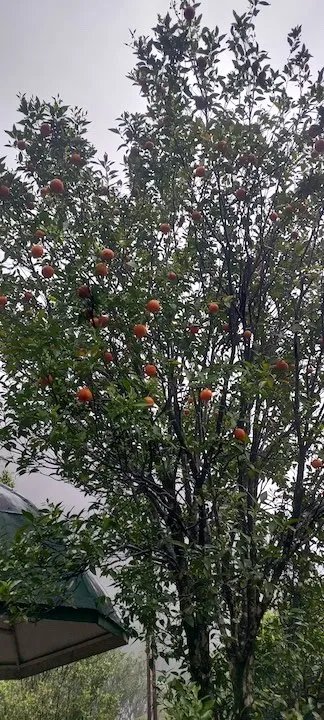
The Rimbi Orange Garden is a pleasant stop surrounded by orange trees, especially beautiful when the trees are full of fruit. From the garden, you can walk down towards the riverbed of the Rimbi River.
There is a small restaurant here where we stopped for coffee with a view of the river, making it a relaxing break during the drive.
Yorong Waterfalls (Rimbi Waterfalls)
Yorong Waterfalls is a quick roadside stop, just about five minutes, before heading back towards Pelling. It’s a simple but scenic waterfall and works well as a short break after a long day of driving.

Day 3: Pelling Sightseeing & Return to Gangtok
Pelling Ropeway
The Pelling Ropeway is located right outside Hotel Sikkim Aurora, which makes it extremely convenient if you’re staying nearby.
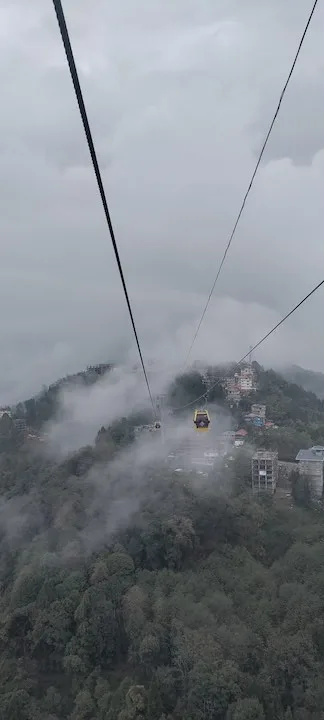
On a clear day, the ride offers great views of the surrounding hills, roads, and even Kanchenjunga in the distance. The ropeway takes you directly to the entrance area for the Sky Walk and the monastery.
It’s better to purchase a two-way ticket if you plan to return the same way. Mornings can get slightly crowded during peak season, and we had to wait in line for about 15 minutes.
Pelling Sky Walk and Monastery
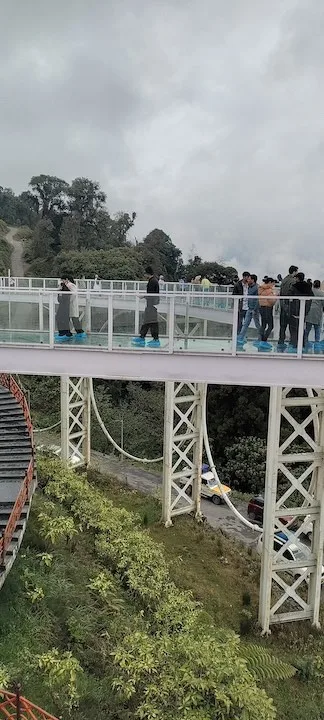
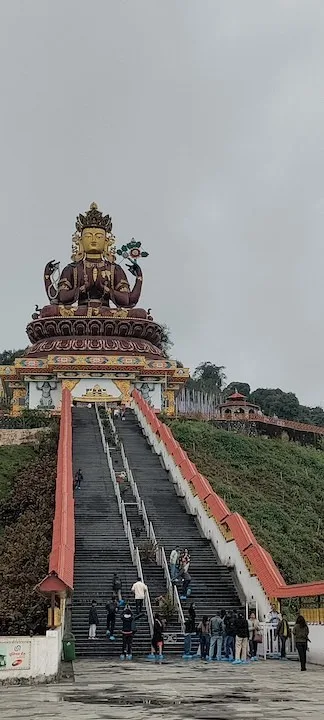
After getting down from the ropeway, there is a short uphill walk of about 100 meters, followed by a staircase that leads to the Pelling Sky Walk and Monastery.
You need to purchase shoe covers before entering. The skywalk itself is a short stretch and, unlike what many expect, it is not made of glass but a solid material, so it does not feel intimidating.
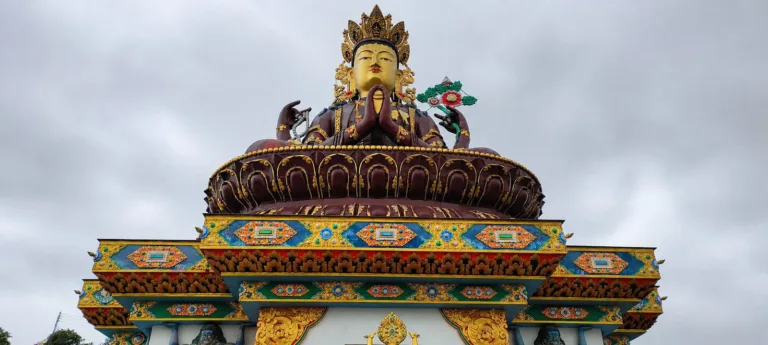
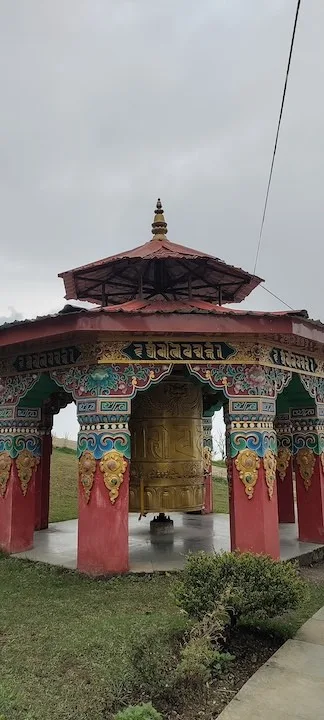
From here, you can continue climbing up to the monastery. Along the way, there are prayer wheels that you can spin as you walk up. At the top stands a giant statue of Buddha, which is one of the main highlights. There is also a large prayer wheel near the top.
You can enter the monastery and climb up internally to reach the terrace area near the base of the statue. The views from here are excellent. Do note that silence is expected inside, and photography is not allowed.
Pemayangtse Monastery
Pemayangtse Monastery is one of the oldest and most important monasteries in Sikkim, built in the 17th century and belonging to the Nyingma sect of Buddhism.
The monastery has multiple levels, with traditional paintings, statues, and religious artifacts inside. One of its most unique features is a detailed wooden structure known as the “Zangdok Palri,” located on the top floor. It is said to represent the celestial palace of Guru Padmasambhava and was handcrafted by a single monk over several years.
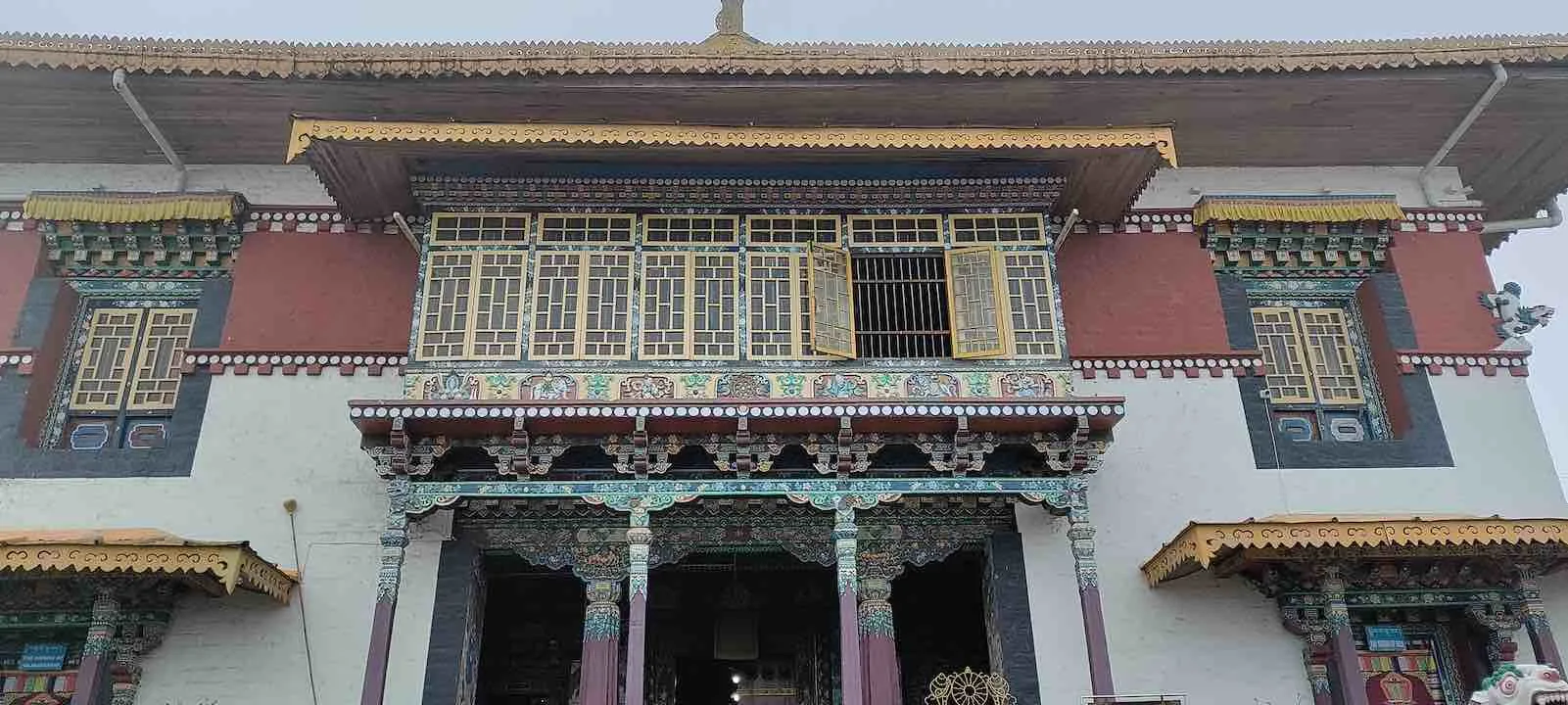
The monastery also houses a collection of old manuscripts and has a peaceful atmosphere, making it worth spending some time exploring.
Sidkeong Tulku Bird Park and Rabdentse Ruins
Our next stop was the Rabdentse Ruins, located a short distance from Pelling. The entrance to the Sidkeong Tulku Bird Park also serves as the entry point for the ruins.
From the entrance, it takes about a 500 meter walk through a forest trail to reach the ruins. Rabdentse was the second capital of the Kingdom of Sikkim in the 17th century before it was destroyed during invasions.
Today, you can see the remains of palace structures, stone platforms, and chortens, with open views of the surrounding hills. The walk itself is quite scenic and peaceful.
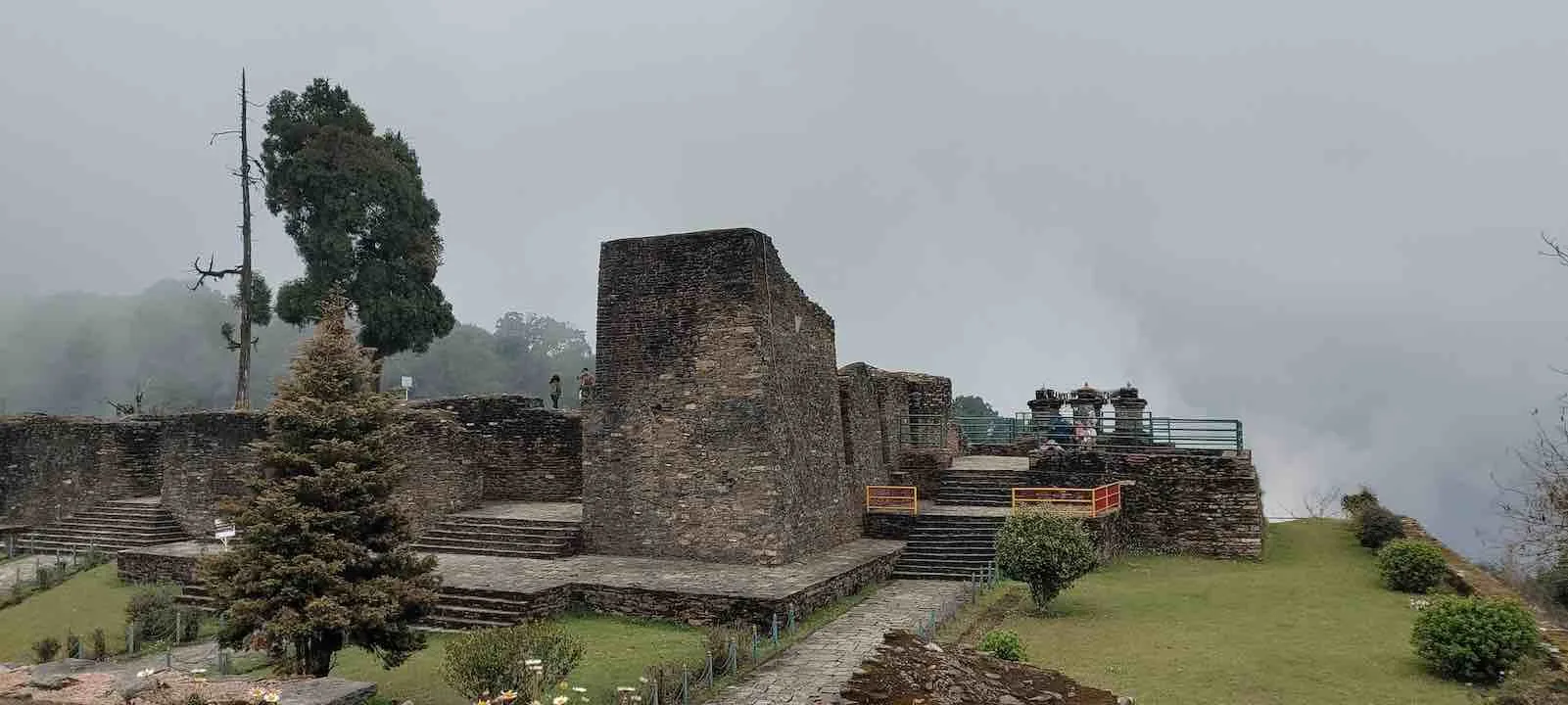
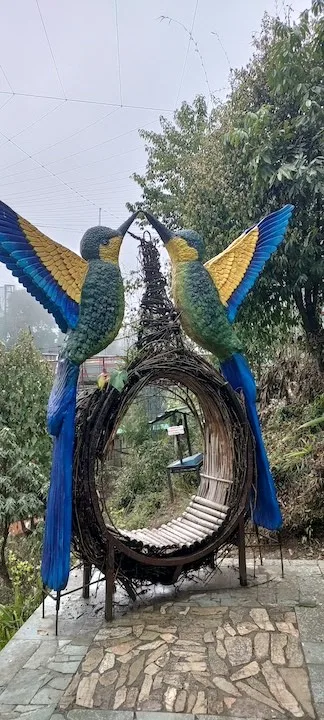
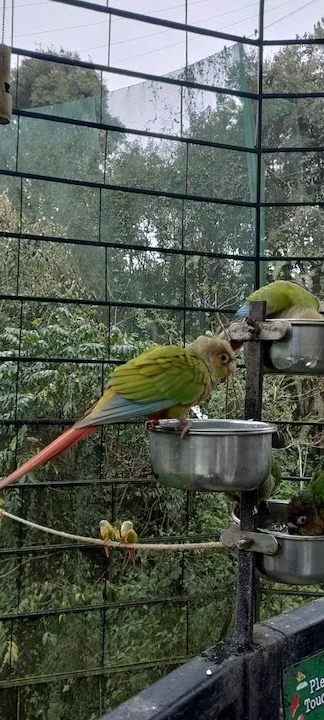
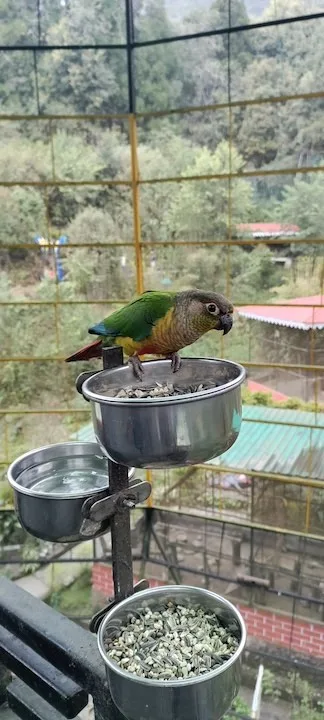
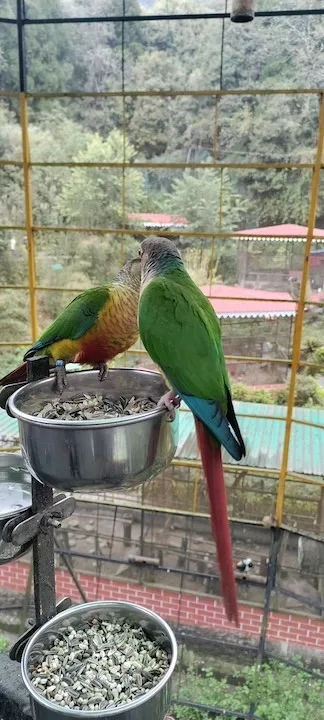
Nearby is the Sidkeong Bird Park, which houses a variety of colorful Himalayan birds. One of the highlights is an open enclosure where some birds can move around more freely, making it more interactive than typical enclosures.
We were able to cover all these spots by around 1 PM. After that, we left for Gangtok and reached by late evening.
Accommodation in Pelling
We stayed at Hotel Sikkim Aurora in Pelling, which is conveniently located right next to the ropeway, making it easy to visit the Sky Walk and the nearby monastery.
The stay cost around ₹2700 per person for 2 nights, including breakfast and dinner, which makes it a good value option. The food here was delicious, with both veg and non-veg options available. The rooms are comfortable, clean, and have a cozy wooden interior, which adds to the overall experience. The terrace also offers clear views of Kanchenjunga on a good day.
Taxi & Transport Options for Pelling (with contacts)
For this itinerary, the easiest option is to hire a private taxi from Gangtok, and most drivers will help you plan and cover the full route including Pelling and Yuksom. Cost per person starts from ₹6000 and varies by group size.
You can contact drivers like:
- Mr. Sanjay Rai (+91 7001747067)
- Mr. Parvat Giri (+91 9635865119)
Always confirm the itinerary, inclusions, and total cost in advance.
Travel Tips for Pelling & Yuksom
- Start early from Gangtok on Day 1 to make the most of the day. If you’re not into walking or hikes, you can skip Tarey Bhir as it’s mainly a viewpoint with a ridge walk.
- Roads in many stretches are not in great condition, so expect slow drives.
- Carry cash, as many places have poor network connectivity. Jio works best in this region, while Airtel and Vodafone can be unreliable.
- On the way back, try to leave Pelling before 2 PM to comfortably reach Gangtok before it gets too late.
Best Time to Visit Pelling & Yuksom
- Oct–Dec: clear views of Kanchenjunga (best)
- Mar–May: greenery + pleasant weather
- Monsoon: not ideal (roads, landslides, clouds)

Total Cost for 3 Days (Per Person) to Pelling & Yuksom
Rough breakdown:
- Taxi: ₹6000–₹9000
- Stay: ₹2700
- Food + entry + extras: ₹1000–₹2000
This 3-day trip from Gangtok to Pelling and Yuksom is a great mix of scenic drives, monasteries, and quiet offbeat spots. It’s slightly packed but manageable, and works well if you want to explore West Sikkim in a short time.
Patience is the ultimate prayer.
Buddhist quote

Nice Place Gangtok