
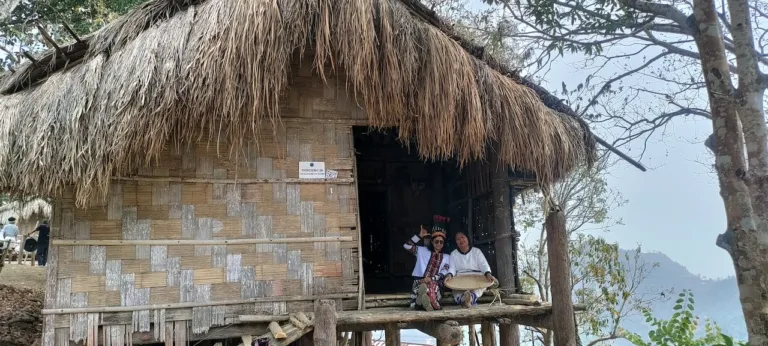

Once a week, the people of Falkawn come together to recreate the traditional way of life of their ancestors. For a few hours, the village transforms into a living museum of Mizo culture, complete with a village chief, dancers, weavers, blacksmiths, kids, bachelors, and everyday village folk going about their routines.
This unique cultural experience takes place every Saturday (except 3rd January and 27th December) in two shows: 11:00 AM – 1:00 PM and 1:30 PM – 3:30 PM at Zokhua Falkawn, located just outside Aizawl.
What is Zokhua Falkawn?
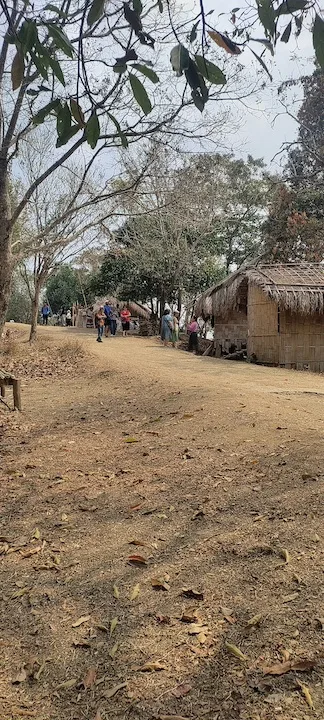
Located about 18 km south of Aizawl, Zokhua Falkawn is a cultural heritage village created by the Department of Art & Culture, Government of Mizoram to showcase traditional Mizo life. Established in 1992, the site functions as a mini living museum that recreates a typical Lusei village from the past.
The village includes traditional huts representing different roles within the traditional Mizo community, offering visitors a glimpse into how society was organised in earlier times. “Zokhua” refers to the traditional way of life of the Mizo people — the customs, community roles, and everyday activities that shaped village life in the past.
What to See at Zokhua Falkawn
Chief’s House (Lal In)
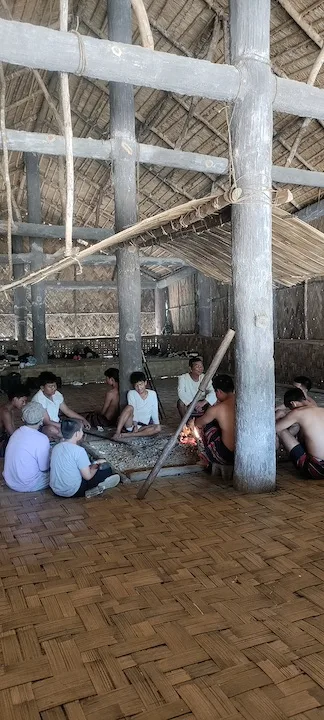
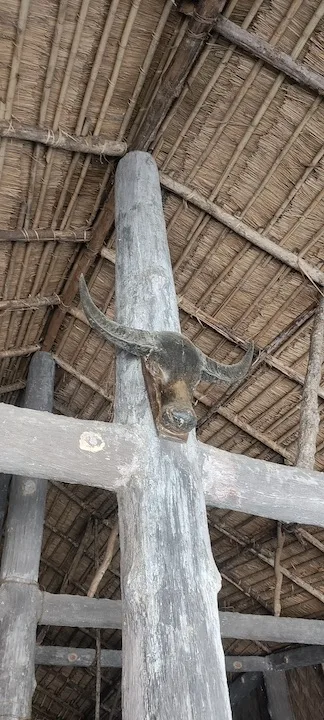
The Lal In, or chief’s house, was the most important house in a traditional Mizo village. At Zokhua Falkawn, the house reflects the authority and status of the village chief. Inside, the walls are decorated with skulls of various animals, a symbol of hunting achievements and prestige in traditional Mizo society.
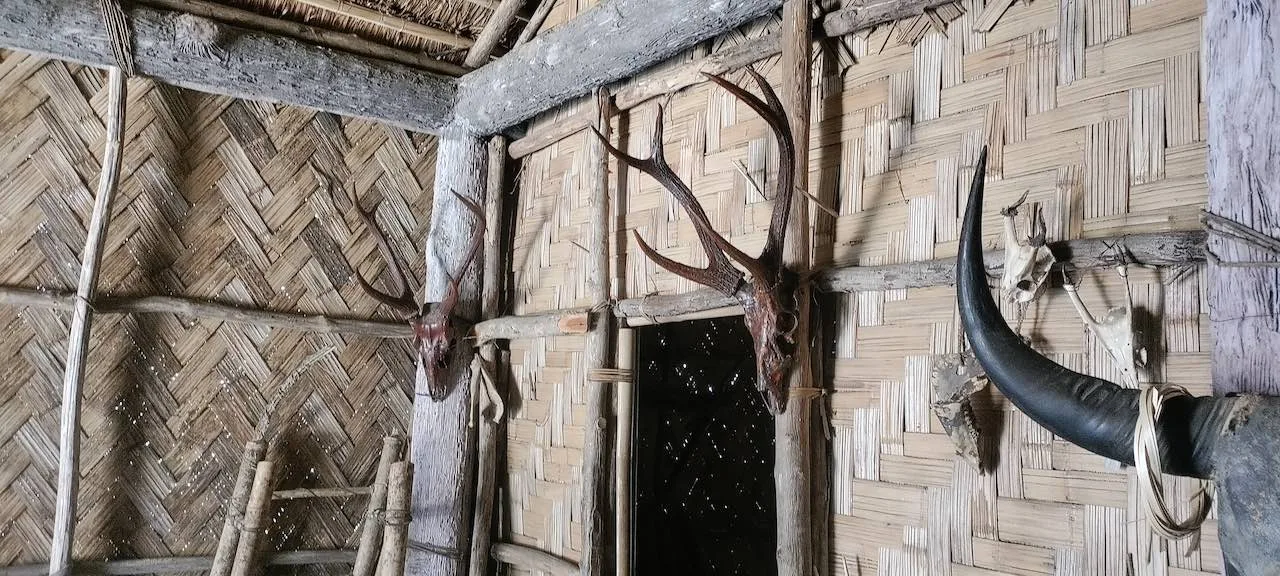
The first room of the house features a fire hearth, with rice husks placed above it. This fireplace was used for cooking and warmth, and people would gather around it to talk and share meals.
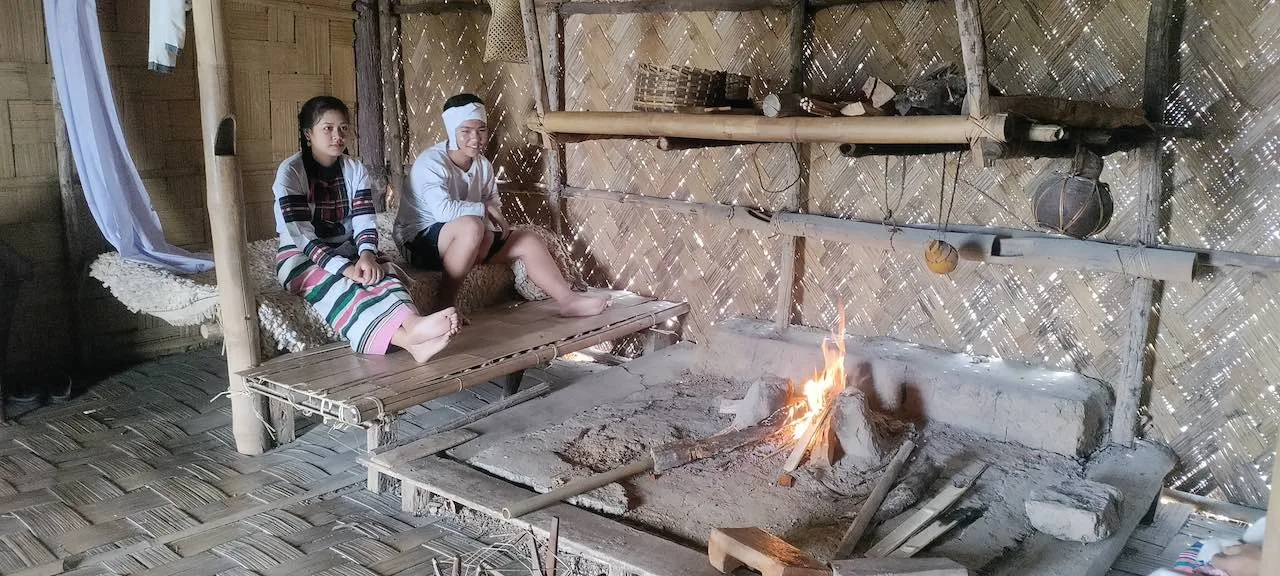
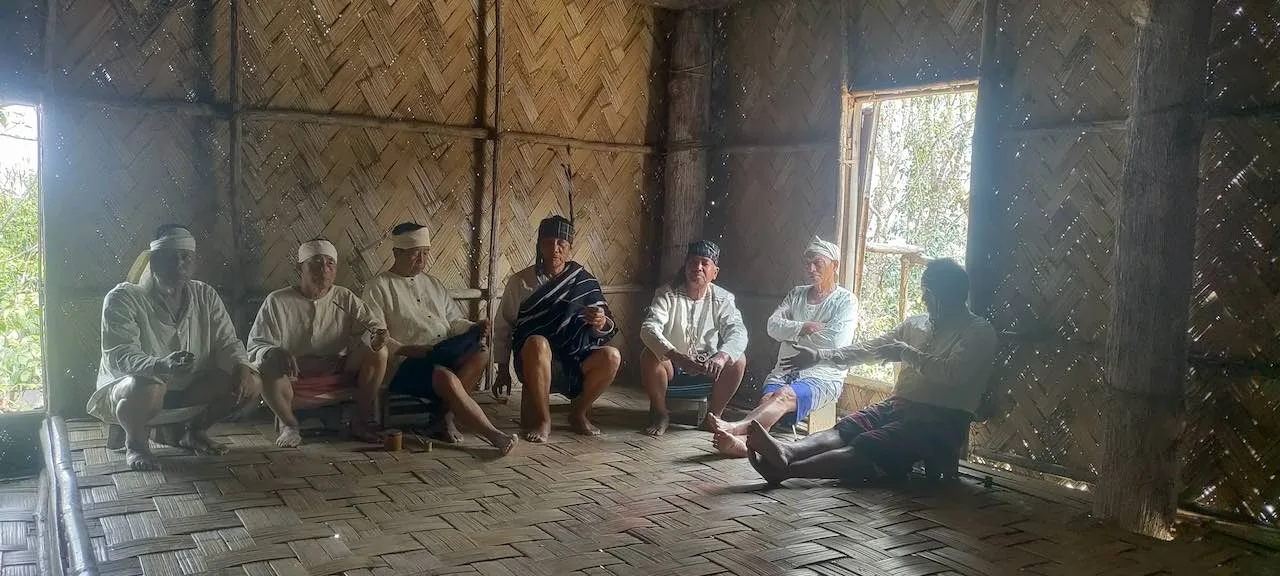
The second room was reserved for women, where they would sit together and carry out daily activities. The last room was for men, including the village chief, who sat on a raised wooden platform during meetings and discussions. Unlike many traditional houses, the chief’s house also has windows, reflecting its slightly higher status and comfort.
Bachelor’s Dormitory (Zawlbuk)
The Zawlbuk was the dormitory where young unmarried men of the village lived and trained together. It was an important institution in traditional Mizo society, where young men learned discipline, hunting skills, and the responsibilities of protecting the village.
At Zokhua, the bachelors are dressed in traditional red and black puans (Mizo wraparound cloth) and remain bare-chested, reflecting how young men traditionally lived.
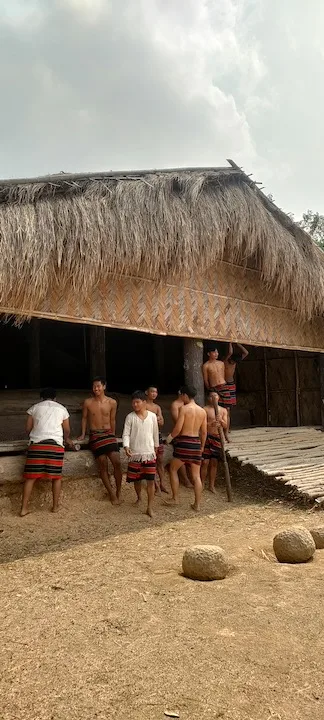
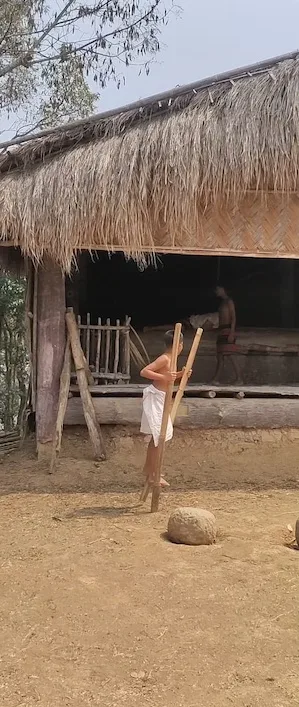
Nearby you can also see long wooden poles used for walking on stilts (Kalchhet), a traditional balancing activity.
Blacksmith’s House (Thirdeng In)
The Thirdeng In, or blacksmith’s house, is where tools and weapons were traditionally made for the village.
The blacksmith heats a piece of iron in a small furnace until it glows bright orange, then repeatedly strikes it with a hammer to shape it. This workshop served as his working space, where he produced farming tools and other essential items.
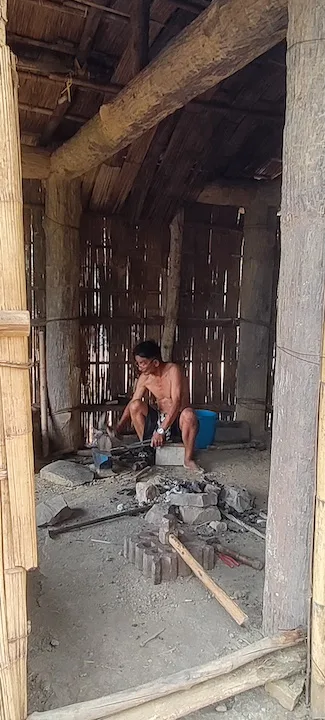
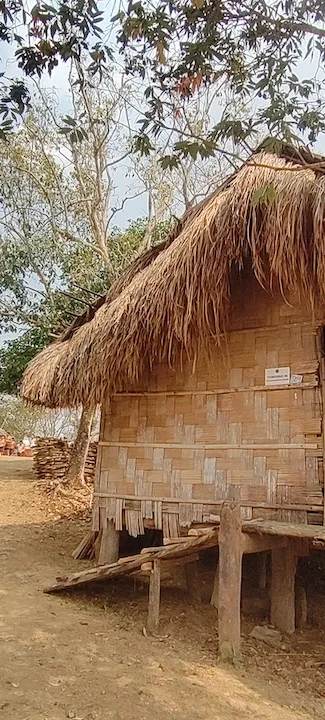
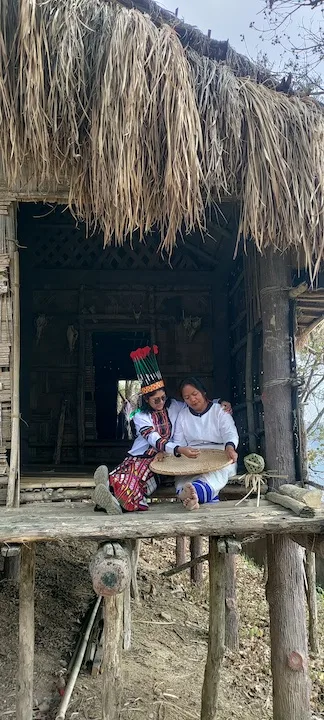
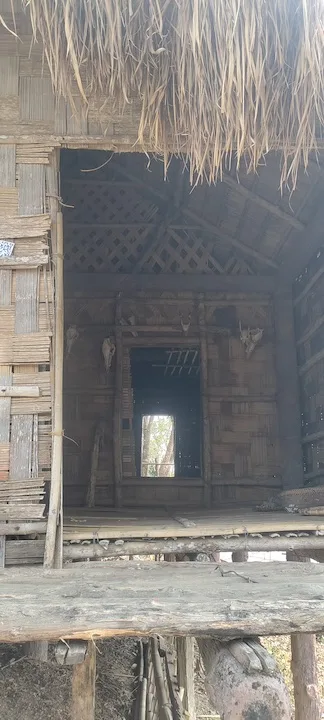
The blacksmith’s living house is located next to the workshop, showing how artisans often lived close to their place of work.

A durable, lightweight bottle that’s perfect for travel.
Widow’s House
The widow’s house is smaller and simpler, reflecting the modest lifestyle of widows in traditional villages.
Inside, a flat woven bamboo basket displays various local vegetables such as brinjal, ginger, beans, pumpkin and chillies. These baskets were used for carrying and sorting vegetables or rice.
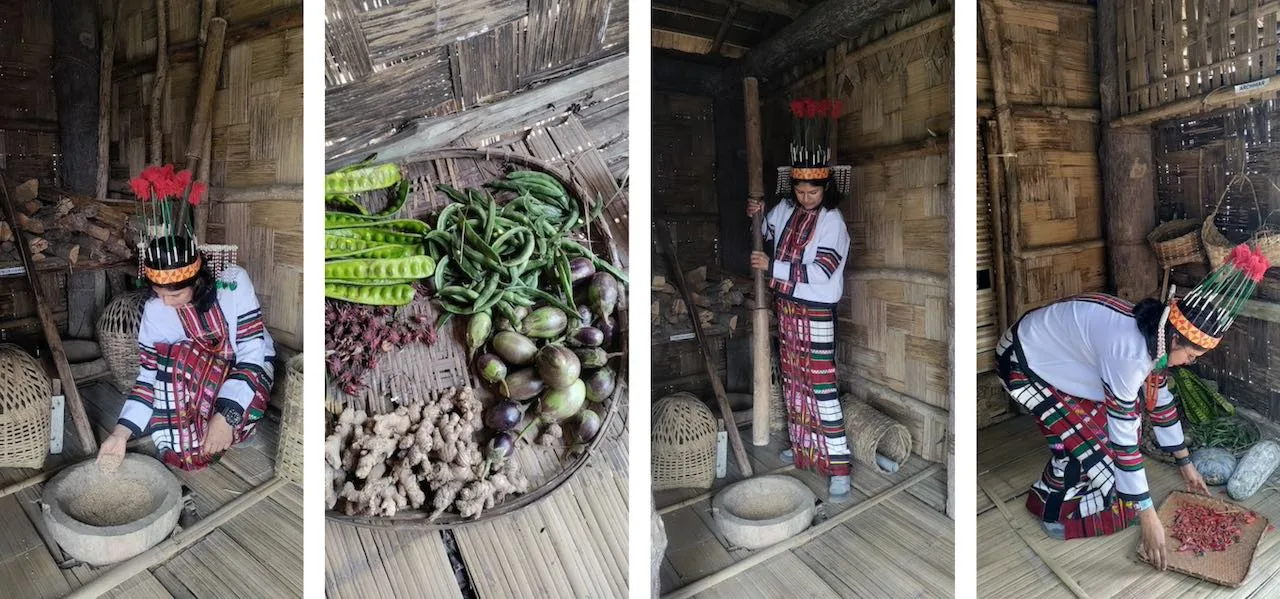
There is also a wooden rice-pounding stick called ‘Suk’, used to grind rice – an essential daily activity in traditional households.
Common Villager’s House
The house of a common villager shows how most people in the village lived. Unlike the chief’s house, these houses typically had no windows.
Traditional Mizo houses were built without windows mainly to retain warmth during cold weather and to keep out strong winds, especially since many villages were located on exposed hilltops. Instead, light and ventilation came from the door and gaps in the bamboo walls.
Weaver’s Houses
Cotton Preparation
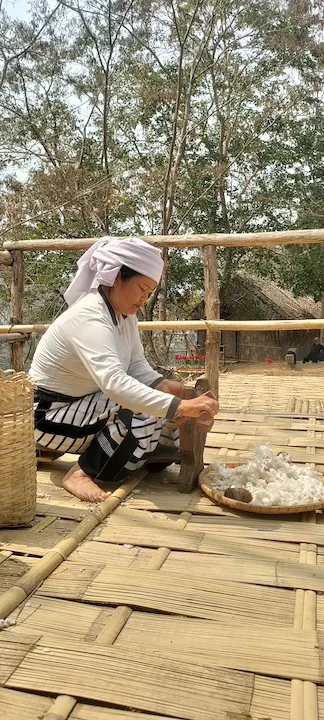
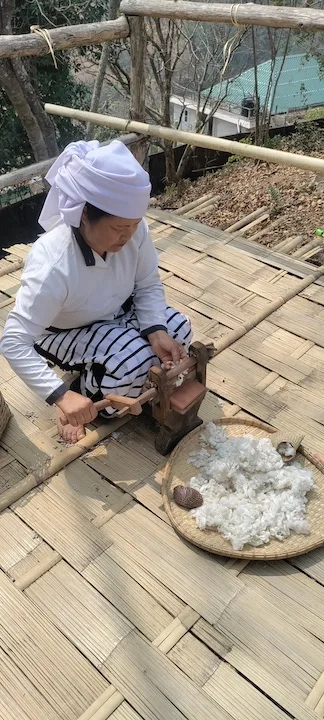
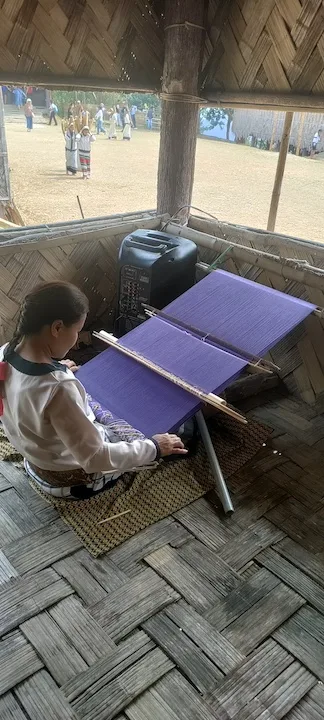
Before weaving could begin, raw cotton had to be prepared. The cotton is passed through a small wooden cotton gin, where a handle is turned to press the cotton between two rollers. This process flattens the cotton and removes seeds, after which it is separated into thin strands that can be spun into thread.
Weaving
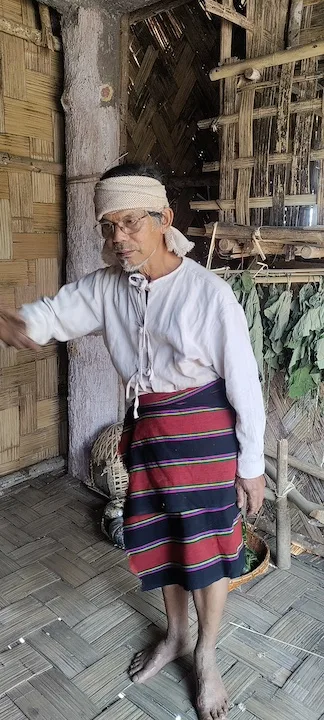
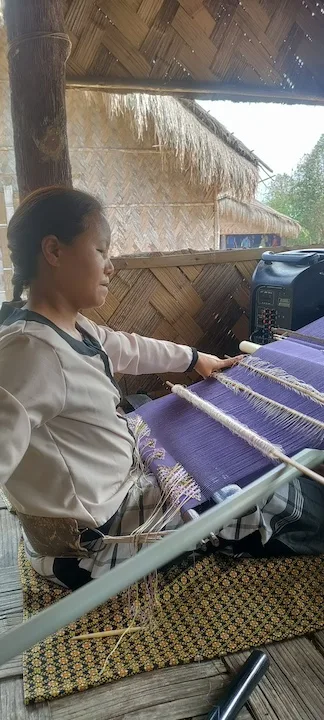
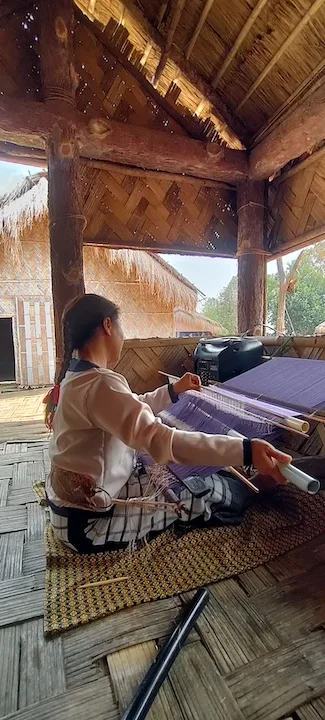
The actual weaving is done on a backstrap loom (Puantah), a traditional loom that is attached to a support at one end and to the weaver’s back at the other. Sitting on the ground with the loom strapped behind them, the weaver carefully interlaces threads to create puan, the traditional Mizo textile.
The loom may look simple, but it requires a high degree of skill and time to create intricate patterns and colourful fabrics that are still worn today.
Bamboo Weaving
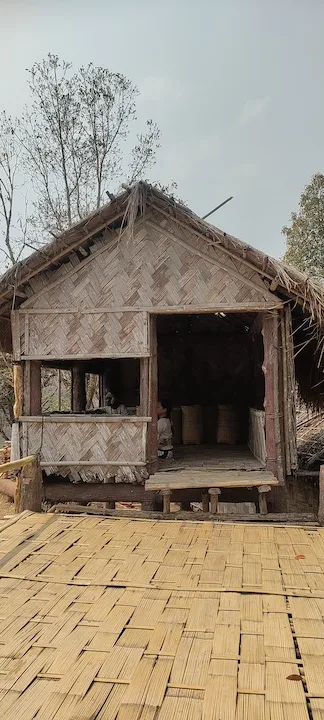
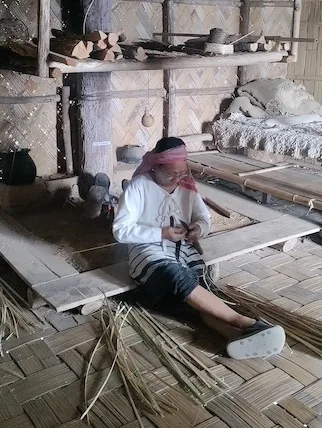
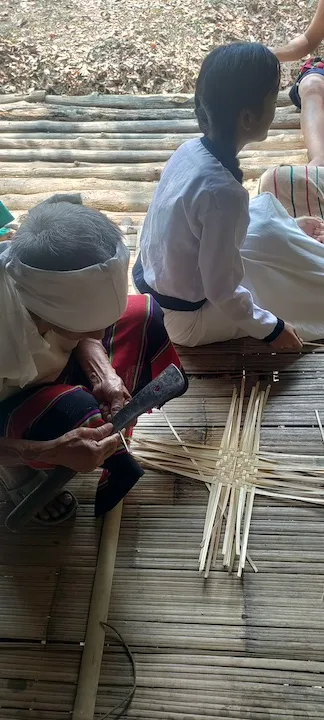
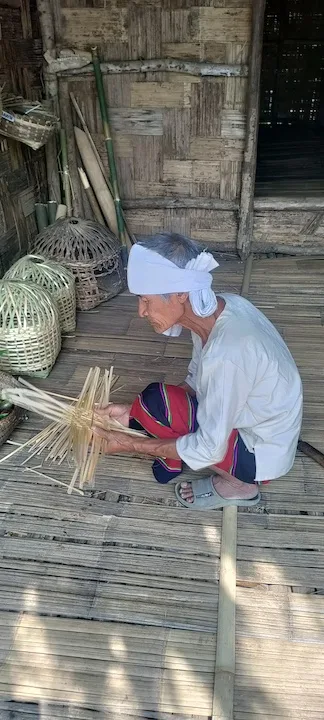
Another house demonstrates bamboo weaving, a skill widely used in traditional Mizo life. Inside, artisans weave thin bamboo strips to create baskets and other everyday items.
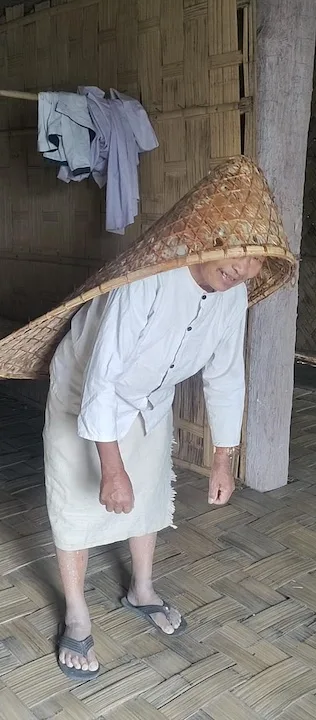
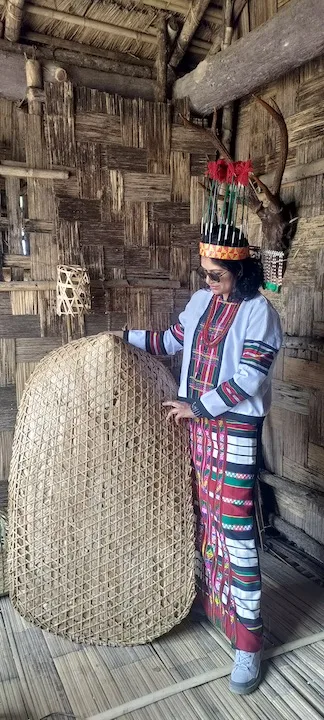
One interesting object is a large bamboo rain shield, shaped like a wide hat that extends from the head down to the knees. This traditional shield protects farmers from rain while working in the fields and can also be used while sorting rice.
Many other bamboo items are woven here, showing how bamboo was essential for daily life in the village. The Mizo people traditionally built houses using bamboo because it was the most practical material available in the hilly region of Mizoram. Bamboo grows abundantly in the forests and is easy to collect for the villagers. It is also light yet strong and flexible.
Village Courtyard
The village courtyard is the central open space where most activities take place. During the Zokhua show, school children play traditional games, and visitors can watch cultural performances. This is where traditional dances such as Cheraw are performed. Strength contests like Inbuan and stone-lifting competitions are also held here.
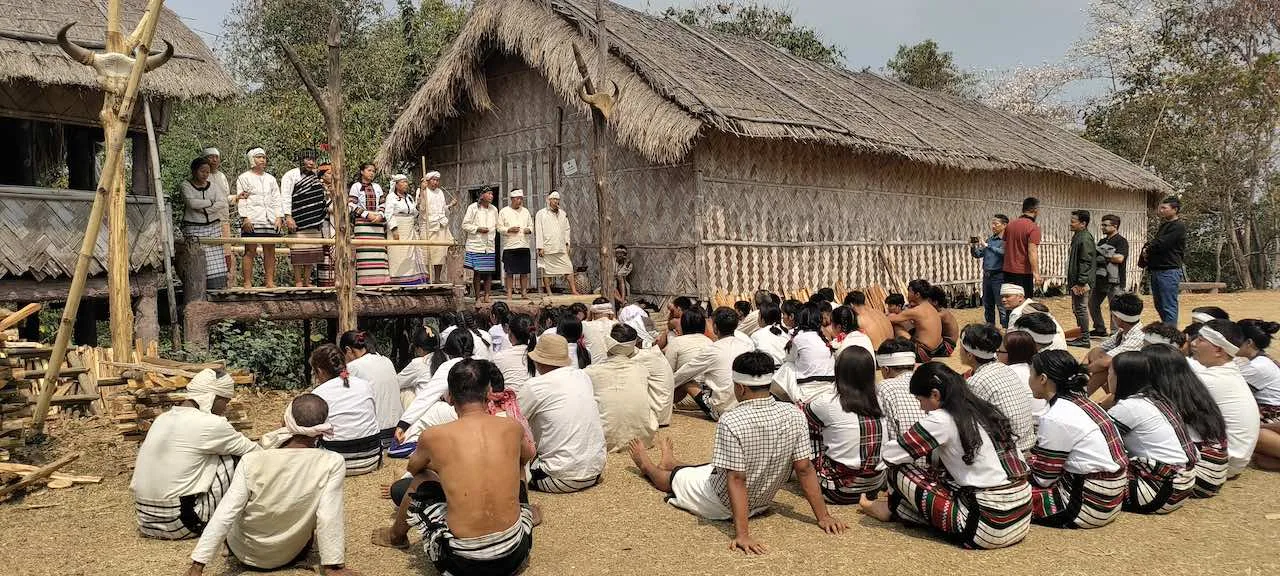
At the end of the program, the village chief delivers a short speech, bringing the experience to a close.
Memorial Stones Area
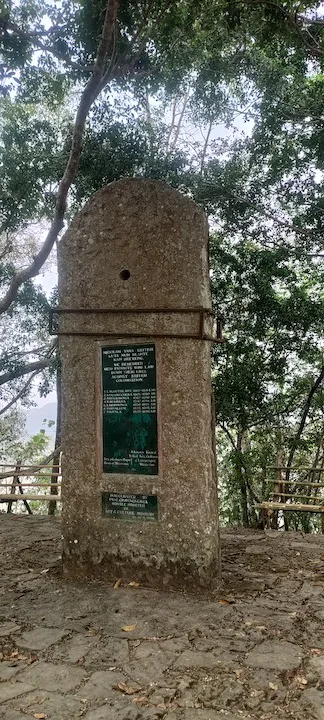
Nearby is an area with a memorial stone dedicated to seven Mizo patriots who lost their lives resisting British colonisation. The stone honours their sacrifice and serves as a reminder of an important chapter in Mizo history.
Cultural Performances and Activities at Zokhua Falkawn
Cheraw (Bamboo Dance)
The Cheraw, often called the bamboo dance, is one of the most famous traditional dances of Mizoram. During the performance, several boys sit on the ground and rhythmically move long bamboo poles in and out, striking them together in time with the music. At the same time, women dressed in colourful traditional attire carefully step and hop between the moving bamboo sticks, making sure their feet do not get caught.
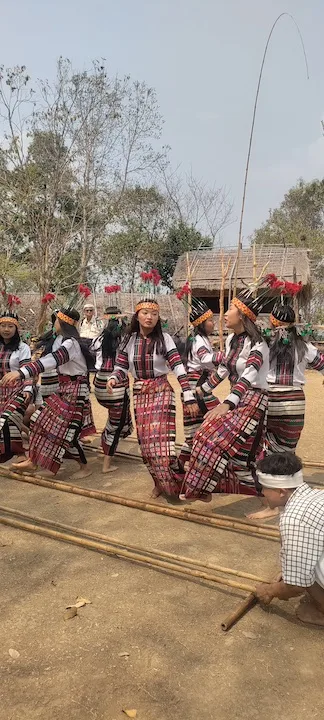
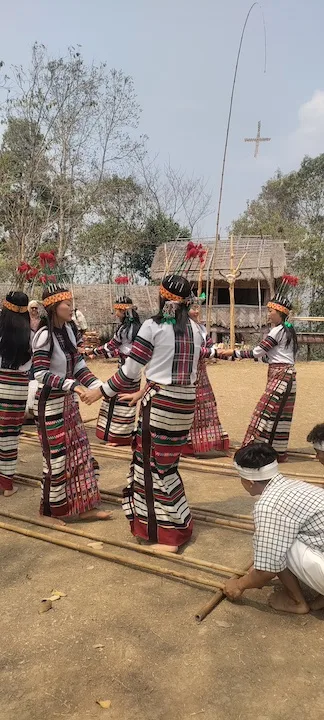
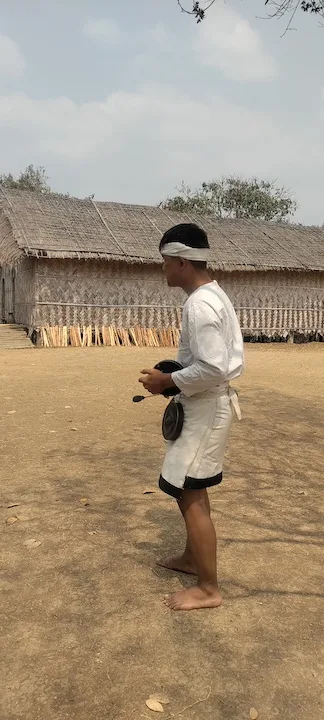
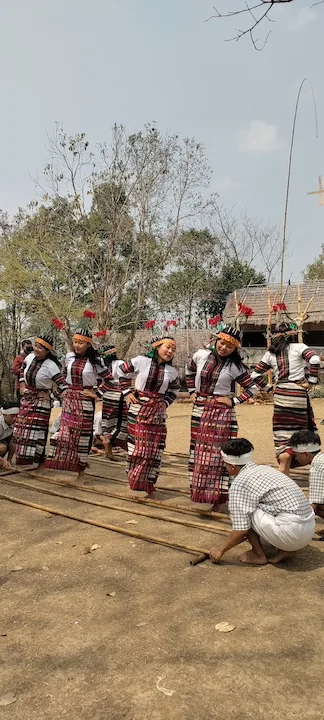
The dance requires precise timing and coordination, both from the dancers and the bamboo pole holders. Traditionally, Cheraw was performed during festivals and celebrations, and today it remains an important symbol of Mizo culture and community spirit.

Chai Dance
The Chai Dance is a graceful traditional dance that often features pairs of dancers moving in rhythm to music and singing. At Zokhua, the performance included one male and one female dancer whose movements were light and fluid, resembling the movements of birds.
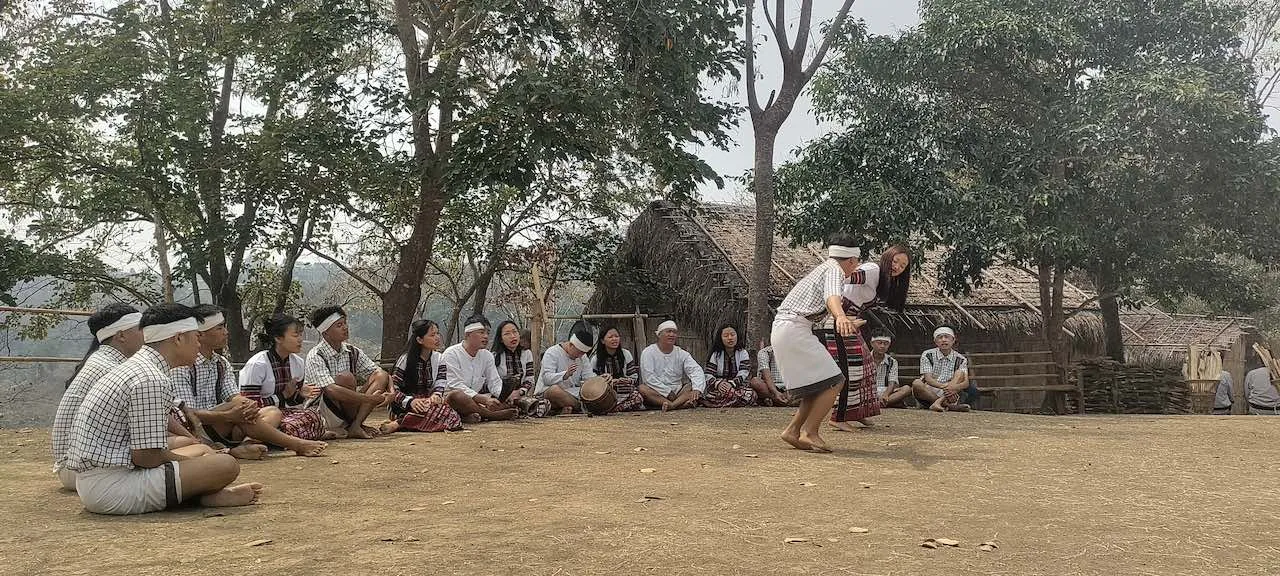
The dancers move in circular patterns with gentle arm gestures and coordinated steps, creating a calm and rhythmic performance. The Chai Dance was traditionally performed during community celebrations and after successful hunting or feasting, symbolising joy, unity, and togetherness within the village.
Lungdawh (Stone Lifting)
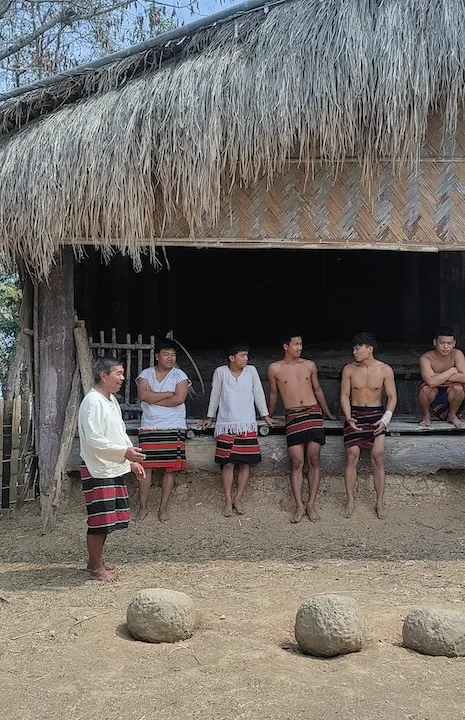
Lungdawh is a traditional strength contest where participants attempt to lift heavy stones from the ground. At Zokhua, three stones of increasing size and weight are placed outside the bachelor’s dormitory. Competitors start with the smallest stone and attempt to lift progressively heavier ones.
This activity was historically a way for young men to demonstrate their physical strength and endurance, qualities that were valued in village life.
Inbuan (Traditional Wrestling)
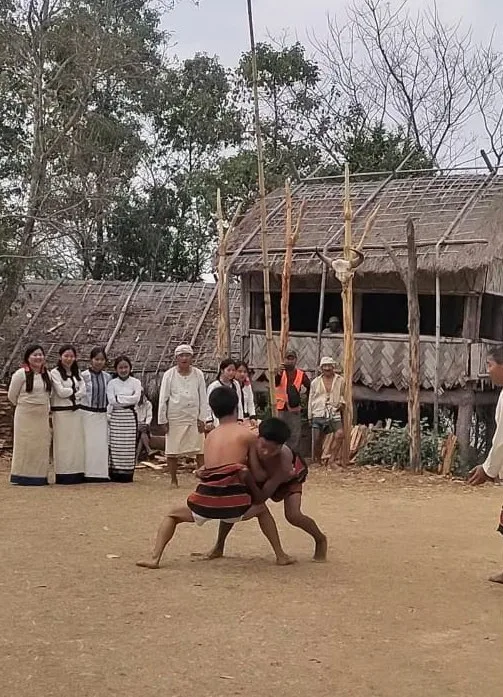
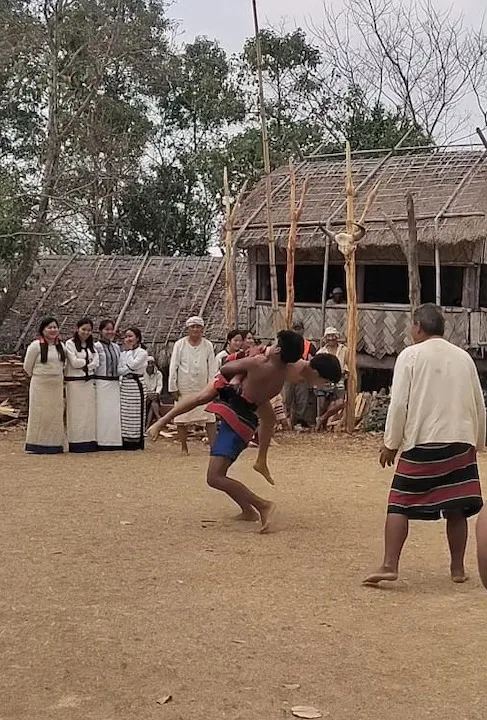
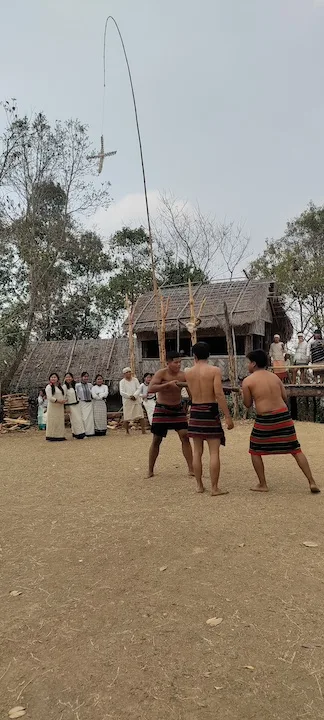
Inbuan is a traditional form of Mizo wrestling. In this contest, two participants hold each other around the waist and attempt to lift their opponent off the ground without using kicks or strikes. The match usually takes place within a small circular area.
At the Zokhua demonstration, the wrestlers competed in a best-of-three format, with the winner being the person who successfully lifted their opponent more times.
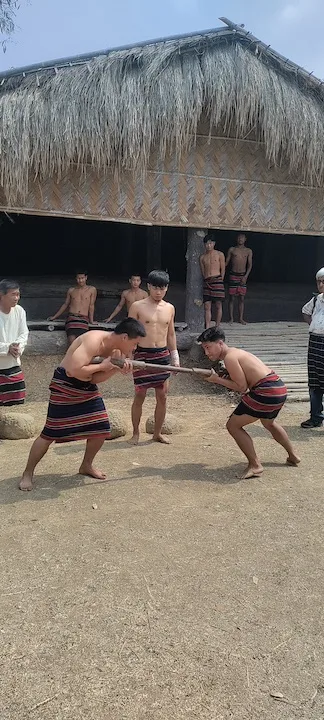
Insuknawr (Strength Contest)
Insuknawr is a traditional strength contest where two participants face each other while holding a rice pounding wooden stick called ‘Suk’ between them. Each person pushes against the stick using their body weight and strength, attempting to force the opponent backward or off balance.
The game tests balance, strength, and endurance, and was traditionally played by young men as a friendly competition within the village.

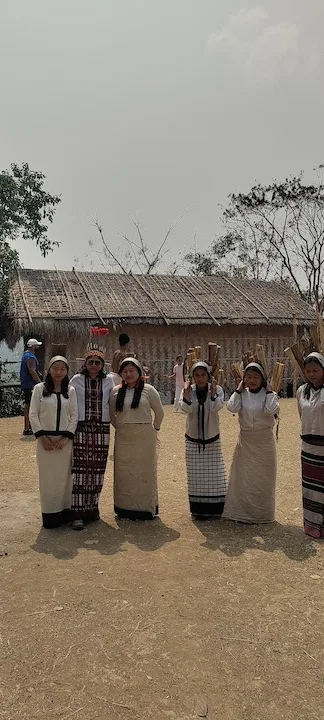
Carrying a Bamboo Basket (Em)
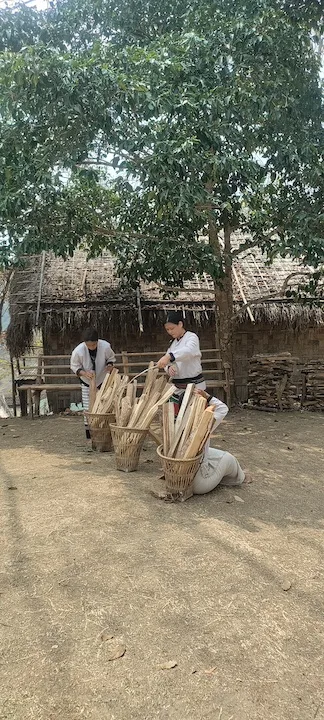
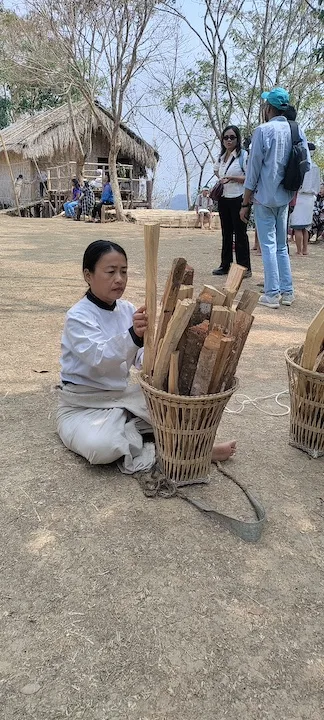
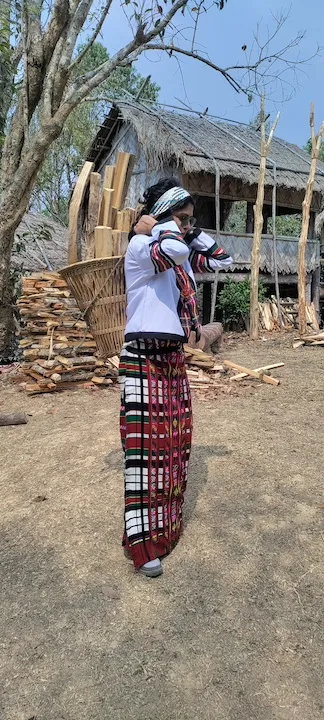
Firewood was often carried using a bamboo carrier with a head strap making it easier to move through the hills. The design keeps the logs stable and balanced while walking on steep paths. Simple bamboo tools like this show the smart and practical ways people in the North East of India use nature to make daily work easier.
Traditional Food at Zokhua Falkawn
Small stalls around the village courtyard offer simple local food that reflect everyday life in the hills.
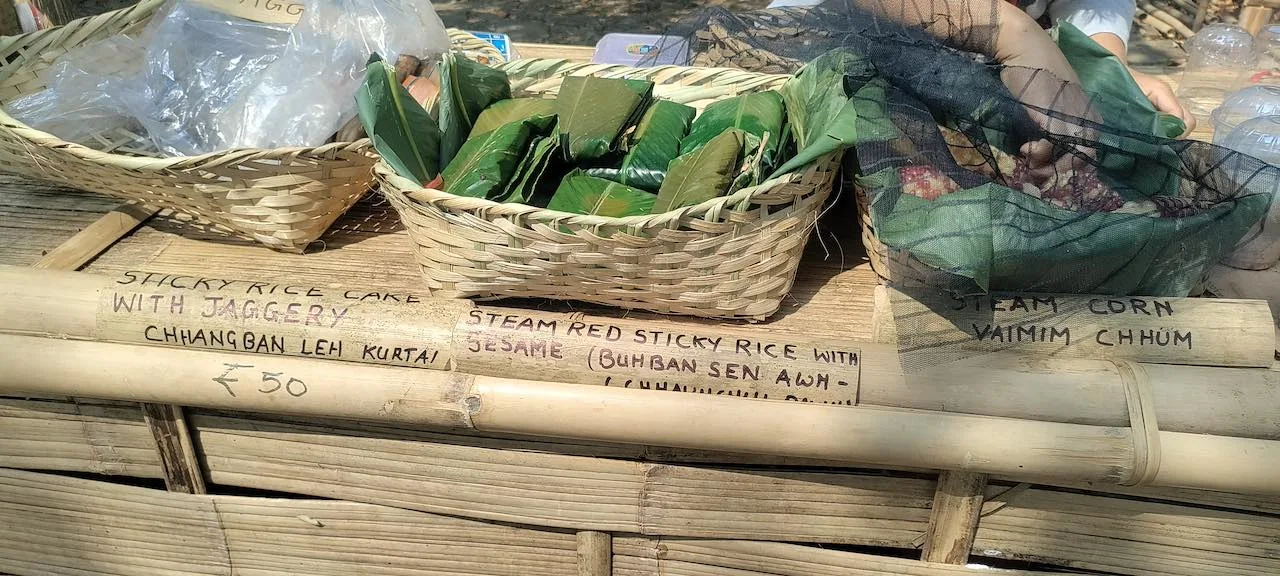
Some of the food items include,
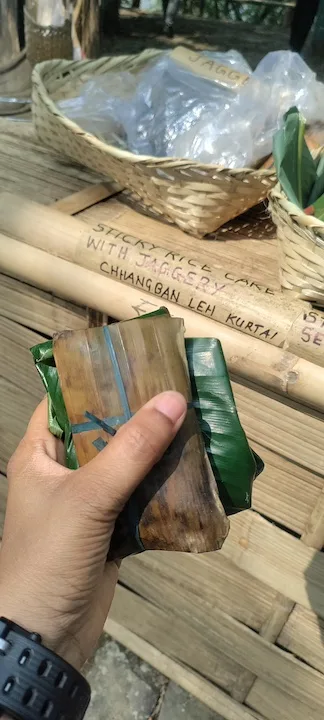
- Sticky rice cake with jaggery (Chhangban leh kurtai)
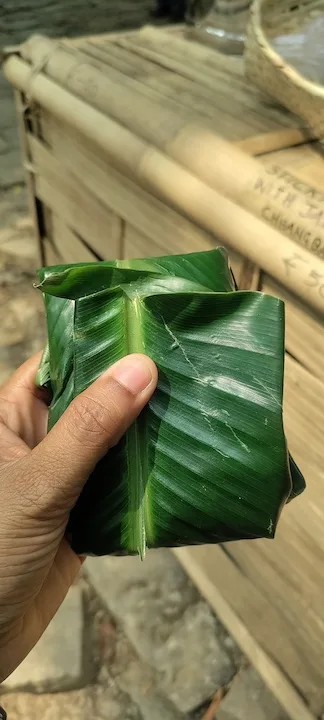
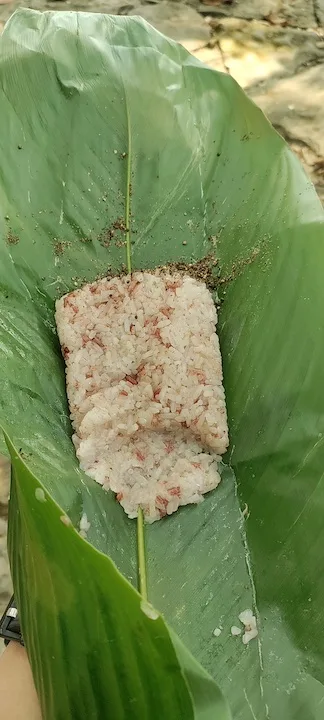
- Steamed sticky rice with sesame (Buhban sen awh)
- Steamed corn (Vaimim chhum)
- Rice beer and local fruits

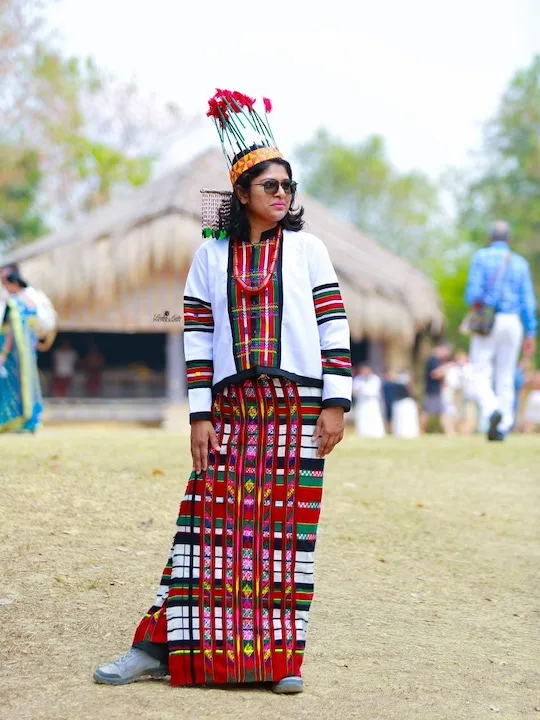
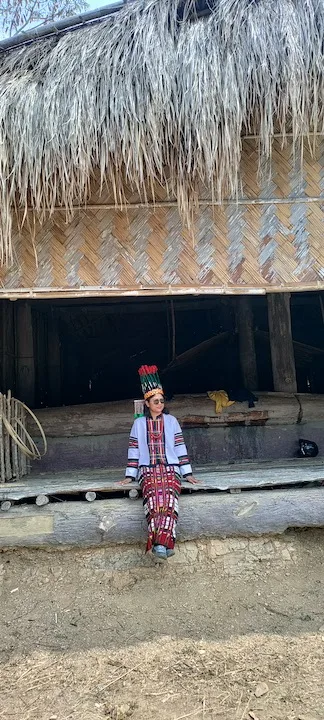
Traditional dress and Souvenirs at Zokhua Falkawn
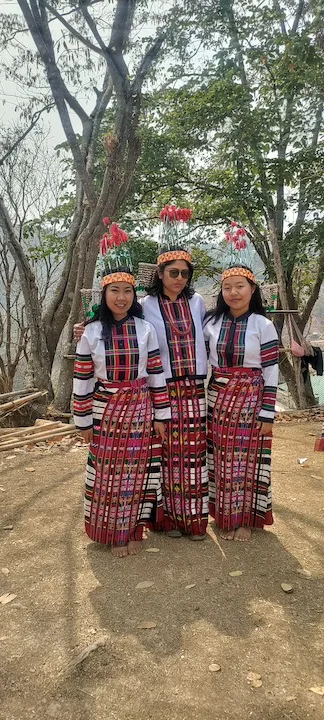
Visitors can rent traditional Mizo attire featuring a Puanchei skirt and the iconic Vakiria feathered headgear for photos and browse stalls selling handmade souvenirs.
Zokhua Show Timings at Falkawn
Every Saturday (except 3rd January and 27th December)
- First show: 11 A.M to 1 P.M
- Second show: 1.30 P.M to 3.30 P.M
Entry fee is ₹100 per person.
How to Reach Zokhua Falkawn from Aizawl
Zokhua Falkawn is located about 18 km south of Aizawl and takes roughly an hour by road. The easiest way to get there is by hiring a taxi from Aizawl.
Local taxis are available and typically charge around ₹3500 for a round trip, including waiting time during the show. If you prefer, you can contact Mr Lalthang Meka, at +918974207461 to book a taxi.
Why You Should Experience Zokhua Near Aizawl
Zokhua offers a rare glimpse into traditional Mizo culture. For a few hours, the village comes to life with dances, games, crafts, and daily activities that once shaped life in the hills. Located close to Aizawl, it is a great way to understand the history and traditions of the Mizo people.
Inkhawmna hi hnam chakna a ni.
Mizo Proverb
Unity is the strength of a community.
Northeast is beautiful.
Thanks for reading!
Good photos